A soup swap party is simple: each guest makes one big batch of soup, portions it into identical quart containers, and goes home with a mix of other people’s soups for the freezer. With nine people each bringing eight quarts, everyone leaves with eight different meals for the price of cooking one.
The details decide whether it works. You need matching containers, honest ingredient and allergen labels, soup that was cooled and frozen safely, and a fair way to pick.
Below is a walkthrough of one hypothetical party, from the first invitation to the last container out the door, with food safety guidance from the USDA and the FDA along the way.
Key takeaways
- Nine people and eight quarts each means every guest takes home eight different soups.
- Ask everyone to use the same wide-mouth quart containers and leave 1 inch of headspace for freezing.
- Label every container with the soup name, date, full ingredients and any of the FDA’s nine major allergens.
- Refrigerate soup within 2 hours of cooking, in shallow containers, then freeze; soups keep best for 2 to 3 months frozen.
- Reheat swapped soup to a rolling boil, as USDA advises for soups, sauces and gravies.
The scenario
Say you are Maya, and you want to stock your freezer for winter without spending every Sunday cooking. You invite eight friends. Each of you, you included, will make one soup and bring eight quart portions of it. Nine cooks, 72 quarts, and everyone leaves with eight soups that are not their own.
Maya plans the party for a Saturday afternoon in early November and works backwards. Here is her schedule.
| When | Task |
|---|---|
| 3 weeks before | Send invitations and a shared sign-up sheet |
| 2 weeks before | Confirm soups, check for duplicates and dietary needs |
| 1 week before | Share the container and label rules; buy extras |
| 1 to 2 days before | Guests cook, cool, portion and freeze or chill |
| Party day | Tasting table, then the swap |
| After the party | Freeze or eat within the storage guidance |
Three weeks out: invitations and sign-up
Maya’s invitation explains the deal in three lines: make one soup, bring eight quarts, take home eight different ones. She links a shared sign-up sheet where each guest lists their soup, its main ingredients and whether it is vegetarian.
Avoiding eight chicken noodles
The sign-up sheet is first come, first served. Once someone claims butternut squash, nobody else can. Maya nudges people towards variety: a couple of vegetarian soups, a bean or lentil soup, a chowder, something spicy.
- Ask for the soup name and main ingredients at sign-up.
- Ask guests to flag common allergens up front, so others can plan.
- Give a firm arrival time so the tasting table fills at once.
Matching containers are the single rule that keeps the swap fair. Everyone should leave with the same amount of soup, and a stack of identical quarts looks tidy on the table.
Containers and labels
Maya asks for wide-mouth quart containers made for freezing. The National Center for Home Food Preservation says rigid plastic or glass containers are especially good for liquids, but warns that ordinary glass jars break easily at freezer temperatures and that thin cartons are not moisture-vapour resistant enough for long freezer storage. Freezer-safe, wide-mouth jars or rigid plastic quarts are the safe bet.
Liquids expand as they freeze. The centre’s headspace guidance for a liquid pack is 1 inch in a wide-mouth quart and 1½ inches in a narrow-mouth one. Maya includes that figure in her reminder email.
What goes on every label
- Soup name and the cook’s name.
- Date made.
- Full ingredient list, including stock, spices and garnishes.
- A clear allergen line, for example Contains: milk, wheat.
- Reheating note: bring to a rolling boil.
The FDA lists nine major food allergens: milk, eggs, fish, crustacean shellfish, tree nuts, peanuts, wheat, soybeans and sesame. Sesame became the ninth on 1 January 2023. Asking every cook to check their soup against that list takes a minute and protects any guest with an allergy.
A soup swap only works if every guest can trust every label.
Cook, cool and freeze safely
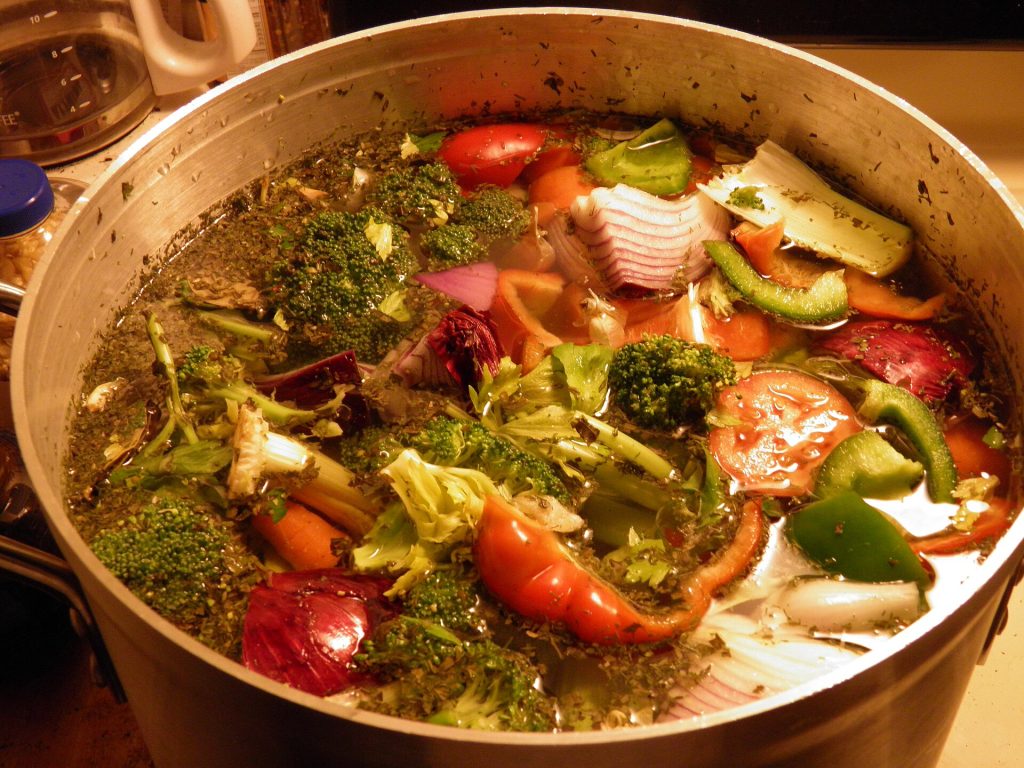
Nine cooks means nine kitchens, so Maya sends everyone the same short food-safety note. A big pot of soup holds heat for hours, and cooling it properly is the step people skip.
- Cool it fast. The USDA Food Safety and Inspection Service says leftovers must be refrigerated within 2 hours of cooking, or within 1 hour if the air is above 90°F.
- Divide the pot. USDA advises splitting large amounts into shallow containers so they chill quickly, rather than cooling the whole pot at once.
- Portion into quarts once cool. Leave 1 inch of headspace in a wide-mouth quart.
- Chill or freeze. Keep the fridge at 40°F or below and the freezer at 0°F or below.
- Transport it cold. Carry the quarts to the party in a cooler, and put them straight into the host’s fridge or a cooler on arrival.
Timing matters too. FoodSafety.gov’s cold storage chart gives soups and stews 3 to 4 days in the refrigerator and 2 to 3 months in the freezer. USDA’s leftovers guidance makes the same point: frozen soup can lose quality the longer it is stored. Guests who cook two days before the party should either freeze their quarts or remember that the fridge clock is already ticking.
Party day: tasting table and swap
Guests arrive, drop their soups in coolers or the fridge, and head for the tasting table. It is the best part of the afternoon.
The tasting table
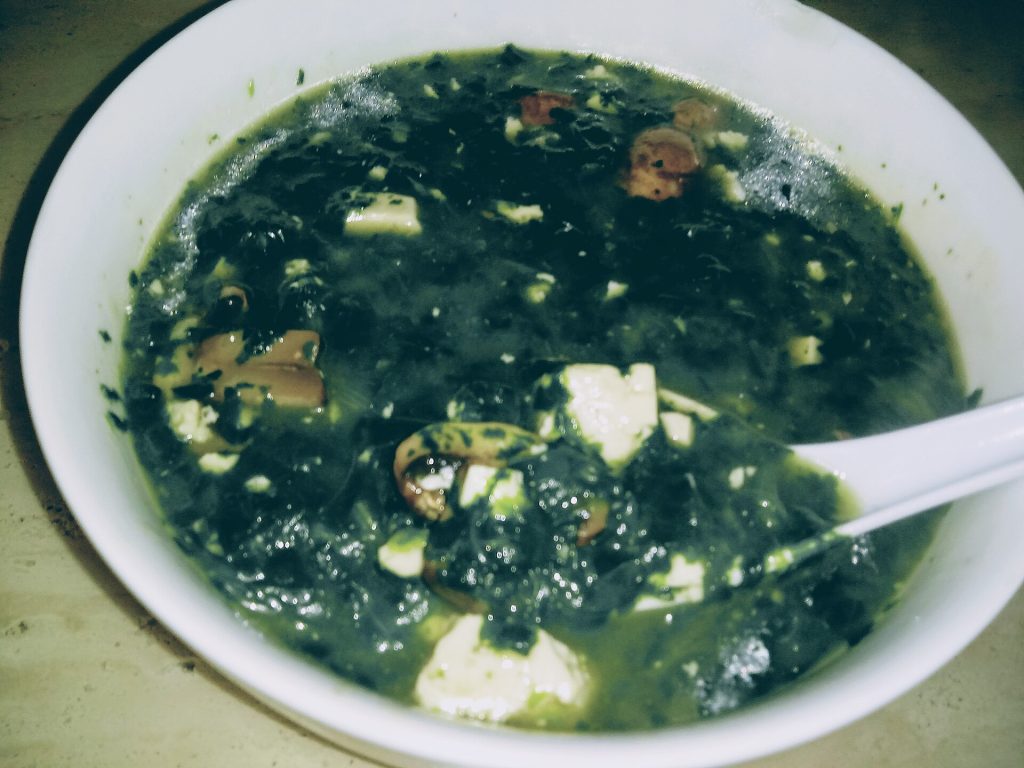
Each cook brings one extra quart for tasting. Maya warms them in small pots or slow cookers, one per soup, with a card showing the name and allergens. Small paper cups and spoons let everyone try all nine without filling up.
Keep hot soups hot on the table and put them away within 2 hours, the same window USDA sets for leftovers. Anything left in the tasting pots goes home with its cook, not into the swap.
Swap mechanics
Maya uses a simple draw. Everyone pulls a number from a bowl, and picking goes in rounds: number one picks first in round one, and the order reverses each round so nobody always picks last. Each person takes one quart per round, never their own soup, until everyone has eight.
- Lay the quarts out by soup, labels facing forward.
- Say each soup’s name and allergens aloud before round one.
- Allow trades at the end, especially for allergy or diet swaps.
- Pack take-home quarts in coolers or insulated bags.
For more ideas on low-effort gatherings, see our lifestyle features and our favourite soup recipes.
FAQ
How many people do you need for a soup swap party?
Six to ten works well. The number of guests, minus one, sets how many quarts each person brings, so nine people means eight quarts each.
How long does swapped soup keep?
FoodSafety.gov gives soups and stews 3 to 4 days in the fridge and 2 to 3 months in the freezer for best quality.
How should guests reheat the soup?
USDA says soups, sauces and gravies should be brought to a rolling boil when reheated. Thaw in the fridge, in cold water or in the microwave.
Can I freeze soup in glass jars?
Use jars made for freezing. Regular glass jars can break at freezer temperatures, and every jar needs headspace for expansion.
Send the invitations
Pick a date three weeks out, set up a sign-up sheet with columns for soup name, ingredients and allergens, and send the invitation today. Then choose your own soup and do a test batch to see how it freezes. Our guide to freezing food can help with the rest.
Featured photo: Khao Sok, Asian noodle soup, Surat Thani, Thailand by Vyacheslav Argenberg, BY 4.0.