Guests start forming an opinion of a restaurant before they read the menu. The lighting, the music, the way the host greets them, and what the staff are wearing all send signals about the kind of night they are about to have. Uniforms are easy to treat as a line item, but they do a lot of quiet work on the floor.
This article looks at front-of-house uniforms for servers, bartenders, and hosts, and how getting them right affects both guests and the people wearing them.
Uniforms tell guests what to expect
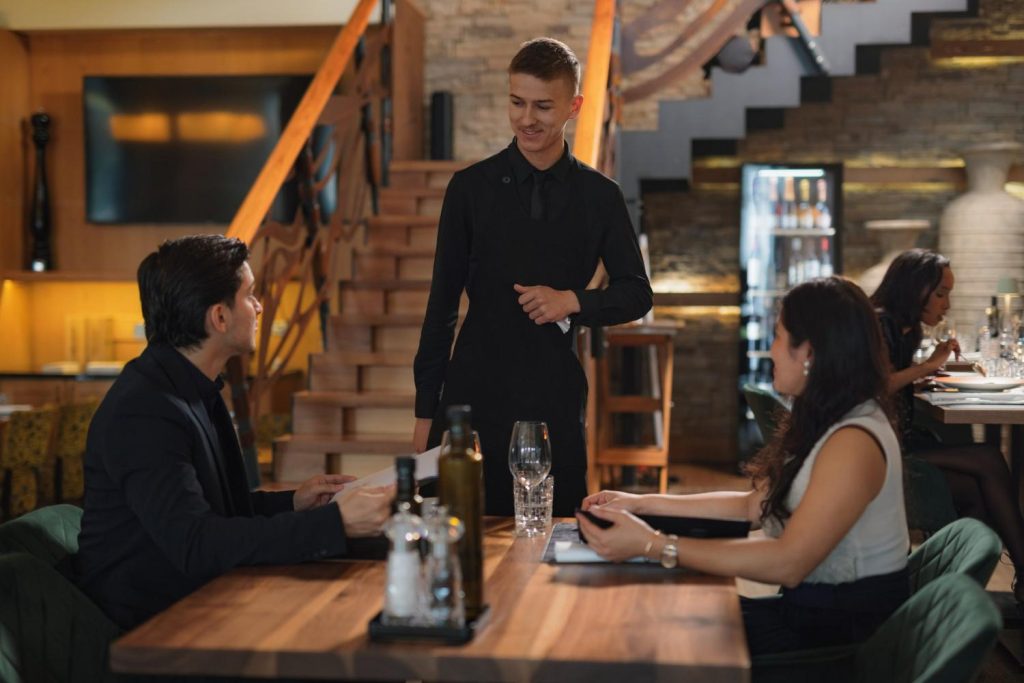
A white shirt and long black apron suggest a classic bistro. Denim bib aprons and rolled sleeves suggest a relaxed neighborhood spot. A tailored vest behind a cocktail bar hints at careful drinks and a slower pace.
None of this is a rule, but guests read these cues fast. When the uniform matches the room, the menu, and the price point, the experience feels consistent. When it clashes, such as a fine-dining menu served by staff in faded polos, guests notice the gap even if they cannot say why.
Before choosing anything, write down a few words that describe how you want guests to feel. Use those words to judge every option.
Making staff easy to find
A practical job of any uniform is helping guests spot who works there. In a busy dining room or a packed bar, a guest who wants another drink or the check should be able to find a staff member at a glance.
A few ways to do this:
- A shared color or garment, such as matching aprons, that stands out from typical guest clothing
- Different looks for different roles, so guests can tell a host from a server from a bartender
- Name tags or embroidered names where the style of service suits them
Clear roles also help the team. New hires learn faster who handles what, and managers can read the floor more quickly. The National Restaurant Association offers training and industry resources on service and operations, and good uniforms support many of the same goals around consistent, attentive hospitality.
Aprons and pockets are working tools
For servers and bartenders, the apron is often the most important piece. It holds pens, order pads, wine keys, lighters, and a phone or handheld device. Pocket placement and size can change how smoothly someone works.
Things to check:
| Feature | Why it matters |
|---|---|
| Pocket size and placement | Staff should reach a wine key or pen without looking down |
| Apron length | Longer styles look formal; shorter waist aprons are easier for quick movement |
| Strap style | Crossback straps can spread weight off the neck for heavier bib aprons |
| Fabric weight | Heavier canvas or denim holds shape and resists stains; lighter fabrics stay cooler |
Some hospitality groups work with specialty makers to design aprons and shirts around their exact needs. Chicago-based Stock Mfg Co, for example, has made workwear for restaurants, bars, and hotels since 2013, including aprons it still produces in Chicago and custom uniform collections. Whichever supplier you use, ask to see samples and test them during real service before placing a large order.
Comfort shows up in service
A server may walk miles over a long shift, carry heavy trays, and lean over tables hundreds of times. A bartender reaches, bends, and moves in a tight space for hours. Clothes that pinch, ride up, or trap heat wear people down, and tired staff have less energy for guests.
Look for:
- Fabrics that breathe and move with the body, especially near open kitchens or on summer patios
- Cuts that allow reaching and bending without constant adjusting
- A range of sizes and fits so every team member can find something that works for their body
- Layering options, such as a light jacket or sweater for patio shifts or drafty entrances
Ask staff for feedback before you order a full run. A short trial with a few team members can catch problems that are invisible on a hanger.
Durability and care
Front-of-house uniforms face spills, wine, grease, and constant washing. A garment that looks great on day one but fades, pills, or shrinks after a month will hurt the look you worked to build.
Plan for:
- Stain resistance. Darker colors and certain fabric finishes hide small spills during a shift.
- Wash instructions. Know whether items go through a laundry service, an in-house machine, or staff homes. Pick fabrics that can handle that routine.
- Spare stock. Keep extra pieces in common sizes so new hires can start right away and damaged items can be swapped mid-shift.
- A replacement schedule. Decide in advance when worn pieces get replaced, so the floor does not drift into a mix of old and new.
Involving the team
Uniforms are personal. Staff wear them for hours and are seen in them by hundreds of guests. When people feel good in what they wear, it often shows in how they carry themselves at the table.
Simple ways to involve the team include sharing a few options and asking for votes, letting staff pick between two or three approved pieces, and asking for honest feedback a month after rollout. Small adjustments, such as adding a pocket or offering a second cut, can make a big difference.
In the end, the right front-of-house uniform sets expectations, helps guests find help, keeps staff comfortable, and holds up to real service. Treat it as part of the guest experience, not just a supply order, and it will repay the effort every shift.