Opening a second restaurant location works when the first one no longer depends on you being there, the new site suits the same concept without stealing its customers, and the money is lined up before the lease is signed. Get those three right and a second location can spread overhead and give your best people room to grow. Get them wrong and a healthy business ends up propping up a struggling one.
To make this concrete, this walkthrough follows a hypothetical operator. Say you own Marlowe, a 70-seat neighbourhood bistro now in its fourth year. Weekends book out, weeknights are steady, and a landlord across town has offered you a former cafe space. What should you check before you say yes?
We’ll take Marlowe’s decision stage by stage, using the SBA’s own expansion guidance and financing programs as reference points.
Key takeaways
- The owner-dependence test comes first: if the original restaurant slips when you step away, it isn’t ready to be copied.
- Pick a site that matches your concept’s customer, and keep enough distance to avoid pulling diners from location one.
- The SBA’s 7(a) program goes up to $5 million and covers working capital; 504 loans fund real estate and long-life equipment but not working capital.
- Write down recipes, opening and closing routines and ordering pars before the second kitchen opens.
- Hire and train the new general manager at the original site months ahead of opening.
In this guide
- Prove the first restaurant can run without you
- Choose a site that fits the concept
- Build the capital plan
- Turn habits into systems
- Hire the general manager first
- Map the timeline
- FAQ
- Your first move this month
Prove the first restaurant can run without you
Marlowe’s owner still expedites every Friday and Saturday, approves every order and handles every complaint. That is the first problem to solve, because the second restaurant will take most of that attention away.
Run a simple test. Take two full weeks away from the pass and from the office. Then compare the numbers and the guest feedback against the two weeks before.
Readiness checklist
- Sales, food cost and labor cost stay within your normal range while you are absent.
- A sous chef or kitchen lead can run service and write the prep list without calling you.
- Front-of-house leadership handles comps, complaints and staffing gaps on its own.
- Your books are current, and you can read a monthly profit and loss statement for the restaurant at a glance.
- The first site has cash reserves of its own, separate from anything earmarked for expansion.
If Marlowe passes on most of these, move ahead. If it fails on two or more, spend the next six months fixing them. The landlord across town will not be the last one to call.
Choose a site that fits the concept
The SBA’s guide to expanding to new locations starts with market research: who the target customer is in the new area, how you’ll reach them, and what competitors already offer there. For a restaurant, that translates into a short list of hard questions about the space.
What Marlowe checks at the cafe site
- Customer match: Do the people who live and work nearby look like Marlowe’s regulars, in age, spending and dining habits?
- Trade area overlap: How many current regulars live closer to the new site than to the original one?
- Kitchen fit: Can the existing hood, gas supply, grease trap and walk-in handle a bistro menu, or does the build-out change the budget?
- Zoning and licences: Is restaurant use allowed, and what will a liquor licence take in that jurisdiction?
- Parking and visibility: Can guests find the door and park at 7 pm on a Thursday?
The SBA also points out that licence and permit requirements vary by state, county and city, and that expanding into another state can mean registering there through a certificate of authority. If your concept depends on a full bar, confirm the licensing path before anything else, because it can change the whole timeline. For a feel of what’s already nearby, the restaurant directory is a quick way to see the local competition.
The cannibalization question
Cannibalization happens when the new location mostly moves existing guests rather than finding new ones. Two restaurants sharing one customer base carry double the rent for little extra revenue.
A second location should find new customers, not split the ones you already have.
Marlowe’s owner pulls reservation data and finds that a meaningful share of regulars live closer to the cafe space. That’s a warning sign. The fix may be a different site or a deliberately different format, such as a smaller wine bar with its own menu, so the two places complement each other.
Build the capital plan
The SBA’s guidance is to build financial forecasts that project the new location’s costs and revenue, then check the balance sheet to see what you can fund yourself. Marlowe’s plan has three buckets: build-out and equipment, pre-opening costs such as hiring, training and marketing, and a working capital cushion to cover losses while the new room finds its feet.
Matching the loan to the need
| SBA 7(a) loan | SBA 504 loan | |
|---|---|---|
| Maximum size | $5 million | $5.5 million |
| Real estate and buildings | Yes, acquiring or improving | Yes, existing buildings, land or new facilities |
| Equipment | Yes, machinery and equipment | Long-term equipment with at least 10 years of useful life |
| Working capital | Yes, short and long term | No |
| Furniture, fixtures, supplies | Yes | Not listed among eligible uses |
Per the SBA, 7(a) loans can be used for real estate, working capital, equipment, furniture and fixtures, and refinancing, with a maximum of $5 million. 504 loans fund major fixed assets such as buildings and long-life equipment, with 10, 20 or 25-year terms, and explicitly exclude working capital and inventory. For a leased space like Marlowe’s, a 7(a) loan is the more natural fit because it can cover the build-out and the cash cushion together. The SBA’s Lender Match tool connects you with participating lenders.
Before talking to a lender, get your numbers into shape with our guide to building a restaurant budget.
Turn habits into systems
In one restaurant, standards live in the owner’s head. In two, they have to live on paper. Marlowe’s owner spends the build-out months writing down what already works.
- Recipe cards with weights, yields, plating photos and allergen notes for every menu item.
- Opening and closing checklists for kitchen, bar and floor.
- Ordering pars and vendor lists, so both sites order the same way and the same products.
- A training plan for each role, with sign-off steps.
- One set of reports for sales, food cost and labor, run the same way at both locations so they can be compared.
Make sure the point-of-sale, scheduling and inventory tools can handle more than one site before you commit. Switching systems mid-opening is painful. Our restaurant technology guides cover the options.
Hire the general manager first
The general manager of the new site matters more than the location itself. Marlowe’s owner has two options: promote the current assistant manager, who knows the culture, or hire from outside, who brings fresh experience but has to learn the house style.
Whichever route, the new GM should start at the original site well before opening. Several months running shifts at Marlowe teaches the standards, the regulars and the unspoken rules in a way no manual can. It also frees the owner to spend time at the build-out.
What the GM job description should include
- Full responsibility for the location’s profit and loss, with clear targets.
- Hiring and training authority for the new team, within an agreed budget.
- A fixed weekly check-in with the owner to review numbers and guest feedback.
- Defined limits: what they can change on their own, and what needs sign-off.
Map the timeline
Every project differs, and permits alone can stretch a schedule. As a planning outline, Marlowe’s owner maps the work in phases rather than fixed dates.
- Readiness and research: run the two-week absence test, study the trade area and draft forecasts.
- Financing and lease: talk to lenders, negotiate the lease and confirm zoning and licences.
- Design and build-out: finalise the layout, order equipment and manage contractors.
- Systems and hiring: finish the manuals, hire the GM early, then recruit the wider team.
- Training and soft opening: run friends-and-family nights and fix problems before the public arrives.
- First 90 days: weekly reviews of sales, costs and guest feedback at both sites.
Build slack into each phase. The most common mistake is a lease that starts paying rent before the kitchen can cook.
FAQ
How do I know my restaurant is ready to expand?
When it holds its sales, costs and guest scores for a sustained stretch without you on site, and has its own cash reserves. If standards slip when you leave, fix that first.
Can an SBA loan pay for a second location?
Yes. The SBA’s 7(a) program can fund real estate, build-out, equipment and working capital up to $5 million. The 504 program covers buildings and long-life equipment but not working capital.
How far apart should two locations be?
There is no fixed rule. Check how many current guests live nearer the new site; if it’s a large share, the two may compete for the same diners.
Where can I get free help with an expansion plan?
The SBA’s local assistance network includes SCORE mentors, Small Business Development Centers, Women’s Business Centers and Veterans Business Outreach Centers, which offer free or low-cost counseling.
Your first move this month
Before you look at another space, block out two weeks away from your current restaurant and watch what happens to the numbers. That single test tells you more about your readiness than any site visit. Then book a session with a SCORE mentor or your local SBDC to pressure-test the forecast. For more on growing an independent operation, browse our restaurant business guides.
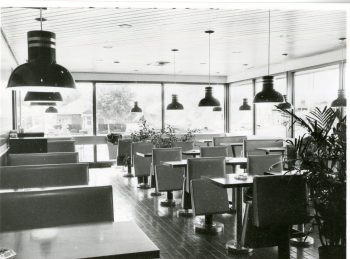
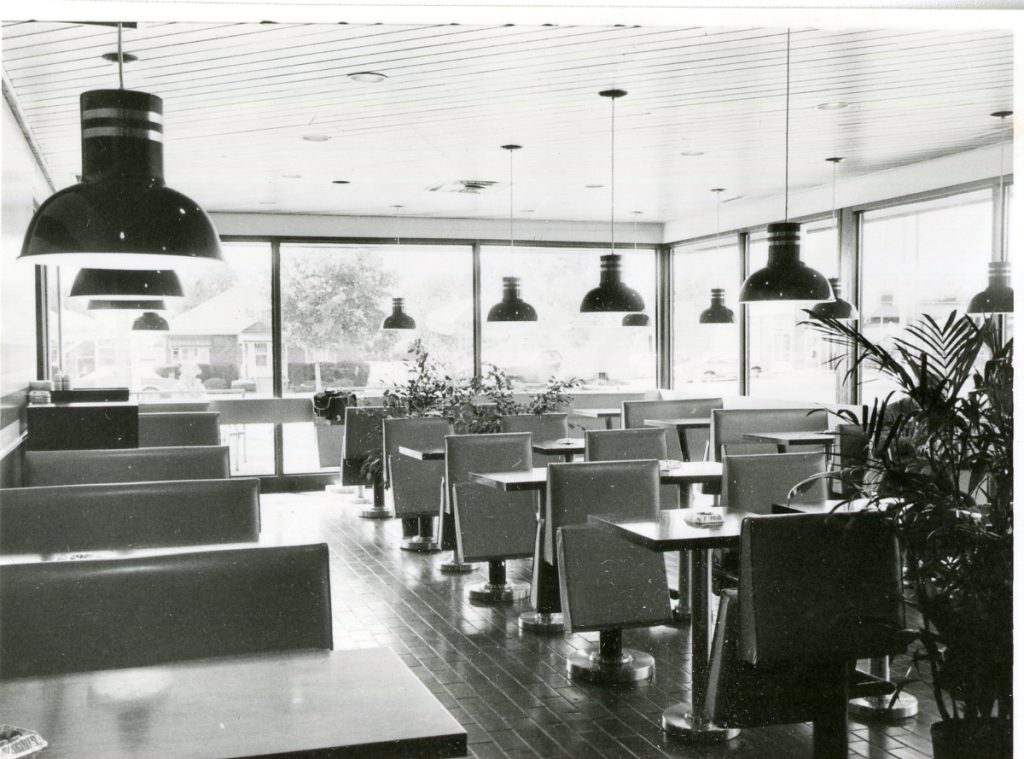
Featured photo: Empty restaurant interior HC08164 by Community Archives, CC0.