There is a specific kind of disappointment that comes from opening the crisper drawer and finding a bag of spinach that has turned to slime, or a bell pepper that has gone soft and wrinkled overnight. It happens in almost every kitchen, almost every week. The good news is that most of this waste is preventable. With a few adjustments to how you store fresh produce, you can keep fruits and vegetables fresh for days or even weeks longer, save money, and cut down on what ends up in the trash.
Why Produce Spoils So Fast
Refrigerators are built to control temperature, and they do that job well. What they are not built to do is manage humidity, and humidity turns out to be just as important as cold when it comes to keeping produce fresh. Cold, dry air pulls moisture out of fruits and vegetables, which is why leafy greens wilt, carrots go limp, and herbs dry out even though they are sitting in the “right” part of the fridge.
There is also the matter of ethylene gas. Many fruits, including apples, bananas, and avocados, naturally release ethylene as they ripen. This gas speeds up the ripening process not just in the fruit producing it, but in whatever nearby produce is sensitive to it. Store ethylene producers next to ethylene sensitive vegetables like broccoli, lettuce, or cucumbers, and you will notice everything around them breaking down faster than expected.
According to the U.S. Department of Agriculture’s Food and Nutrition Administration, refrigerators should be kept at 41°F or below, with the coldest part typically toward the back and the warmest near the door. The agency also recommends storing ethylene producing fruits as far as possible from ethylene sensitive produce, since keeping them separated significantly slows deterioration.
Getting the Basics Right
A few simple habits go a long way before you even think about specialized tools or gadgets.
Keep your fridge at the correct temperature. A refrigerator thermometer is inexpensive and takes the guesswork out of this. Aim for the 40°F range, and check it periodically since fridge dials are not always accurate.
Use your crisper drawers as intended. Most crisper drawers have adjustable vents that control humidity. Higher humidity settings are generally better for leafy greens and herbs, while lower humidity settings suit fruits that release more moisture and ethylene, like apples and pears.
Do not wash produce until you are ready to use it. Excess moisture on the surface of berries, greens, and other delicate produce encourages mold growth. Wash right before eating or cooking, not right after bringing groceries home.
Store cut produce properly. Once fruits or vegetables are cut or peeled, they should go into clean, covered containers in the refrigerator. The University of Maine Cooperative Extension recommends refrigerating cut or peeled produce within two hours and using it within three to four days for both quality and food safety reasons.
Separate raw meat from produce. This is a food safety issue as much as a freshness one. Keep produce away from raw meat, poultry, and fish to avoid cross contamination, and store meat on a lower shelf where drips cannot reach anything else.
Solving the Humidity Problem
Once you have the basics down, the biggest remaining challenge is humidity. A standard fridge simply cannot add moisture back into the air the way a grocery store’s produce section does with misting systems. This is part of why store bought greens often look fresher on day one than what many people manage to maintain at home over the following week.
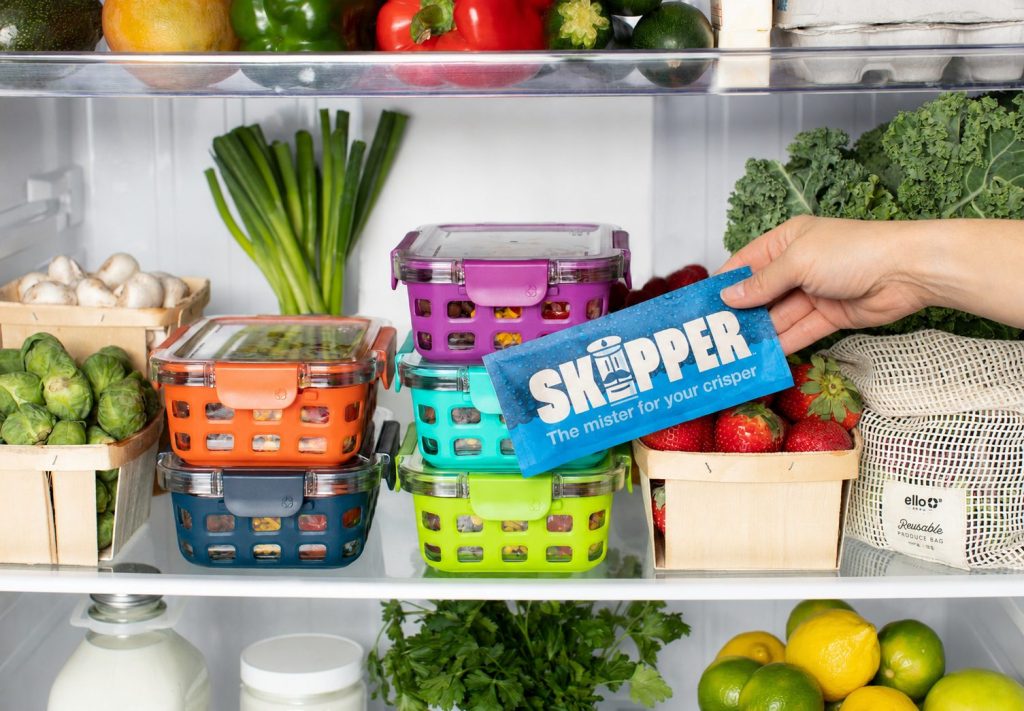
This gap is exactly what products like Skipper are designed to address. Skipper is a small device made for the crisper drawer that releases purified water vapor, adding hydration that a standard fridge cannot provide on its own. Since cold air alone tends to dry out produce rather than preserve it, adding a controlled source of moisture inside the drawer can help fruits and vegetables stay crisp for longer, closer to what you would expect from produce that just arrived at a grocery store.
Whether or not you use a dedicated hydration tool, understanding that humidity, not just temperature, is a key factor in produce storage can change how you think about your crisper drawer entirely.
A Few Extra Tips by Type
Not all produce wants the same treatment. A handful of examples:
The Bottom Line
Reducing food waste at home does not require a complete kitchen overhaul. It starts with understanding that a refrigerator’s cold air and a crisper drawer’s humidity level are two different variables, both of which matter. Keep your fridge at the right temperature, separate ethylene producing fruits from sensitive vegetables, store cut produce properly, and consider ways to add moisture back into the crisper if your produce still seems to wilt faster than it should. Small changes add up, and over the course of a year, they can mean noticeably less spoiled food and noticeably more money staying in your pocket.