A holiday potluck works when three things are planned ahead: who brings what, how every dish is labelled, and how food stays hot or cold from one kitchen to another. Get a sign-up sheet out early, ask for allergen labels on every dish, and make the 2-hour rule the house rule for anything perishable on the table.
Everything else, from serving spoons to takeaway containers, is easy once those are in place. The hard part is that a potluck has a dozen cooks and no single kitchen, so the host has to set the standards.
This checklist runs in order, from the first invitation to the last container of leftovers, with food safety guidance from the USDA, FoodSafety.gov and the FDA.
Key takeaways
- Use a shared sign-up sheet with categories and quantities so you do not end up with five desserts and no mains.
- Ask every cook to label their dish with its name and any of the FDA’s nine major allergens.
- Keep cold food at 40°F or below and hot food at 140°F or above in transit and on the table.
- Perishable food should not sit out more than 2 hours, or 1 hour above 90°F.
- Refrigerate leftovers within 2 hours in shallow containers and eat them within 3 to 4 days.
Two to three weeks out: the sign-up sheet
Send the invitation with a link to a shared sign-up sheet. A simple spreadsheet or document works; the point is that everyone can see what has already been claimed.
Set up the sheet
- ☐ Create columns for name, dish, category, serves how many, hot or cold, and allergens.
- ☐ Split the rows into categories: mains, sides, salads, bread, desserts, drinks, and paper goods or ice.
- ☐ Set a target number of dishes per category based on your head count.
- ☐ Ask each guest to add a serving spoon or tongs to their row if the dish needs one.
- ☐ Add a column for whether the dish needs oven space, a fridge or an outlet on arrival.
A rough balance for a group of 20 might look like this. Adjust it to your crowd and how much you are cooking yourself.
| Category | Dishes for 20 guests | Notes |
|---|---|---|
| Mains | 2 to 3 | Host often covers one, such as a turkey or ham |
| Hot sides | 3 to 4 | Check oven space before assigning |
| Salads and cold sides | 2 to 3 | Need a cooler or fridge on arrival |
| Bread and rolls | 1 to 2 | Easy for guests who do not cook |
| Desserts | 2 to 3 | Cap this, or everyone brings pie |
| Drinks and ice | 2 | Assign ice separately |
Check for gaps
- ☐ Two weeks out, look for duplicates and empty categories, and nudge people to switch.
- ☐ Make sure there is at least one filling vegetarian option if any guests need it.
- ☐ Ask for at least one dish that is free of the most common allergens in your group.
A potluck has a dozen cooks and no head chef. The sign-up sheet and the labels are how the host runs the kitchen.
The week before: labels and allergens
The FDA lists nine major food allergens: milk, eggs, fish, crustacean shellfish, tree nuts, peanuts, wheat, soybeans and sesame. Sesame became the ninth on 1 January 2023, so older lists you find may miss it.
Guests with food allergies cannot ask twelve cooks about every ingredient. A card on each dish solves that.
- ☐ Send every guest the list of nine allergens with a reminder a week before.
- ☐ Ask for a folded card or sticky label on each dish: dish name, cook’s name and a Contains line.
- ☐ Include hidden ingredients: butter in the mashed potatoes, nuts in the crumble topping, fish sauce in a dressing, sesame in a glaze.
- ☐ Mark vegetarian and vegan dishes clearly.
- ☐ Keep a few blank cards and a pen by the door for anyone who forgets.
Cooking day: packing and transport
This is where most potluck food goes wrong. The USDA notes that bacteria that cause foodborne illness grow between 40°F and 140°F, so the goal is to keep every dish out of that range on the way over.
Cold dishes
- ☐ Move perishable food such as meat, poultry, egg or seafood salads straight from the fridge into a cooler.
- ☐ Pack the cooler with ice or gel packs so it holds 40°F or below.
- ☐ Ride the cooler in the air-conditioned car, not the trunk.
Hot dishes
- ☐ Keep hot foods at or above 140°F by wrapping dishes in insulated bags or towels.
- ☐ Leave just enough time to travel; do not cook hours ahead and hold the dish on the counter.
- ☐ If the dish has cooled, reheat it at the host’s house before serving.
Guests who would rather not manage temperatures can bring what the USDA calls safer alternatives: whole fruit, whole vegetables, bagged chips and dips, dried fruit, nuts and jerky.
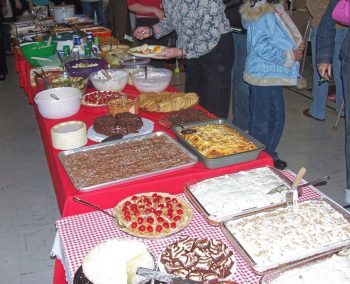
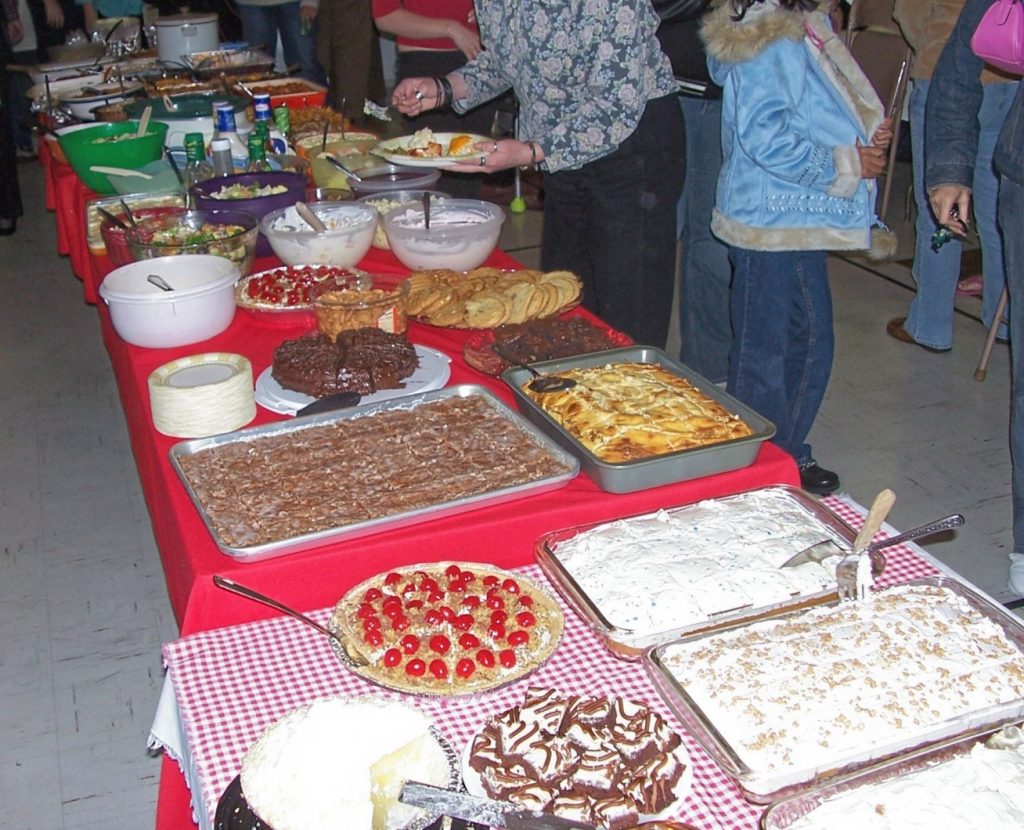
At the party: the serving table
Set the table so food stays at the right temperature and nobody has to guess what they are eating.
- ☐ Keep hot foods at or above 140°F with chafing dishes, slow cookers or warming trays.
- ☐ Set cold dishes on bowls or trays of ice to keep them at 40°F or below.
- ☐ Put one serving utensil in every dish, and have spares so spoons do not migrate between dishes.
- ☐ Place dishes containing common allergens, especially nuts, at one end of the table, away from allergen-free dishes.
- ☐ Note the time food goes out. Perishable food should not sit out more than 2 hours, or 1 hour if it is above 90°F.
- ☐ Set out small replacement platters rather than one huge one, and swap them from the fridge.
For hosting ideas beyond the food, browse our lifestyle features and our holiday hosting tips.
After the party: leftovers
Leftovers are the best part of a potluck, and the most often mishandled. The USDA Food Safety and Inspection Service says leftovers must be refrigerated within 2 hours of cooking or of being taken out of a warmer.
- ☐ Have takeaway containers, foil and a marker ready so guests can pack their dishes quickly.
- ☐ Divide large amounts into shallow containers so they cool fast in the fridge.
- ☐ Label each container with the dish and the date.
- ☐ Throw out anything that sat on the table longer than the 2-hour limit.
- ☐ Reheat leftovers to 165°F, and bring sauces and gravy to a rolling boil.
How long will it keep? FoodSafety.gov gives cooked meat and poultry leftovers 3 to 4 days in a fridge at 40°F or below. Casseroles with eggs and pumpkin or pecan pies also get 3 to 4 days after baking. Freeze what you will not eat by then.
FAQ
How do I organise who brings what?
Use a shared sign-up sheet with categories and target numbers for each, plus columns for allergens and whether the dish is hot or cold. Check it two weeks out for gaps.
How long can potluck food sit out?
The USDA says no more than 2 hours for perishable food, or 1 hour if the temperature is above 90°F.
What allergens should guests label?
The FDA’s nine major allergens: milk, eggs, fish, crustacean shellfish, tree nuts, peanuts, wheat, soybeans and sesame.
How should I transport a hot dish?
Keep it at or above 140°F by wrapping it in insulated bags or towels, and travel straight to the party. Reheat it on arrival if it has cooled.
Start the sign-up sheet
Open a shared document today, set up the columns and categories above, and send the link with your invitation. Buy a stack of cards for allergen labels and a bag of ice for the day. Then pick your own dish from our make-ahead recipes so you are not cooking at the last minute.