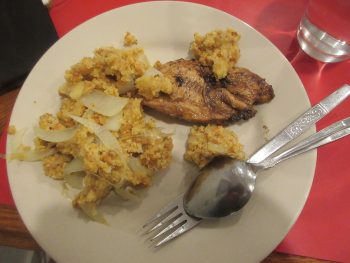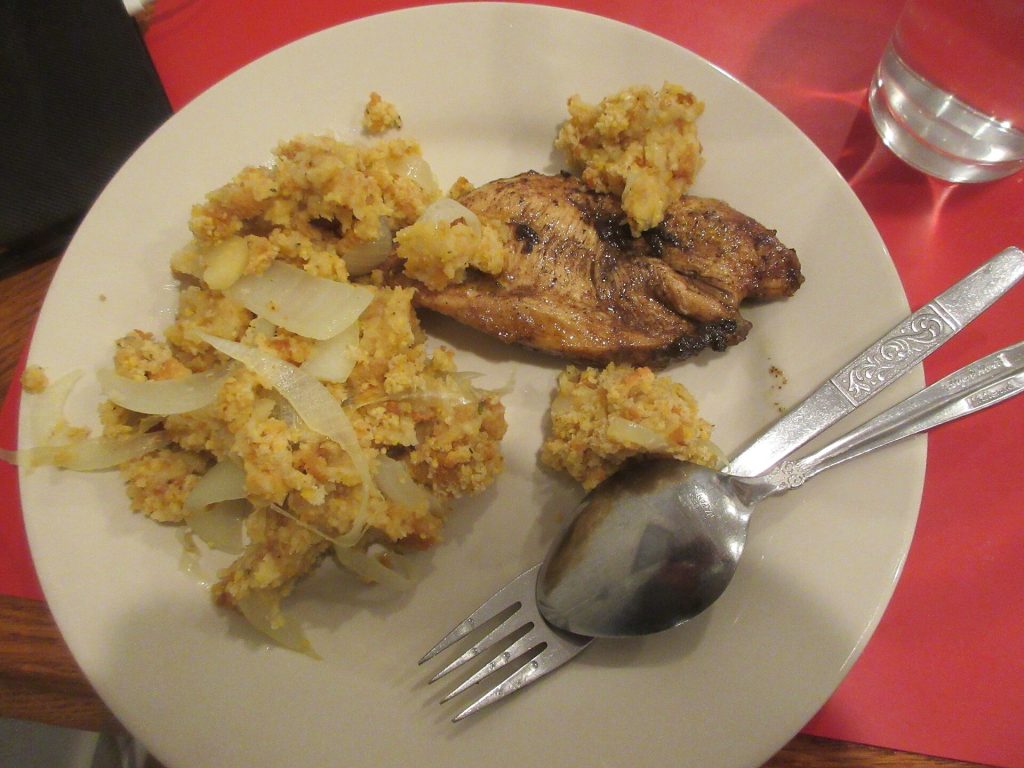
Stuffing vs dressing is mostly a question of vocabulary and geography, not recipe. Strictly speaking, stuffing is cooked inside the bird and dressing is baked in a separate pan, but in everyday American speech the words overlap. Southerners tend to say dressing whatever the method, and many Northerners say stuffing even when it never goes near the turkey.
The more interesting differences are in the pan. Cornbread dressing, oyster dressing, sausage and sage stuffing and Louisiana rice dressing are genuinely different dishes, shaped by what each region grew, caught and baked.
Below: where the two words came from, a regional comparison table, how the bread changes the result, and what the USDA says about cooking it safely.
Key takeaways
- Stuffing goes inside the bird; dressing is baked separately. In practice, the word you use says more about where you grew up.
- Stuffing has been used in English for these fillings since at least the 1500s; dressing caught on in parts of the US in the 1800s.
- The South favours cornbread dressing; coastal cooks have used oysters in stuffing for more than 300 years.
- The USDA recommends cooking stuffing separately for safety, and says it must reach 165°F on a food thermometer.
- Refrigerate leftover stuffing within 2 hours, taken out of the bird.
The short answer
Dictionaries do not draw a hard line. The University of Wyoming Extension quotes Merriam-Webster defining stuffing as a seasoned mixture typically placed inside the cavity of a turkey, pepper or similar, and dressing as a seasoned mixture usually used as a stuffing. In other words, one of the two definitions uses the other word.
Cooks tend to settle it by method. If the bread mixture is spooned into the bird, it is stuffing. If it is baked in a casserole dish, many people call it dressing. The trouble is that plenty of families bake it in a dish and still call it stuffing, and plenty of Southern families have never called it anything but dressing.
Stuffing and dressing are the same idea. The word you use is a map of where your family learned to cook.
Where the two words came from
The dish is old. Dictionary.com points to evidence of roasted birds filled with bread and spices in ancient Rome and the Middle East, and the Wyoming extension notes that Roman cooks stuffed animals with vegetables, spices, herbs and spelt. In medieval and early modern English kitchens the filling went by farce and later forcemeat.
Stuffing, as a word for that filling, has been in English since at least the 1500s. Dressing arrived later: in the 1800s it gained popularity in parts of the United States as a name for the dish cooked inside a bird. Dictionary.com says the shift is theorised to stem partly from Victorian-era prudishness and a move away from more graphic terms. The verb dress, meaning to prepare food, is much older, going back to at least the 1300s.
Today, stuffing is probably the more common word overall. Dressing holds strongest in the South, with pockets of loyal users across the rest of the country.
Regional styles compared
Here is how the main American styles compare. Recipes vary family by family, so treat this as a map rather than a rulebook.
| Style | Where it’s common | Base | Key flavourings | Usually called |
|---|---|---|---|---|
| Sausage and sage | Northeast and Midwest | Cubed white bread | Pork sausage, onion, celery, sage, butter | Stuffing |
| Cornbread dressing | The South | Crumbled cornbread | Onion, celery, sage, broth, sometimes egg | Dressing |
| Oyster dressing | Chesapeake Bay and coastal South | White bread or cornbread | Oysters and their liquor, herbs | Either |
| Rice dressing | South Louisiana | Cooked rice | Ground meat, chicken livers, onion, celery, bell pepper | Dressing |
| Chestnut or dried-fruit | Across the country | White or sourdough bread | Chestnuts, apples, cranberries or other dried fruit | Stuffing |
Cornbread dressing in the South
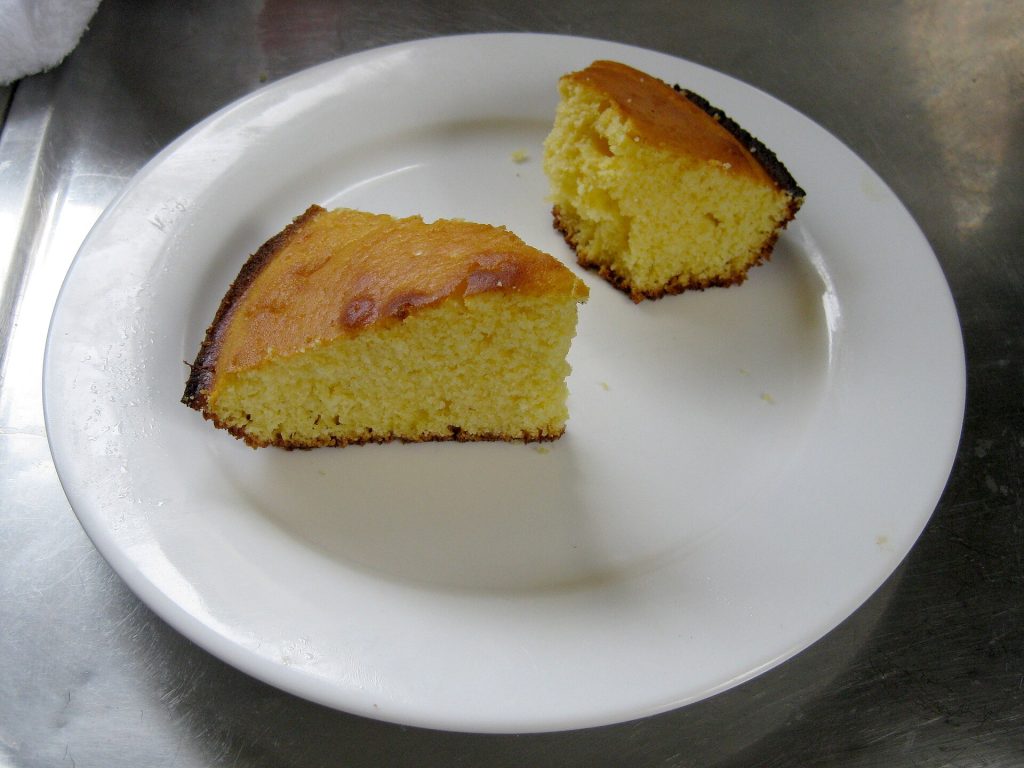
The Wyoming extension notes that dressing in the American South is often made with cornbread instead of white bread. The cornbread is baked ahead, crumbled, moistened with broth and baked again until the top crisps. It is denser and more crumbly than a white-bread stuffing, and it holds its shape when spooned.
Oyster dressing on the coast
Oysters in stuffing are not a modern twist. The Chesapeake Bay’s Oyster Recovery Partnership traces the idea to a 1685 London cookbook, The Accomplisht Cook, which stuffed a young chicken with oysters, spices and herbs. It says oysters have been used to stuff poultry and fish for more than 300 years, and that British colonists brought the habit to America. Its advice is to use the oyster liquor, the natural brine, to keep the dressing moist.
Sausage and sage up north
In much of the Northeast and Midwest, the default is cubed white bread with browned pork sausage, onion, celery and plenty of sage and butter. The extension lists sausage, onion, celery, mushrooms, carrots, butter and herbs as common ingredients, with oysters, dried fruit and bacon as popular additions.
Rice dressing in Louisiana
In South Louisiana, the holiday dressing is often made from rice rather than bread. Cooked rice is typically mixed with browned ground meat, often chicken livers, and the local trio of onion, celery and bell pepper. It is closely related to dirty rice and belongs on the table beside, not inside, the turkey.
The bread decides the texture
Whatever you call it, the bread sets the texture. Pick it first, then build the flavourings around it.
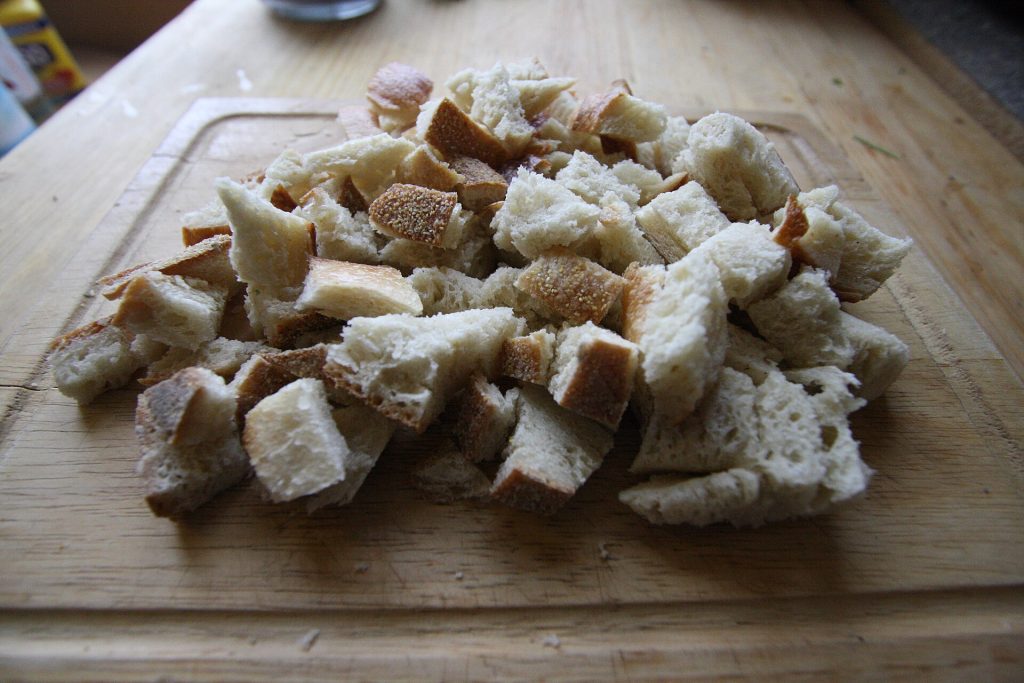
- White sandwich bread: soft and absorbent; gives the classic, spoonable stuffing. Dry the cubes first so they do not turn to paste.
- Sourdough or country loaf: sturdier, with a tang that suits sausage, apples and chestnuts.
- Cornbread: crumbly and slightly sweet or savoury, depending on the recipe; the base of Southern dressing.
- Brioche or challah: rich and eggy; best with fruit and nuts rather than sausage.
- Rice: skips bread entirely, as in Louisiana rice dressing.
A useful rule of thumb: stale or oven-dried bread soaks up broth evenly, while fresh bread collapses. Toast cubes on a sheet pan in a low oven the day before if your bread is fresh.
Inside the bird or in a pan
This is where the stuffing vs dressing distinction stops being about words. The USDA Food Safety and Inspection Service says that for optimal safety and uniform doneness, you should cook stuffing separately. Either way, it must reach a safe minimum internal temperature of 165°F, measured with a food thermometer.
If you do stuff the bird
- Prepare the wet and dry ingredients ahead and chill them, but do not mix them until just before stuffing the bird.
- Spoon the stuffing in loosely, about ¾ cup per pound of poultry. Keep it moist rather than dry, because the USDA notes that heat destroys bacteria more rapidly in a moist environment.
- Check that the centre of the stuffing, as well as the bird, reaches 165°F.
- Let the bird stand 20 minutes before removing the stuffing and carving.
- Take all the stuffing out of the cavity and refrigerate it separately within 2 hours.
Baking it in a dish is simpler and gives you more crisp edges, which many people argue is the best part anyway. For the rest of the meal, see our food culture stories and how to roast a turkey.
FAQ
What is the difference between stuffing and dressing?
Stuffing is cooked inside the bird and dressing is baked separately, by the strict definition. In everyday use, the choice of word is mostly regional, with dressing most common in the South.
Why do Southerners say dressing?
Dressing gained popularity in parts of the US in the 1800s, possibly because it sounded more polite than stuffing. The word stuck most firmly in the South, where cornbread dressing is the standard.
What temperature should stuffing reach?
The USDA says 165°F, measured with a food thermometer, whether it is cooked in the bird or in a dish.
Can I make stuffing the day before?
You can prepare and chill the wet and dry ingredients ahead, but the USDA advises not mixing them until just before cooking or stuffing the bird.
Pick your style this year
Choose one base, one region and one method this year. If your family has always had sausage and sage stuffing, try a small pan of cornbread or oyster dressing next to it and let the table vote. Bake it in a dish, check it with a thermometer, and look through our Thanksgiving side dishes for what to serve alongside.
Featured photo: Balsamic Chicken and Cornbread Dressing by Infrogmation of New Orleans, BY-SA 4.0.