Non-alcoholic wine is real wine that has had its alcohol removed after fermentation, usually by vacuum distillation, a spinning cone column or reverse osmosis. In the US, a bottle sold as dealcoholized must contain less than 0.5% alcohol by volume, and one labeled alcohol-free must have no detectable alcohol at all. The best buys tend to be sparkling wines, where bubbles and acidity make up for the body that alcohol usually provides.
Quality varies far more than in regular wine, because removing alcohol also strips out some aroma and texture. Knowing how a bottle was made and how to read its label narrows the field quickly.
This guide covers the methods, US labeling rules, the styles most worth buying, what to check on the label, three budget approaches and how to serve it.
Key takeaways
- Non-alcoholic wine starts as ordinary wine; the alcohol is removed afterwards.
- In the US, ‘dealcoholized’ and ‘alcohol-removed’ wines must contain less than 0.5% ABV; ‘alcohol-free’ means no detectable alcohol.
- Wine under 7% ABV is regulated by the FDA as a food, so labels carry an ingredient list and nutrition information.
- A 2021 study found reverse osmosis kept fruity and floral aromas better than vacuum distillation.
- Start with sparkling styles, check the sugar line on the label, and serve well chilled.
How non-alcoholic wine is made
Every method solves the same problem: separating ethanol from the many other compounds that make wine taste like wine. None does it perfectly, and the method used shapes what ends up in the glass.
Vacuum distillation
Lowering the pressure lowers the boiling point, so alcohol can be evaporated at a relatively mild temperature rather than by boiling the wine. The trade-off is that delicate aroma compounds evaporate with it. In a 2021 study in the journal Membranes, researchers ran vacuum distillation with a 35°C water bath and found it removed 94 to 99% of some fruity aroma compounds.
Spinning cone column
A spinning cone column is a refinement of distillation. Wine flows down a column of inverted cones spinning under vacuum, spreading it into a thin film. A first, gentle pass strips off the volatile aromas, which are condensed and kept; a second, warmer pass removes the alcohol. The saved aroma fraction can then be blended back into the dealcoholized wine.
Reverse osmosis
Reverse osmosis uses pressure to push wine against a very fine membrane. Water and ethanol pass through; larger flavor and color molecules stay behind. The alcohol is then separated from that water, and the water is returned to the wine. In the same Membranes study, reverse osmosis at 20°C preserved fruity and floral notes, color intensity, sweetness and aroma intensity better than vacuum distillation, and tasting panels rated those wines higher.
| Method | How it works | What to expect in the glass |
|---|---|---|
| Vacuum distillation | Evaporates alcohol at reduced pressure and lower temperature | Aroma losses can be heavy |
| Spinning cone column | Thin-film distillation in two passes, capturing aroma first | Aroma can be added back after alcohol removal |
| Reverse osmosis | Membrane separates water and ethanol from larger flavor molecules | Better aroma retention in comparative testing |
Most producers don’t name the method on the label, but many explain it on their websites. When a producer is open about the process, that is usually a good sign.
Reading a US label
Non-alcoholic wine sits in a different regulatory lane from regular wine. Under federal rules at 27 CFR 4.10, the wine labeling regulations enforced by the TTB apply to wine with not less than 7% and not more than 24% alcohol by volume. Below 7%, labeling falls to the FDA.
The FDA’s compliance policy on dealcoholized wine sets out the terms you’ll see:
- “Dealcoholized” or “alcohol-removed” must appear right before the word “wine” or the wine type, in letters of the same size. These products must state that they contain less than 0.5 percent alcohol by volume.
- “Non-alcoholic” may appear as an extra description, but not in place of “dealcoholized” or “alcohol-removed.” It allows trace alcohol below 0.5% ABV.
- “Alcohol-free” is reserved for products with no detectable alcohol.
Because these are FDA-regulated foods, their labels carry the kind of information you’d find on other packaged foods, including an ingredient statement and a Nutrition Facts panel. That makes it easy to compare sugar and calories across bottles, something regular wine labels rarely show.
If you need zero, buy ‘alcohol-free.’ ‘Non-alcoholic’ means under half a percent, not nothing.
Which styles work best
Not every style survives the loss of alcohol equally. Alcohol carries aroma and gives wine weight on the palate, so styles that rely on freshness, acidity and bubbles tend to hold up best.
- Sparkling whites and rosés: the easiest place to start. Carbonation adds texture and lift that partly replaces the missing body.
- Aromatic whites: grapes such as Riesling and Sauvignon Blanc bring strong aromas that can come through the process.
- Still rosé: light, fruity and served cold, which hides some thinness.
- Still reds: the hardest category. Without alcohol, tannin can taste harsher and the wine thinner. Try reds last, and lean toward lighter, fruit-forward styles.
What to check before you buy
Use this checklist in the shop or when reading an online description.
- The alcohol wording. Decide whether you need alcohol-free (no detectable alcohol) or whether under 0.5% ABV is fine for you.
- Sugar per serving. Some bottles are noticeably sweeter than others. Check the Nutrition Facts panel and compare.
- Calories. Also on the panel. Don’t assume they match regular wine in either direction; read the number.
- Ingredients. Look for added grape juice, sugar, flavorings or preservatives, all of which will be listed.
- Method transparency. A producer that explains its dealcoholization process has usually thought about quality.
- Dates. Check for a best-before date on the label, and buy from shops with good turnover.
Three budget tiers
Prices move fast in this category, so rather than quote numbers that will date, here is how to think about spending.
Everyday
Supermarket-level bottles are fine for spritzers, sangria-style punches and cooking. Choose sparkling or rosé, check the sugar line, and don’t expect complexity.
Dinner party
Mid-range bottles from producers that name their method, often reverse osmosis or spinning cone, are where quality improves most noticeably. This is the tier to buy for pairing with food.
Special occasion
At the top end you’ll find dealcoholized wines from established wine estates and traditional-method sparkling styles. They’re worth it for toasts and celebrations where the non-drinkers deserve the same bottle quality as everyone else.
For restaurants, the dinner-party tier is the natural by-the-glass pour. Our guide to building a zero-proof drinks list covers pricing and presentation.
How to serve it
- Serve colder than you would regular wine. Chill brings acidity forward and masks thinness.
- Use proper glassware. A wine glass or flute signals that this is wine, not juice.
- Follow the label once opened. Check the storage advice on the bottle, reseal it and keep it in the fridge.
- Pair with salt, fat and acid. Fried starters, cheese boards and citrusy dishes flatter lighter wines.
- Try it mixed. A splash of soda water and a citrus twist turns an ordinary still white into a good spritz.
Planning a menu around it? Our wine pairing basics apply here too, with a bias toward lighter dishes.
FAQ
Does non-alcoholic wine contain any alcohol?
It can. Products labeled dealcoholized or non-alcoholic may contain up to, but less than, 0.5% ABV. Only alcohol-free products must have no detectable alcohol.
How is non-alcoholic wine different from grape juice?
It starts as fermented wine, so it has the flavor compounds that fermentation creates. The alcohol is removed afterwards. Grape juice has never been fermented.
Which non-alcoholic wine style should I try first?
Sparkling. The bubbles and acidity make up for much of the body lost with the alcohol.
Who regulates non-alcoholic wine in the US?
The FDA, because wine below 7% ABV falls outside the TTB’s wine labeling rules. That is why these labels carry ingredient and nutrition information.
Build a tasting shortlist
Pick three bottles: one sparkling, one aromatic white and one rosé, ideally from producers that explain their method. Chill them well, taste them side by side with a salty snack, and note the sugar per serving from each label. Keep the winner as your house bottle and try a red only once you know what you like. For more on what to pour, browse our drinks section.
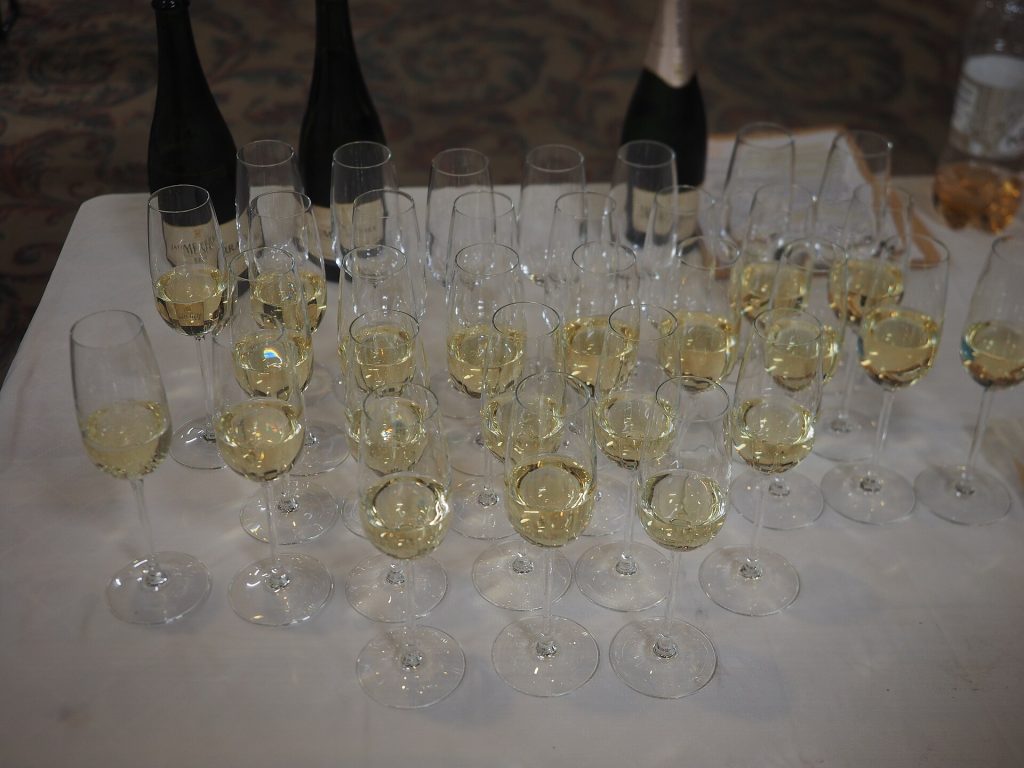
Featured photo: Glasses of sparkling wine in Katajanokka in October 2025 by JIP, BY-SA 4.0.