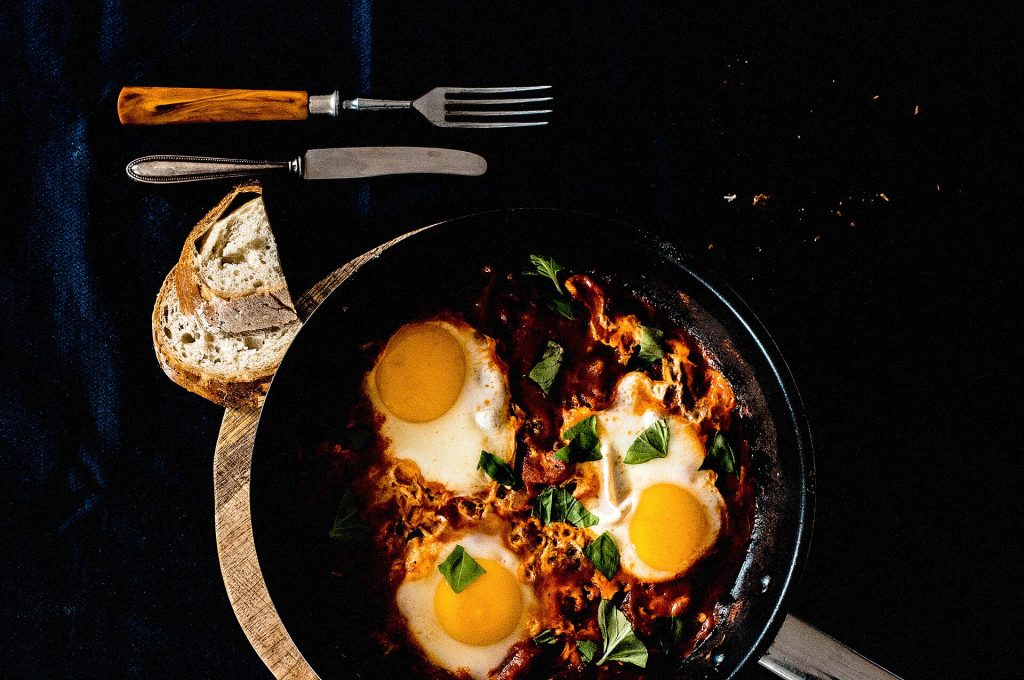
Here is how to make shakshuka in one breath: soften onion, pepper and garlic in olive oil, stir in cumin and paprika, add tomatoes and simmer until thick, then make little wells, crack in the eggs, cover and cook until they’re done the way food safety guidance recommends. Serve it straight from the pan with bread for scooping. The whole thing takes about 35 minutes and one skillet.
It is one of the few dishes that works just as well at a late brunch as it does for a Tuesday dinner, and it has earned a permanent place on cafe menus far from where it started. The technique is simple, but a few details decide whether you get a rich, jammy sauce or a watery one.
This guide covers where the dish comes from, a reliable base recipe, the egg question most recipes skip over, and variations including green shakshuka and a feta finish.
Key takeaways
- Shakshuka is a North African dish of eggs cooked in a spiced tomato and pepper sauce, later embraced in Israel and far beyond.
- Cook the sauce down until it is thick enough to hold a well, or the eggs will sink and spread.
- Cumin and paprika are the backbone; add chilli to taste.
- Food safety agencies advise cooking eggs until both white and yolk are firm; use pasteurized eggs if you want runny yolks.
- Green shakshuka swaps tomatoes for greens and herbs; feta adds a salty finish to either version.
Where shakshuka comes from
According to Encyclopaedia Britannica, shakshouka, as it is also spelled, is a North African dish of poached eggs in a spicy tomato sauce seasoned with peppers, onion, garlic and spices. The name comes from Maghrebi Arabic and means “mixed.”
Tomatoes and peppers reached the Maghreb from the Americas in the mid-16th century, and the dish became standard fare in Libya, Tunisia, Morocco and Egypt. Jewish emigrants from North Africa brought it to Israel in the 1950s and 60s, with another wave in the 1990s, where it became hugely popular. Britannica also notes a Spanish habit of adding chorizo, and a Turkish dish called şakşuka that is quite different: fried eggplant and vegetables with no eggs at all.
That history explains the flexibility. There is no single correct shakshuka, just a method and a family of seasonings. For more dishes with deep regional roots, browse our food culture stories.
Ingredients and kit
This base recipe serves two generously or four with plenty of bread. You need a 10 to 12-inch skillet with a lid; a wide, heavy pan gives the sauce room to reduce.
| Ingredient | Amount | Why it’s there |
|---|---|---|
| Olive oil | 3 tablespoons | Carries the spices and gives the sauce body |
| Onion, finely sliced | 1 medium | Sweetness and bulk |
| Red bell pepper, sliced | 1 large | The pepper half of the pepper-tomato base |
| Garlic, sliced | 3 cloves | Depth |
| Ground cumin | 1 teaspoon | Earthy warmth |
| Sweet or smoked paprika | 2 teaspoons | Colour and a mild, rounded heat |
| Chilli flakes or harissa | To taste | Heat |
| Whole peeled tomatoes | 1 can (about 28 oz) | The sauce itself; crush by hand |
| Eggs | 4 to 6 | Cooked right in the sauce |
| Salt, pepper, parsley or cilantro | To finish | Seasoning and freshness |
Canned whole tomatoes give a more consistent result than out-of-season fresh ones. In late summer, swap in about two pounds of ripe fresh tomatoes, chopped, and cook them a little longer.
How to make shakshuka, step by step
- Soften the vegetables. Warm the oil over medium heat. Add the onion and pepper with a pinch of salt and cook, stirring now and then, for 8 to 10 minutes until soft and just starting to colour.
- Bloom the spices. Add the garlic, cumin, paprika and chilli. Stir for about a minute until fragrant. Don’t let the garlic brown.
- Add the tomatoes. Pour in the tomatoes and crush them with a spoon or potato masher. Season with salt and pepper.
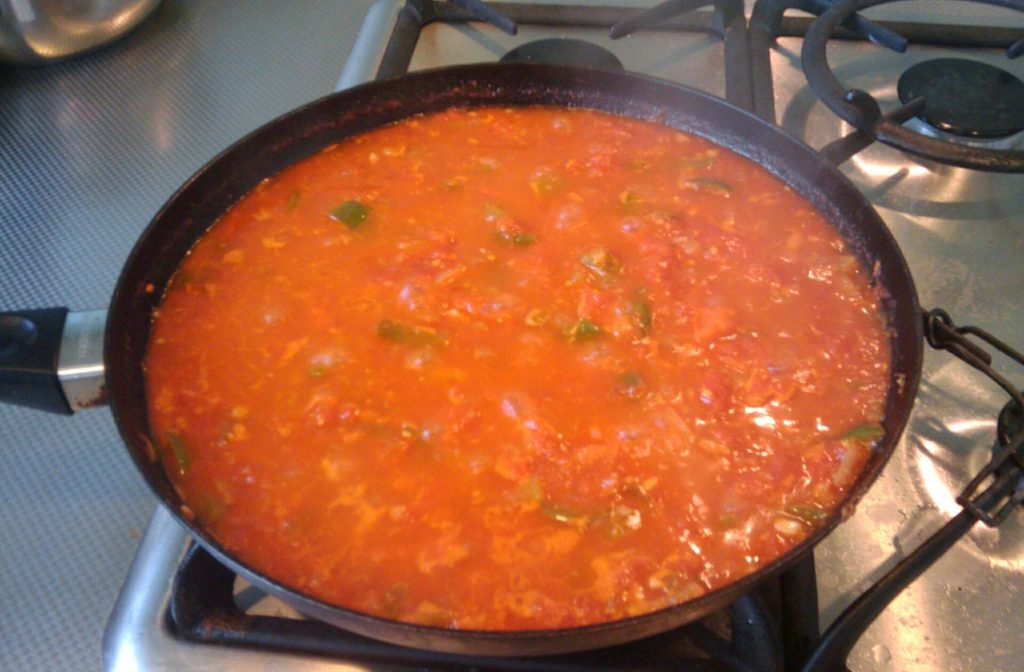
- Reduce the sauce. Simmer uncovered for 10 to 15 minutes, stirring occasionally, until thick enough that a spoon dragged through leaves a trail that holds for a second or two. Taste and adjust the salt and heat.
- Make the wells. Turn the heat to low. Use the back of a spoon to press 4 to 6 shallow hollows into the sauce.
- Crack in the eggs. Crack each egg into a small cup first, then slide it into a well. This keeps shells out of the pan and the yolks intact.
- Cover and cook. Put the lid on and cook gently until the eggs are done (see the next section). Spooning a little sauce over the whites helps them set evenly.
- Finish and serve. Scatter over chopped herbs and, if you like, crumbled feta. Bring the pan to the table with warm bread or pita.
Shakshuka lives or dies by the sauce. Reduce it until it can hold a spoon’s trail, and the eggs will take care of themselves.
Common mistakes
- Watery sauce: the eggs spread out and the whites run into the sauce. Reduce longer before adding them.
- Heat too high after the eggs go in: the bottoms scorch before the tops set. Keep it low and covered.
- Under-seasoning: tomatoes need more salt than you think. Taste before the eggs go in, because you can’t stir afterward.
Getting the eggs right, and safe
Many shakshuka recipes aim for set whites and a runny yolk. It’s worth knowing what the food safety agencies actually advise. The US government’s FoodSafety.gov temperature chart says to cook eggs until the yolk and white are firm, and to cook egg dishes to 160°F. The FDA’s egg safety guidance says the same, noting that fresh eggs can contain Salmonella.
If you prefer a runny yolk
The FDA’s advice for recipes that call for lightly cooked eggs is to use shell eggs treated to destroy Salmonella, such as pasteurized eggs, or pasteurized egg products. The agency also names children, older adults, pregnant women and people with weakened immune systems as being at greater risk of serious illness, so cook the eggs through for anyone in those groups.
How to tell when they’re done
- Whites are fully opaque, with no clear or jelly-like patches near the yolk.
- For guidance-compliant eggs, the yolk is firm when pressed gently with a spoon.
- In a covered pan on low heat, keep checking every minute or so once the whites turn white, since pan size and egg temperature vary.
For leftovers, USDA’s Food Safety and Inspection Service says not to leave eggs out of the refrigerator for more than two hours and to use cooked egg dishes within three to four days. In practice, shakshuka is best eaten fresh, though the sauce alone keeps well and can be reheated before you add new eggs.
Variations worth trying
Once you have the base down, the method adapts easily.
Green shakshuka
Skip the tomatoes and pepper. Soften a sliced leek or onion in olive oil, add garlic, then wilt in a big bunch of chopped greens such as spinach, chard or kale, with a splash of stock or cream to loosen. Season with cumin, a squeeze of lemon and plenty of herbs, then make wells and cook the eggs as before.
Feta and herbs
Crumble feta over the sauce just before covering the pan, so it softens without melting away. Finish with parsley, cilantro or dill.
Other additions
- Roasted eggplant or zucchini stirred into the sauce for a heartier vegetable version.
- Chorizo or merguez browned first, then the vegetables cooked in its fat.
- A spoonful of harissa for smoky, deeper heat.
- Chickpeas added with the tomatoes to stretch it into a fuller dinner.
Looking for more one-pan ideas? Try our easy brunch recipes or explore more egg dishes from around the world.
FAQ
What do you eat with shakshuka?
Bread is the traditional partner, used to scoop up egg and sauce. Pita, crusty sourdough or challah all work, and a simple salad makes it a full meal.
Can I make the sauce ahead?
Yes. Cook the sauce through step 4, cool and refrigerate it. Reheat it in the skillet until simmering, then add the eggs.
Is shakshuka Israeli or North African?
It originated in North Africa, in the Maghreb. North African Jewish emigrants brought it to Israel, where it became widely popular.
How do I keep the yolks runny safely?
Use pasteurized shell eggs, which the FDA recommends for dishes with lightly cooked eggs. With regular eggs, food safety agencies advise cooking until the yolk is firm.
Make it this weekend
Pick up a can of good whole tomatoes, a red pepper and a carton of eggs, pasteurized if runny yolks are your thing, and give yourself a slow Saturday morning. Make the base once as written, then start adjusting: more chilli, a handful of greens, a crumble of feta. By the third pan you’ll have your own version. Find more step-by-step cooking in our recipes section.
Featured photo: Shakshuka (Unsplash) by Jarosław Ceborski jarson, CC0.