A good Halloween dinner party for eight comes down to three decisions made early: a menu that can be cooked ahead and sit on a buffet, a timeline that leaves the day itself for reheating and dressing up, and a plan for allergies and food safety that no guest has to think about. Get those right and the theme can be as spooky as you like.
To show how that works, we follow one hypothetical host from invitation to leftovers. Her choices are illustrative rather than a rulebook, but the food safety numbers come straight from the FDA and USDA.
Halloween falls on a Saturday this year, which makes a sit-down-then-buffet evening easier than usual.
Key takeaways
- Choose dishes that hold well: a slow-cooker main, a soup, a big salad and a dessert made the day before.
- Ask about allergies on the invitation; the FDA recognises nine major food allergens, including sesame.
- Serve only commercially wrapped candy and keep non-food treats in a separate bowl, as FARE’s Teal Pumpkin Project suggests.
- Hold hot food at 140°F or above and cold food at 40°F or below, and discard perishables left out more than two hours.
- Refrigerate leftovers within two hours and use them within three to four days.
In this guide
- Meet the host and the brief
- Building a menu that holds up on a buffet
- The make-ahead timeline
- Setting the budget
- Allergy-safe treats and candy
- Party night: keeping the buffet safe
- FAQ
- Start your own plan this weekend
Meet the host and the brief
Say you are Jess, and you have invited seven friends for dinner on Halloween night. The group includes one guest with a peanut allergy, one vegetarian and two people who will arrive late after taking their kids trick-or-treating. Your kitchen is small, you have one oven, and you want to be in costume, not in an apron, when the doorbell rings.
Those constraints are typical, and they shape every choice that follows. The brief Jess writes for herself is short:
- Eight adults, 7pm start, food served buffet-style from 7:30pm.
- One main that works for latecomers, one vegetarian main, no peanuts anywhere on the table.
- Nothing that needs last-minute frying or searing.
- A themed dessert and a treat bowl for trick-or-treaters at the door.
Building a menu that holds up on a buffet
A buffet punishes dishes that must be eaten the minute they are plated. Jess picks food that tastes as good at 9pm as it does at 7:30.
| Course | Dish | Why it works | Make ahead? |
|---|---|---|---|
| Starter | Roasted pumpkin soup in a slow cooker | Stays hot on the warm setting; vegetarian | Yes, two days ahead |
| Main | Black bean and beef chili, with a separate vegetarian pot | Holds for hours; latecomers can serve themselves | Yes, the day before |
| Side | Cornbread and a roasted squash salad | Room-temperature friendly for a short window | Cornbread the day before |
| Dessert | Dark chocolate pots with “graveyard” cookie crumbs | Chilled, portioned and easy to theme | Yes, the day before |
| Drinks | Pasteurized apple cider, warmed, plus a dark cocktail | Cider is safe and seasonal | Garnishes on the day |
Two things are deliberately missing. There is no raw cookie dough or batter-based treat, because the FDA advises against tasting dough or batter made with uncooked eggs or flour. And the cider is pasteurized, since the FDA warns that unpasteurized juice and cider can contain harmful bacteria.
Every recipe also gets a peanut check. Jess reads ingredient labels for the chocolate, the cookies and any spice blends, because food labels must name major allergens either in the ingredient list or in a “Contains” statement, according to the FDA.
The make-ahead timeline
The timeline is what turns a stressful Saturday into an easy one. Jess works backward from 7pm.
- Seven days out: send a final message asking about allergies and dietary needs, confirm numbers and make the shopping list.
- Three days out: shop for pantry items, decorations, wrapped candy and non-food treats.
- Two days out: buy fresh produce, roast the pumpkin and make the soup. Cool it in shallow containers and refrigerate.
- The day before: make both chilis, bake the cornbread and set the chocolate pots. Lay out serving dishes and label each one.
- Party morning: roast the squash for the salad, set the table and decorate.
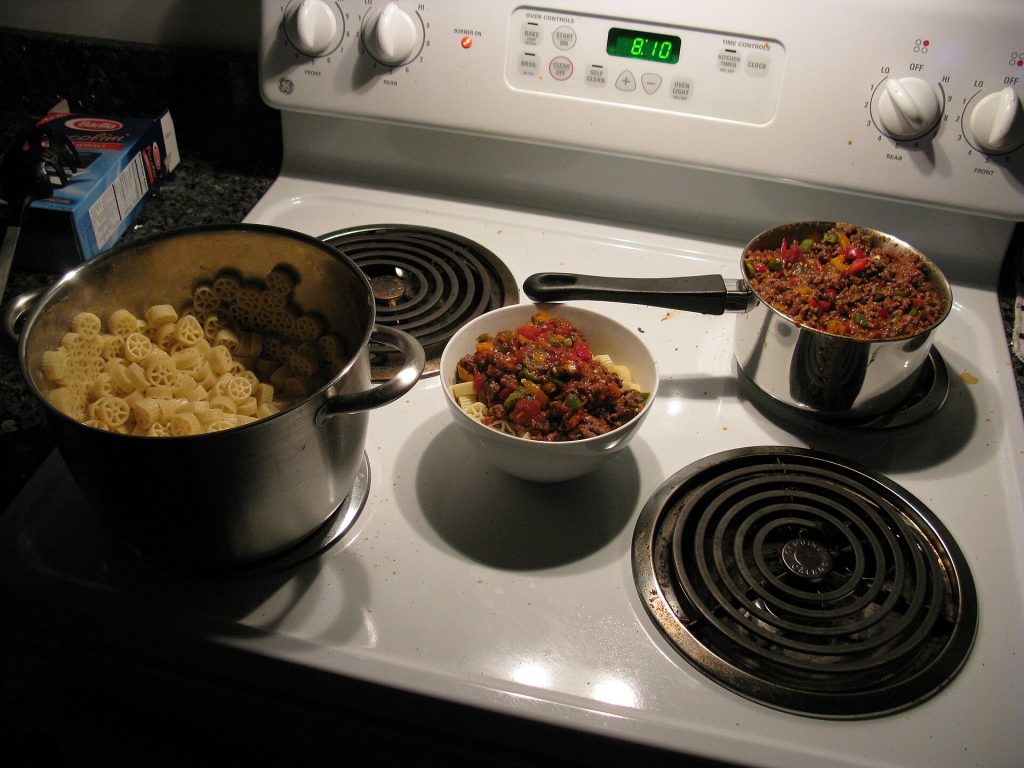
- 5pm: start reheating the chili and soup in slow cookers so they are fully hot well before guests arrive.
- 6:30pm: dress the salad components, fill the ice bowl for cold dishes and put the treat bowls by the door.
- 7:30pm: open the buffet with small platters and keep backups in the fridge and on the stove.
The best Halloween hosts do the scary part on Thursday, so Saturday is only about the costume.
When reheating, Jess checks with a food thermometer. The USDA says reheated foods should reach at least 165°F.
Setting the budget
Rather than a single total, Jess splits her budget into buckets so a big decoration idea cannot quietly eat the food money. Her split, for a dinner of eight, is a useful starting shape:
- Food, about half: chili ingredients, soup, salad, bread and dessert. Beans, pumpkin and squash keep this bucket modest.
- Drinks, about a quarter: cider, one batch cocktail and sparkling water.
- Treats for the door, about a tenth: wrapped candy plus non-food treats.
- Decor and extras, the rest: candles, a few pumpkins and anything reusable next year.
Two savings do the heavy lifting. A chili-and-soup menu leans on inexpensive staples, and asking one friend to bring the cocktail ingredients trims the drinks line. Buying decorations that can come out again every October is the other.
For more ideas on stretching a party budget, see our dinner party planning tips.
Allergy-safe treats and candy
Halloween is the one night your front door is part of the party, so the allergy plan covers guests and trick-or-treaters alike.
At the table
The nine major food allergens the FDA recognises are milk, eggs, fish, crustacean shellfish, tree nuts, peanuts, wheat, soybeans and sesame, which was added in 2021 and has been covered by labelling rules since January 1, 2023. Jess keeps a small card beside each dish listing which of those it contains, so her peanut-allergic guest never has to ask.
At the door
Jess joins the Teal Pumpkin Project, run by Food Allergy Research & Education. The idea is simple: put a teal pumpkin outside to show you have non-food treats such as glow sticks or small toys, and keep food and non-food treats in separate bowls. FARE says roughly one in 13 children in the US has a food allergy.
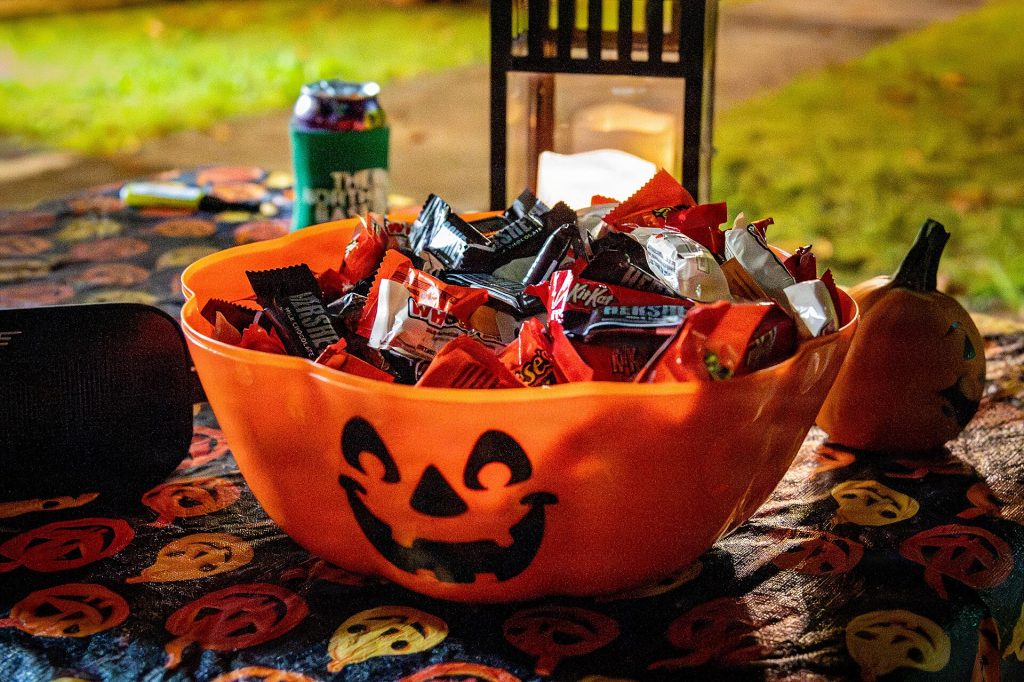
For the candy bowl, she follows the FDA’s Halloween advice for parents in reverse: only commercially wrapped treats, nothing homemade. The FDA also suggests parents inspect wrappers for tears or pinholes and remove choking hazards like hard candy for young children, so skipping loose items makes their job easier.
Party night: keeping the buffet safe
A buffet is where good food goes wrong, because dishes sit out while everyone talks. Jess follows the USDA’s party buffet guidance.
- Keep hot food hot. Chili and soup stay in slow cookers set to hold at 140°F or above.
- Keep cold food cold. The chocolate pots and salad dressing sit in bowls nested in ice to stay at 40°F or below.
- Watch the clock. Perishable food should not sit at room temperature for more than two hours, or one hour if it is above 90°F. Jess notes the time each platter goes out.
- Replace, don’t top up. Fresh small platters replace empty ones instead of new food going on top of dishes guests have already served from.
- Know the danger zone. The USDA says bacteria multiply rapidly between 40°F and 140°F, doubling in number every 20 minutes.
If a game of bobbing for apples breaks out, the FDA advises rinsing the fruit under cool running water and scrubbing with a produce brush first.
After the party
Leftovers go into shallow containers and into the fridge within two hours, per USDA guidance, and get eaten within three to four days or frozen. Jess sends her latecomers home with a container of chili.
For more hosting ideas through the season, browse our lifestyle section.
FAQ
How far ahead can I make food for a Halloween dinner party?
Soups, chili and chilled desserts can be made one to two days ahead and kept in the fridge. Reheat hot dishes to at least 165°F before serving.
How long can party food sit out?
No more than two hours at room temperature, or one hour above 90°F, according to the FDA and USDA. Keep hot dishes at 140°F or above and cold dishes at 40°F or below.
What treats are safe for kids with food allergies?
Non-food treats like glow sticks and small toys are safest. FARE’s Teal Pumpkin Project suggests keeping them in a bowl separate from candy.
Is apple cider safe to serve at a party?
Yes, if it is pasteurized. The FDA warns that unpasteurized juice and cider can contain harmful bacteria.
Start your own plan this weekend
Grab a notebook and write your own brief: number of guests, dietary needs, oven space and start time. Then pick one make-ahead main and work the timeline backward from the doorbell. If you would rather leave the cooking to someone else, our Halloween food ideas include options you can buy in.