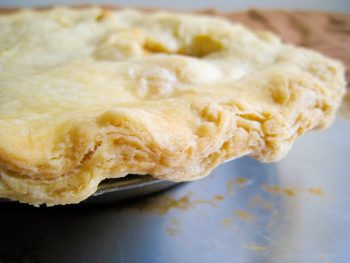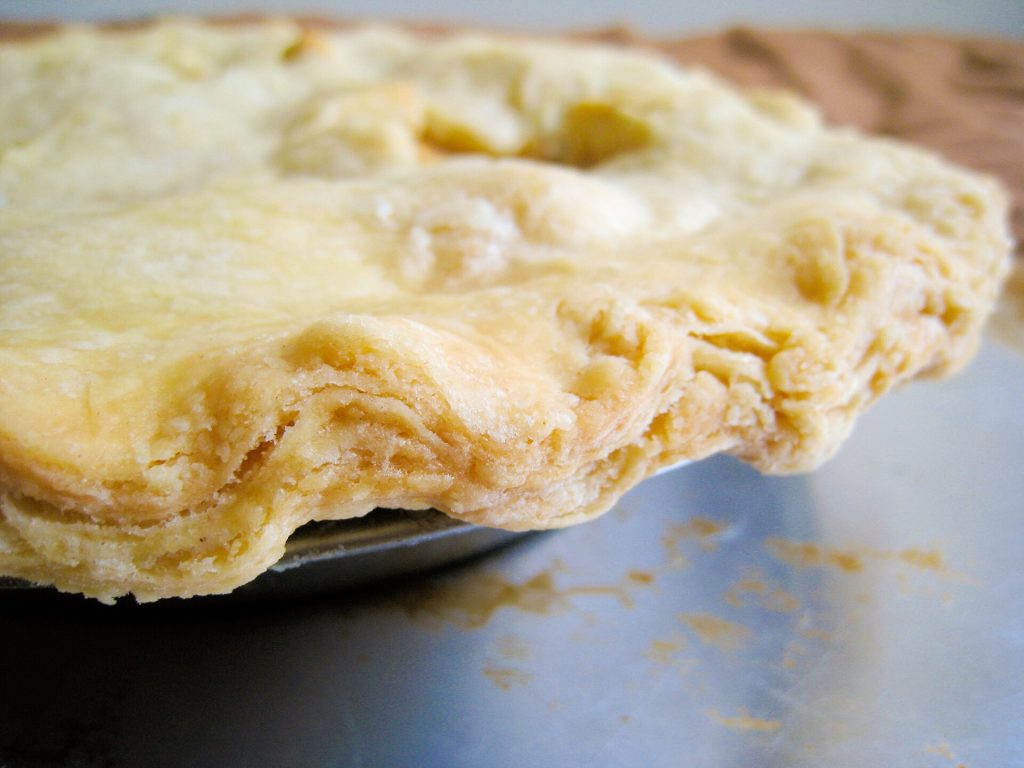
A flaky pie crust comes down to two things: solid pieces of cold fat scattered through the dough, and as little gluten development as you can manage. Keep the fat cold so it doesn’t melt before the oven, add just enough ice-cold liquid to hold the dough together, and handle it as little as possible. The rest of the folklore is negotiable.
And there is a lot of folklore. Butter purists, lard loyalists and the vodka crowd all have a rule, and every family has a grandmother whose crust nobody can match. Some of those rules hold up. Some are half true. One of them, about leaving pumpkin pie on the counter, can make people sick.
With holiday baking weeks away, here are six common pie crust myths, taken one at a time, with what extension food scientists and food-safety agencies actually say.
Key takeaways
- Shortening and lard make a flakier, more tender crust than butter, according to University of Kentucky Extension; butter is chosen mainly for flavour.
- Cold matters: ice-cold liquid keeps the fat from melting, which is where the flakes come from.
- Vodka helps because ethanol doesn’t form gluten, but 80-proof vodka is still 60% water, so it isn’t magic.
- Rerolling scraps toughens dough; patching is better.
- Pumpkin, pecan and custard pies should go in the fridge within two hours of baking and keep 3 to 4 days.
Six pie crust myths at a glance
| Myth | Fact |
|---|---|
| All-butter is the only way to get flakes | Shortening and lard have more shortening power and give a flakier, more tender crust; butter brings flavour |
| Cold ingredients are fussy and optional | Ice-cold liquid keeps the fat solid, and solid fat is what makes flakes |
| Vodka makes any crust foolproof | Ethanol doesn’t form gluten, but 80-proof vodka is 60% water, so technique still matters |
| Scraps can be rerolled as often as you like | Rerolling toughens dough; patch instead |
| Blind baking is only for professionals | Pre-baking the shell is a simple step that helps wet fillings; vent double-crust pies so steam escapes |
| Pumpkin pie is fine on the counter overnight | Egg-rich pies need refrigerating within two hours of baking |
The fat myths
Myth 1: All-butter is the only way to get a flaky crust
Butter has the loudest fan club, but it isn’t the flakiest fat. The University of Kentucky Cooperative Extension’s guide to pies and cobblers says shortening and lard have more shortening power than butter and produce a flakier, more tender crust. Butter’s case is taste. That is why so many bakers split the difference and use butter for flavour with some shortening or lard for texture.
If you go all-butter, accept that it asks more of you: it softens faster in warm hands, so chilling the dough between steps pays off.
Myth 2: Cold ingredients are optional
This one is simply wrong. The same extension guide advises using ice water or ice-cold liquids so the fat does not melt. Flakes form when pieces of fat stay solid in the dough, then melt and release steam in the hot oven, leaving thin layers behind. Melt the fat at the mixing stage and you get a dense, greasy crust instead.
- Cube the fat and chill it until firm before cutting it in.
- Measure the water with ice in it, then pour off just what you need.
- Chill the dough after mixing and again after lining the dish if the kitchen is warm.
Flakes are just cold fat that survived long enough to reach the oven.
The mixing and rolling myths
Myth 3: Vodka makes any crust foolproof
The vodka crust, popularized by Cook’s Illustrated’s foolproof pie dough, rests on real chemistry. As Scientific American explains, water hydrates the flour proteins gliadin and glutenin so they form gluten, which toughens dough. Ethanol doesn’t do that, so swapping some water for vodka lets you add enough liquid for an easy-rolling dough without adding as much gluten.
The catch is in the label. Eighty-proof vodka is 40% ethanol and 60% water, so it still hydrates flour. It gives you more margin for error, not a licence to knead. Cold fat and a light touch still decide the result.
Myth 4: You can reroll the scraps as often as you like
Every time you gather and reroll dough, you work the gluten a little more. The Kentucky guide is direct: patching is preferred to rerolling, because rerolling toughens the dough. Press a scrap into a thin spot or a torn edge with a dab of water, and save the rest for decorations or cinnamon twists.
The same logic applies to mixing. Cutting fat into flour should leave visible, flour-coated pieces of fat. Stop when the dough just holds together when squeezed; it should look a little shaggy, not smooth.
The baking myth
Myth 5: Blind baking is only for professionals
Blind baking just means baking the empty shell, usually lined with parchment and filled with weights, before the filling goes in. It is worth the extra step for wet fillings like custard and pumpkin, because a pre-set crust has a better chance of staying crisp underneath. Cream pies go into a fully baked shell.
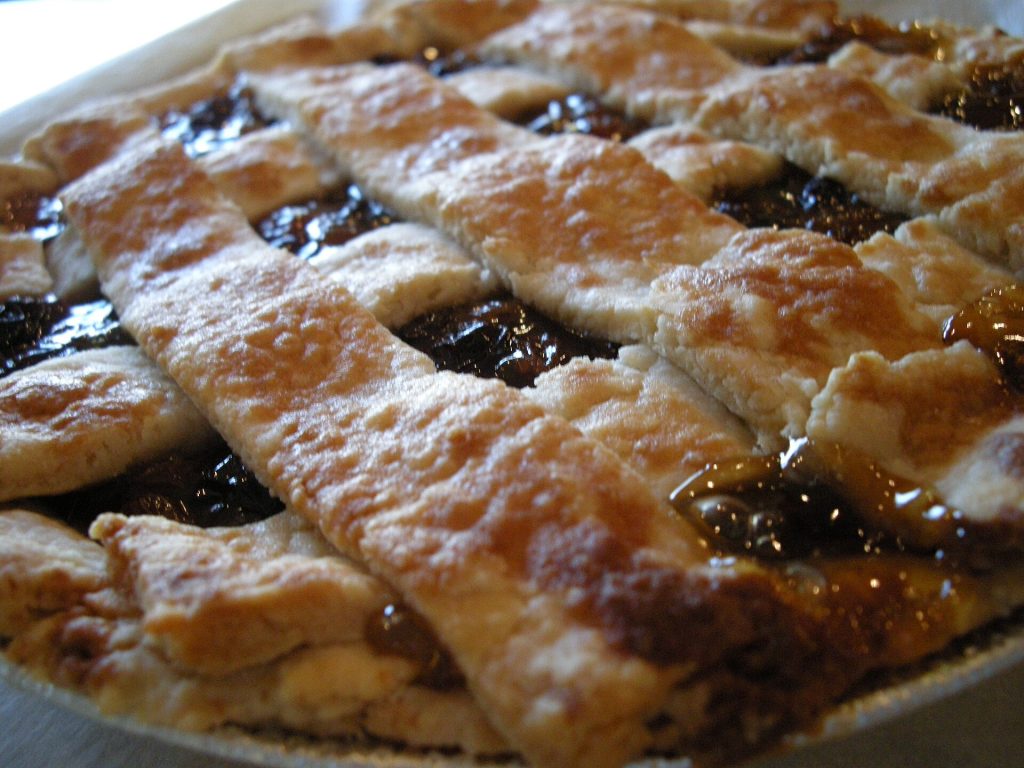
Double-crust fruit pies need something different. The Kentucky guide says to prick the top or cut a decorative vent so steam can escape. Without one, steam builds under the lid and can crack it or push filling out of the edges.
- Line the chilled shell with parchment and fill it right to the rim with weights or dried beans.
- Bake until the edges set, then remove the weights and bake a little longer to dry the base.
- Let it cool before adding a custard filling.
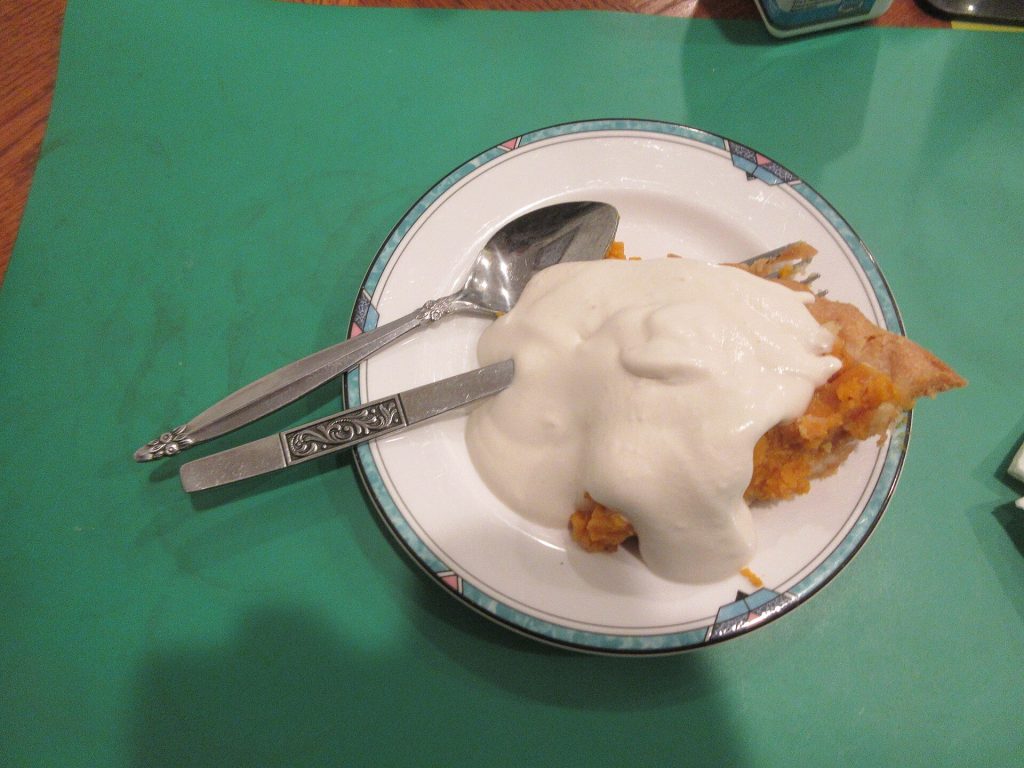
The food-safety myth that ruins holidays
Myth 6: Pumpkin pie is fine on the counter overnight
Plenty of families leave the pumpkin pie out on the sideboard all evening. Food-safety guidance says otherwise. Iowa State University Extension’s AnswerLine advises that all egg-rich pies, which include pumpkin, pecan, custard and meringue, be refrigerated after baking and cooling unless they will be served within two hours. After two hours at room temperature, it warns, they are in danger of growing harmful bacteria.
Once chilled, the federal cold storage chart on FoodSafety.gov gives pumpkin and pecan pies 3 to 4 days in a refrigerator set at 40°F or below, or 1 to 2 months in the freezer. Custard and chiffon pies also keep 3 to 4 days refrigerated, but the chart says not to freeze them.
- Bake custard-style pies the day before, cool them, then refrigerate overnight.
- Bring the pie out for serving and put leftovers back within two hours.
- Freeze pumpkin or pecan pie if you’re baking well ahead; don’t freeze custard pies.
Hosting a crowd? Our guide to holiday baking ahead helps you plan the oven schedule, and you’ll find more tested techniques in our food and recipes section.
FAQ
What is the best fat for a flaky pie crust?
For pure flakiness, shortening or lard, according to University of Kentucky Extension. For flavour, butter. A mix of butter with some shortening or lard gives you some of each.
Can I make a flaky crust without vodka?
Yes. Vodka only limits gluten while you mix and roll. Ice-cold liquid, cold fat and minimal handling do most of the same work, and they are what the extension guidance emphasises.
Why did my crust shrink in the pan?
Shrinking is usually a sign of overworked or stretched dough. Handle it less, don’t stretch it to fit the dish, and chill the lined shell before baking.
How long can pumpkin pie sit out?
No more than two hours at room temperature, then refrigerate. In the fridge it keeps 3 to 4 days.
Make one test crust this weekend
Before the holiday rush, bake one practice crust with your usual recipe, change a single thing, such as swapping a quarter of the butter for shortening or chilling longer, and compare. You’ll learn more from one side-by-side test than from any rule of thumb. Then use our favourite pie fillings to put it to work.
Featured photo: Flaky Vegan Pie Crust (4277580052) by Veganbaking.net from USA, BY-SA 2.0.