The FDA’s proposed front-of-package nutrition label is a small black-and-white “Nutrition Info” box that would sit on the front of most packaged foods. It rates three nutrients, saturated fat, sodium and added sugars, as Low, Med or High. The agency proposed it in January 2025, and as of the latest reporting it is still a proposal: no final rule has been published, so nothing is required on shelves yet.
That gap between proposal and final rule matters. If the rule is finalized in its current form, larger food businesses would get three years to comply and smaller ones four, counted from the final rule’s effective date.
Here is what the box would show, how the ratings work, where the rule stands, and what it means for food brands and for restaurants that sell packaged products.
Key takeaways
- The proposed Nutrition Info box rates saturated fat, sodium and added sugars as Low, Med or High per serving.
- Ratings are based on percent Daily Value: 5% DV or less is Low, 20% DV or more is High, and anything between is Med.
- The FDA proposed the rule on January 14, 2025, and extended the comment period to July 15, 2025. No final rule had been issued as of the latest reporting.
- If finalized, businesses with $10 million or more in annual food sales would have three years to comply; smaller businesses four.
- Restaurant menus are covered by separate menu labeling rules, not by this proposal.
In this guide
- What the Nutrition Info box shows
- How Low, Med and High would be set
- Where the rule stands in late 2026
- The proposed compliance timeline
- What it means for packaged food makers
- What it means for restaurants
- FAQ
- Get ahead of the label now
What the Nutrition Info box shows
The box is designed to be read in a second or two. According to the FDA’s announcement of the proposal, it would display information on saturated fat, sodium and added sugars, and label each one as “Low,” “Med” or “High” for that food.
The proposal frames all three as nutrients to limit. The box does not replace the Nutrition Facts label on the back or side of the pack. The FDA describes it as a complement to that label, a quick summary that points shoppers to the details.
What is not on it
- No calorie rating. Calories are not part of the Low, Med or High scheme, though the FDA notes they may be shown voluntarily elsewhere on the front of the pack.
- No colors or warning symbols. The proposed design is plain black and white.
- No positive nutrients. Fiber, protein and vitamins are not rated; the box only covers nutrients to limit.
Why this design
The FDA tested several formats before choosing this one. In a 2023 experimental study of nearly 10,000 US adults, the agency says the black-and-white Nutrition Info scheme with the percent Daily Value “performed best in helping consumers identify healthier food options.” The box is also meant to work alongside the FDA’s updated “healthy” nutrient content claim and its work on a “healthy” symbol.
How Low, Med and High would be set
The ratings are not a new formula. They borrow the rule of thumb that has sat under the Nutrition Facts label for years: 5% of the Daily Value or less per serving is low, and 20% or more is high. The proposed rule applies that same interpretation to the front of the pack.
- Low: 5% DV or less per serving.
- Med: more than 5% but less than 20% DV.
- High: 20% DV or more.
In practice, that means a product can score High on sodium and Low on added sugars at the same time. Shoppers compare three separate signals rather than a single overall grade, which is a deliberate choice: there is no summary star rating or letter grade.
Three words, three nutrients, one glance. The box is built for the aisle, not the kitchen table.
Where the rule stands in late 2026
This is the part most coverage gets wrong. The rule is still proposed. The FDA’s front-of-package labeling page describes it as a proposed rule, and the agency extended the original May 16, 2025 comment deadline by 60 days to July 15, 2025.
The FDA had at one point projected a final rule by May 2026. That date passed without one. Reporting from Packaging Digest in May 2026 said the agency’s Human Foods Program planned to “assimilate and summarize the public comments and prepare options for leadership” during 2026. An August 2026 industry review also found no final rule had been issued, and noted that no packaged food in the United States is currently required to carry nutrition information on the front of the pack.
What could still change
A final rule can differ from the proposal. The agency could adjust the thresholds, the design, the list of exempt foods or the compliance dates in response to comments. Until a final rule appears in the Federal Register, treat every detail here as the current proposal, not settled law.
The proposed compliance timeline
The proposed clock starts when a final rule takes effect, not when it was proposed. That is why the compliance dates are expressed in years after the effective date rather than calendar dates.
| Business size | Proposed compliance date | Status today |
|---|---|---|
| $10 million or more in annual food sales | 3 years after the final rule’s effective date | No date set; rule not final |
| Less than $10 million in annual food sales | 4 years after the final rule’s effective date | No date set; rule not final |
| Restaurant menus and menu boards | Not covered by this proposal | Separate menu labeling rules already apply to chains |
For planning, that means even a final rule published in the next few months would leave most brands with years before the box becomes mandatory. It does not mean waiting is free: packaging runs, reformulation and new label artwork take time.

What it means for packaged food makers
The proposal would require most foods that must carry a Nutrition Facts label to also carry the Nutrition Info box on the principal display panel, the part of the pack a shopper sees first. The FDA’s own economic analysis estimated annualized costs of about $333 million over ten years, with a range of roughly $191 million to $530 million, covering relabeling and reformulation.
Relabeling
Every covered product would need new front-of-pack artwork. Brands that already redesign labels on a regular cycle can fold the box into a scheduled refresh rather than paying for a one-off change.
Reformulation
The more interesting effect is on recipes. A product sitting just above 20% DV for sodium would show High; trimming it below the line would change the label. That is why the FDA’s cost estimate includes reformulation as well as relabeling: products sitting near a threshold are the obvious candidates.
The box would not be the only label change on the horizon. Our coverage of food labeling changes tracks the other rules that affect what goes on a pack.
What it means for restaurants
Restaurant menus are not part of this proposal. Restaurants that belong to a chain of 20 or more locations operating under the same name already follow the FDA’s menu labeling requirements, in force since May 7, 2018. Those rules require calories for standard menu items, a statement that written nutrition information is available on request, and the line that “2,000 calories a day is used for general nutrition advice, but calorie needs vary.”
Where it could still reach you
- Retail products. If you bottle a signature sauce, package a spice rub or sell jarred dressings through grocery stores, and those products must carry a Nutrition Facts label, the box would likely apply to them too.
- Your suppliers. Packaged ingredients arriving in your kitchen may start carrying the box, which gives your team a quick read on sodium and added sugars.
- Guest expectations. Diners who get used to Low, Med and High in the grocery aisle may start asking similar questions about your menu.
For operators planning a retail line, now is a good moment to review selling restaurant products at retail before new artwork is printed.
FAQ
Is the front-of-package nutrition label required now?
No. It is a proposed rule. As of the latest reporting, no final rule has been issued and no packaged food is required to carry it.
Which nutrients does the Nutrition Info box cover?
Saturated fat, sodium and added sugars, each rated Low, Med or High based on percent Daily Value per serving.
Will calories appear in the box?
Not as part of the Low, Med or High ratings. The FDA notes that calories may be shown voluntarily.
Does this apply to restaurant menus?
No. Chain restaurants with 20 or more locations follow the separate federal menu labeling rules for calories.
When would brands have to comply?
Under the proposal, three years after the final rule’s effective date for businesses with $10 million or more in annual food sales, and four years for smaller businesses.
Get ahead of the label now
If you make or sell packaged food, pull the Nutrition Facts panel for each product and mark where saturated fat, sodium and added sugars fall against the 5% and 20% DV lines. Flag anything sitting near a threshold as a candidate for reformulation, and note which label artwork is due for a refresh anyway. Then check the FDA’s front-of-package page every quarter for a final rule. For more regulatory changes that affect food businesses, follow our industry news coverage, or see how other operators present their menus in our restaurant directory.
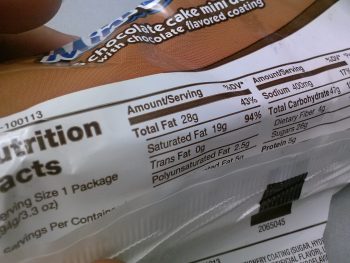
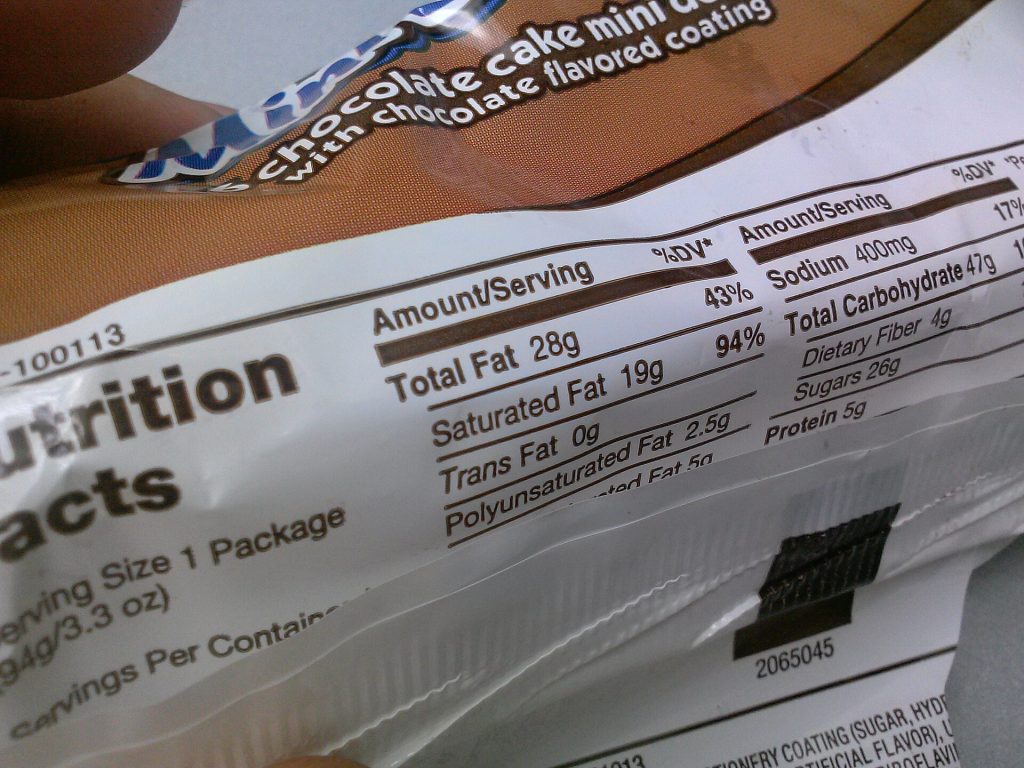
Featured photo: Nutrition Facts label with 94% saturated fat per serving by B137, CC0.