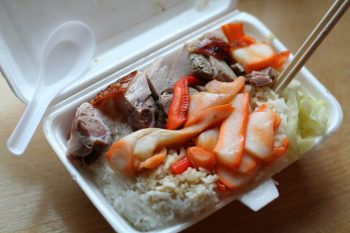
A foam container ban is now law in a dozen US states. Vermont, Maryland, Maine, New York, New Jersey, Colorado, Washington, Oregon, Rhode Island, California, Delaware and Virginia all restrict expanded polystyrene foam cups, clamshells, plates and trays for prepared food. The rules differ in who they cover, which items are exempt and when they started, with Virginia’s final phase arriving on July 1, 2026.
For restaurant operators, the details are where the risk sits. A multi-state chain can face three different exemption lists, and a caterer working across a state line can be compliant on one side and not the other.
Below, we compare every statewide rule we could confirm from the state agency or legislature responsible for it, then walk through coverage, exemptions and penalties.
Key takeaways
- Twelve states restrict expanded polystyrene (EPS) foam food service ware; Vermont and Maryland were among the earliest, both in force since July 1, 2020.
- California’s rule applies because EPS producers failed to hit a 25% recycling rate by January 1, 2025, so sales and distribution are now prohibited.
- Virginia’s ban covered chains with 20 or more locations from July 1, 2025 and every other food vendor from July 1, 2026.
- Raw meat, poultry and seafood trays are the most common exemption, but Oregon’s law has no industry exemptions at all.
- New York City runs its own foam ban separately from New York State.
In this guide
- The state-by-state comparison
- What counts as a foam container
- The exemptions that matter to restaurants
- The newest rules: California, Delaware and Virginia
- Enforcement and penalties
- FAQ
- Audit your packaging before the next order
The state-by-state comparison
The table below lists each statewide rule, the date it applied to food service, and the headline exemption. Dates come from each state’s environmental or health agency, or from its legislature where the agency page was silent.
| State | Applies to food service from | What’s covered | Notable exemptions |
|---|---|---|---|
| Vermont | July 1, 2020 | EPS plates, cups, trays, egg cartons, take-out containers | Trays for uncooked meat, fish, poultry or seafood; products packaged out of state |
| Maryland | July 1, 2020 | EPS single-use containers, cups, plates and trays | Egg cartons shipped in, raw meat packaging, food pre-packaged before receipt |
| Maine | July 1, 2021 | Foam containers, bowls, plates, trays, cartons, cups, lids, sleeves, stirrers | Raw protein packaging until July 1, 2027; licensed hospitals; seafood shipping coolers |
| New York | January 1, 2022 | Foam cups, bowls, plates, trays and containers, plus packing peanuts | New York City regulated separately; coolers added January 1, 2026 |
| New Jersey | May 4, 2022 | All polystyrene foam food service products | Temporary exemptions (soda spoons, small hot-food portion cups, raw meat trays); hardship waivers |
| Colorado | January 1, 2024 | Foam cups and food containers from restaurants | Existing stock could be used up after the start date |
| Washington | June 2024 | Foam plates, bowls, clamshells, trays, cups and coolers | Raw meat, seafood, produce and eggs; medical items; perishable shipping |
| Oregon | January 1, 2025 | Foam containers for prepared food, packing peanuts, PFAS foodware | None; the law gives DEQ no power to exempt |
| Rhode Island | January 1, 2025 | Foam cups, lids, sleeves, stirrers and containers for prepared food, plus plastic stirrers | Nursing facilities, food pantries, farmers markets, some hospitals, agricultural fairs |
| California | Announced April 4, 2025 | Sale and distribution of EPS food service ware | Triggered by a missed recycling target, not a list of items |
| Delaware | July 1, 2025 | Foam packaging for ready-to-eat food | Pre-packaged food; meals for patients or residents of health-care providers |
| Virginia | July 1, 2025 (chains of 20+) / July 1, 2026 (all others) | Foam containers used by food vendors, including schools | One-year local hardship exemptions, renewable on application |
Two patterns stand out. The early laws in Vermont and Maryland focused on food service businesses, while later states such as Washington and Oregon went after the sale of foam products themselves, which reaches distributors and retailers too. And the most recent rules, in California and Virginia, use very different mechanisms to reach the same result.
What counts as a foam container
Every state here targets expanded or foamed polystyrene, the light, white material most people call Styrofoam. Rigid, non-foamed plastics are a separate matter, and a clear polystyrene lid is not automatically caught by a foam ban.
The core items
Across the states, the covered list is broadly similar:
- Clamshells and hinged take-out boxes.
- Hot and cold cups, and in several states their lids and sleeves.
- Plates, bowls and trays used to serve prepared food.
- Egg cartons, in Vermont’s case.
- Stirrers, in Maine and Rhode Island.
Some states go wider than the dining room. Washington’s rule, as the state’s Department of Ecology explains on its expanded polystyrene ban page, also covers portable foam coolers and, from June 2023, foam packing peanuts. New York added foam coolers and ice chests not fully enclosed in a durable outer container from January 1, 2026. Oregon’s law bans foam packing peanuts and foodware containers with intentionally added PFAS alongside foam containers.
Who is covered
Maryland’s Department of the Environment says its rule reaches restaurants, cafeterias and other establishments that sell or provide food and drink, including those run by schools and government agencies, plus manufacturers, distributors and retailers of food service products. Maine lists an even broader set, from churches and food pantries to hospital cafeterias and workplace cafes.
That breadth matters for caterers and ghost kitchens. If your business hands prepared food to a customer, assume you are in scope until your state agency tells you otherwise.
The exemptions that matter to restaurants
Exemptions are where the states diverge most. The single most common carve-out is packaging for raw meat, poultry and seafood, which appears in some form in Vermont, Maryland, Maine, Washington and New Jersey’s original law.
Food packaged before it reaches you
Several states exempt food that arrives already packed in foam. Maryland exempts food and beverages packaged in EPS before a Maryland food service business receives them, and Delaware exempts pre-packaged food. Vermont exempts products packaged out of state. None of these let a restaurant pack its own food in foam.
Time-limited exemptions
Watch the expiry dates. Maine’s exemption for raw protein packaging runs until July 1, 2027. New Jersey’s 2021 fact sheet listed exemptions for long-handled soda spoons, portion cups of 2 ounces or less for hot foods and raw meat trays, with an original expiry of May 4, 2024, so check the Department of Environmental Protection for their current status before relying on them.
An exemption is a deadline with a grace period, not a permanent pass.
States with almost none
Oregon stands apart. Its Department of Environmental Quality says the law does not exempt any specific industries and does not authorise the department to create exemptions. Colorado’s approach was simpler still: restaurants could use up foam stock bought before January 1, 2024, and then had to stop.
The newest rules: California, Delaware and Virginia
California
California never passed a standalone foam ban. Instead, its 2022 packaging law, SB 54, required EPS food service ware to reach a 25% recycling rate by January 1, 2025. CalRecycle says that requirement has not been met, so producers are prohibited from selling, offering for sale, distributing or importing EPS food service ware, including take-out containers and cups, in or into California. The state announced the prohibition on April 4, 2025.
Delaware
Delaware’s food code chapter on single-use plastics bars food establishments from providing ready-to-eat food in polystyrene foam packaging. The prohibition took effect on July 1, 2025, and from July 1, 2026, a violation is treated as a core item violation of the Delaware Food Code, subject to administrative penalties.
Virginia
Virginia phased its rule in. According to the Virginia Department of Environmental Quality, food vendors with 20 or more locations in the state had to stop using EPS containers on July 1, 2025, and all other vendors followed on July 1, 2026. Localities can grant a one-year exemption for undue economic hardship, and vendors can reapply before it expires.
Enforcement and penalties
Most states lead with education and warnings before fines, but the penalties are real once they arrive.
- Maryland: a written notice, three months to correct, then a penalty of up to $250. Counties may set stricter rules, as the Maryland Department of the Environment notes.
- Washington: up to $250 for a first offense and $1,000 for repeat violations after continued non-compliance.
- New Jersey: a warning for the first violation, fines of up to $1,000 a day for a second and up to $5,000 a day for later offenses.
- Rhode Island: fines of up to $100.
- Colorado: enforcement is local, and state law allows injunctive relief and civil penalties. Colorado also repealed its preemption law on July 1, 2024, so cities can now set stricter rules.
Local rules can be tougher than state law. Before you place a bulk packaging order, check your city and county as well as the state. Rising packaging costs make this a good moment to revisit your takeout packaging choices.
FAQ
Is Styrofoam banned nationwide?
No. There is no federal ban on foam food containers. The rules above are state laws, and many cities and counties have their own.
Can I still use foam cups for hot drinks?
Not in the states listed here, where cups are among the core covered items. Lids and sleeves are also covered in several states, including Maine and Rhode Island.
Does the ban apply to meat trays at my butcher counter?
Often not. Raw meat, poultry and seafood packaging is exempt in several states, but not in Oregon, and Maine’s exemption ends July 1, 2027.
Does New York’s ban apply in New York City?
New York City runs its own separate ban, so NYC operators should follow the city’s rules rather than the state’s.
Audit your packaging before the next order
Pull your last three packaging invoices and list every foam item on them, including cups, lids, portion cups and meat trays. Match each one against your state’s row in the table, then ask your distributor for compliant alternatives and a price comparison before your next order. For more regulatory changes that affect your kitchen, follow our industry news coverage and our guide to new restaurant regulations, or see how other operators handle take-out in our restaurant directory.
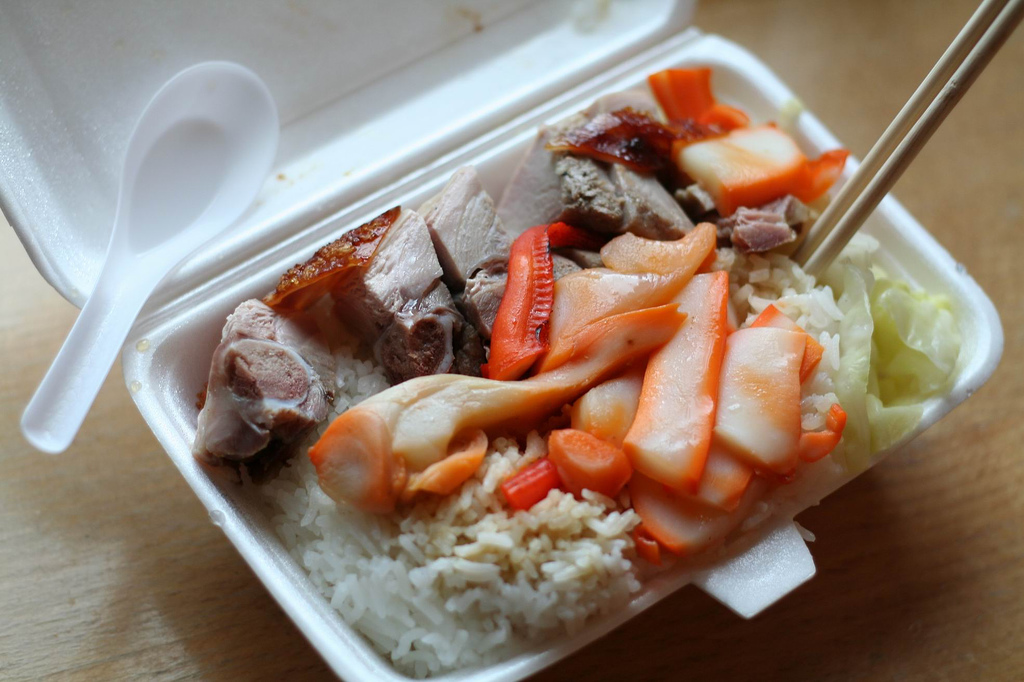
Featured photo: Yummp hk lunchbox by thomas yuan, BY 2.0.