Australia’s commercial kitchen sector faces transformative regulatory changes as government expansion of energy efficiency standards drives unprecedented equipment modernization across the hospitality industry. This policy shift creates new compliance frameworks while market growth accelerates toward USD 307 million by 2030.
GEMS Scheme Expansion Creates New Compliance Framework
The Department of Climate Change, Energy, the Environment and Water announced significant expansion of the Greenhouse and Energy Minimum Standards (GEMS) scheme following ministerial agreement on July 19, 2024. Energy and Climate Change Ministers agreed to develop a comprehensive 10-year Equipment Energy Efficiency Program strategy, creating forward planning for energy efficiency requirements across multiple appliance categories.
According to the Department of Climate Change, Energy, the Environment and Water (19 July 2024), the GEMS scheme expansion includes developing updated minimum energy performance standards for various commercial appliances. The program demonstrates measurable impact, with the GEMS scheme reducing electricity consumption by between 5.5 and 8.5 gigawatt hours in 2022-23, saving Australian households and businesses between $1.3 and $2.1 billion.
The regulatory framework operates under the Greenhouse and Energy Minimum Standards Act 2012, which promotes development and adoption of appliances using less energy and producing fewer greenhouse gases. This legislation affects commercial kitchen operators by establishing minimum energy performance standards that equipment must meet before registration and supply in Australia.
Commercial kitchen equipment falls under increasing scrutiny as regulations expand beyond traditional household appliances. Industry operators must navigate compliance requirements while equipment suppliers adapt product lines to meet enhanced efficiency standards.
Commercial Kitchen Equipment Market Responds to Efficiency Mandates
Australia’s commercial cooking equipment market demonstrates robust growth driven by efficiency mandates and operational demands. According to Next Move Strategy Consulting (May 23, 2025), the Australia commercial cooking equipment market revenue reached USD 178.3 million in 2023 and is projected to reach USD 307 million by 2030, at a CAGR of 7.6%.
Market volume data reveals equally impressive expansion, with equipment units growing from 26 thousand in 2023 to a projected 56 thousand units by 2030, representing a compound annual growth rate of 10.9%. Modern commercial cooking equipment designs increasingly emphasize energy efficiency, helping businesses lower utility costs and environmental impact.
The Expert Market Research analysis (2024) indicates that energy-efficient appliances gain significant traction as hospitality businesses prioritize solutions compliant with energy efficiency standards set by the Equipment Energy Efficiency Program. Commercial kitchens actively seek equipment aligned with eco-friendly practices across Australia and New Zealand.
Industry expansion reflects broader hospitality sector growth, with Wendy’s planning to open 200 restaurants across Australia by 2034 through master franchise agreement with Flynn Restaurant Group. This development highlights substantial opportunities within Australia’s hospitality cooking equipment sector requiring energy-efficient solutions for high-volume food production.
Regulatory compliance adds complexity to equipment selection processes. Next Move Strategy Consulting notes that stringent requirements including food safety standards and emissions regulations increase costs and complexity for equipment compliance, particularly impacting small and medium-sized enterprises.
European Efficiency Engineering Meets Australian Standards
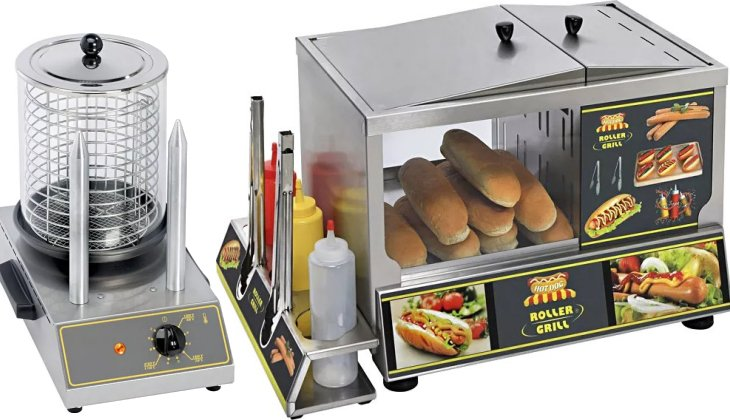
European manufacturers leverage advanced energy efficiency engineering to meet Australia’s evolving regulatory requirements. Companies like Roller Grill, with over 75 years of French manufacturing expertise, position themselves strategically in the Australian market through proven energy-efficient equipment design.
The organization’s extensive product range includes high-performance, compact solutions designed for intensive commercial use. Roller Grill’s professional catering equipment incorporates French engineering principles emphasizing energy efficiency across planchas, ovens, crepe makers, waffle makers, and specialized commercial appliances.
European equipment design philosophy aligns with Australian efficiency mandates through integrated technology solutions. Smart appliances equipped with sensors and connectivity features enable precise monitoring and control, optimizing cooking processes while reducing energy consumption. This approach addresses both regulatory compliance and operational cost management for Australian foodservice operators.
International expertise becomes increasingly valuable as Australian regulations mirror global efficiency trends. The firm’s presence across 100+ countries provides insights into diverse regulatory environments, enabling adaptation of European efficiency technologies to Australian market requirements.
IoT-enabled equipment allows real-time data monitoring and analysis, empowering kitchen staff to make informed decisions for improved performance. These innovations reduce energy consumption and waste while meeting rising demand for sustainable practices in Australia’s food service industry.
Cost-Benefit Analysis for Australian Foodservice Operators
Australian hospitality businesses face complex financial calculations when evaluating energy-efficient equipment investments. According to Sustainability Victoria, managing heating and cooling systems can reduce energy bills by up to 50%, especially for hospitality businesses requiring kitchen cooling.
Equipment upgrade decisions must balance initial capital expenditure against long-term operational savings. The GEMS scheme demonstrates measurable financial benefits, with the program saving Australian businesses between $1.3 and $2.1 billion in 2022-23 while reducing emissions by 4.2 to 6.5 megatonnes of carbon dioxide equivalent.
Commercial kitchen operators benefit from multiple efficiency improvements. Sustainability Victoria research indicates that businesses upgrading refrigeration equipment to energy-efficient models decrease energy use significantly while supporting environmental objectives. Gas appliances remain cheaper to operate but are less energy efficient compared to induction cooktops, requiring increased ventilation and cooling systems.
Dishwasher efficiency represents substantial cost management opportunity, as these appliances consume large portions of hospitality energy budgets through water heating requirements. Upgrading to energy-efficient dishwashers reduces operational costs while meeting regulatory compliance standards.
The Bonafide Research analysis (2025) projects the Australian commercial cooking equipment market growing at 7.82% CAGR from 2025 to 2030, driven by energy efficiency requirements and operational cost management. Investment in energy-efficient equipment becomes essential for maintaining competitiveness and profitability in the expanding foodservice sector.
Financial incentives support equipment modernization through various government programs. Victorian Energy Upgrade programs offer discounted energy-efficiency products and services through accredited providers, reducing initial investment barriers for hospitality businesses.
Strategic Equipment Planning in Australia’s Growing Hospitality Sector
Australia’s hospitality sector expansion creates strategic opportunities for energy-efficient equipment adoption. According to Expert Market Research Australia (2024), the Australia hospitality market reached AUD 102.05 billion in 2024, with projected growth at 3.80% CAGR to AUD 148.18 billion by 2034.
Tourism industry recovery drives commercial kitchen equipment demand across diverse applications. The Future Market Insights report (May 2, 2025) projects Australia’s food service equipment market reaching USD 1,664.7 million by 2035, with key growth factors including preference for quick-service restaurants, technological advancements in cooking equipment, and focus on operational efficiency.
Strategic planning requires consideration of evolving regulatory landscapes and consumer preferences. 76% of travellers indicated higher likelihood of booking hotels with green certification according to Booking.com research (2023), while 43% express willingness to invest more in sustainable accommodations.
Equipment selection strategies must accommodate diverse operational requirements from fine dining establishments to institutional catering services. Australia’s multicultural food culture creates demand for specialized cooking appliances, from traditional grills to Asian woks, pizza ovens, and sous-vide machines.
Technology integration becomes critical for competitive positioning. Smart technology and automation rapidly transform commercial kitchen landscapes, with IoT-enabled equipment allowing remote monitoring, optimization of energy consumption, and accurate cooking standards. These capabilities address labor shortage challenges while improving operational efficiency.
Market consolidation through international franchise expansion requires standardized equipment solutions meeting efficiency requirements. The growing presence of global foodservice chains in Australia drives investment in commercial cooking equipment supporting scalable operations while maintaining energy efficiency standards aligned with both local regulations and corporate sustainability objectives.
Sources:
1. Department of Climate Change, Energy, the Environment and Water – “Improving energy efficiency standards of more appliances for consumers” (July 19, 2024)
2. Next Move Strategy Consulting – “Australia Commercial Cooking Equipment (CCE) Market Analysis 2024-2030” (May 23, 2025)
3. Expert Market Research – “Australia Commercial Kitchen Appliances Market Size 2034” (2024
4. IMARC Group – “Australia Commercial Kitchen Appliances Market 2033” (2024)
5. Bonafide Research – “Australia Commercial Cooking Equipment Market Overview, 2030” (2025)
6. Future Market Insights – “Australia Food Service Equipment Market Size & Growth 2035” (May 2, 2025)
7. Sustainability Victoria – “Energy efficiency in hospitality” (2024)
8. Expert Market Research Australia – “Australia Hospitality Market Size, Share, Report 2025-2034” (2024)