Running payroll for a hotel or restaurant is genuinely one of the messier HR challenges out there. Tip pooling, split shifts, seasonal hiring spikes, and multi-state tax filings all hit at once, and the best HR & payroll platforms need to handle every layer without breaking a sweat. After reviewing dozens of platforms built for hourly workforces and high-turnover environments, the patterns around what works and what doesn’t become pretty clear. This guide covers five platforms worth serious consideration for any hospitality business looking to cut payroll errors and get time back.
The shortlist methodology
Each option on this list was vetted through publicly available sources, including user reviews, feature documentation, and ratings from established software directories. Only platforms with a demonstrated track record in HR and payroll software made the cut.
→ See the full research breakdown
- Hybrid Payroll – Best for small to mid-size hospitality businesses seeking tailored payroll and PEO services
- Paycor – Best for small to medium-sized businesses needing unified HR and payroll management
- BambooHR – Best for small and medium-sized businesses seeking unified HR and payroll solutions
- PayChex – Best for small to medium-sized business payroll and HR management
- Gusto – Best for small to mid-market businesses seeking integrated HR and payroll solutions
Why the Right HR & Payroll Platforms Make a Difference
Picking the wrong payroll platform in hospitality doesn’t just cost money. It costs staff trust, and in an industry where turnover already runs high, a missed paycheck or a benefits enrollment mess can push good people out the door fast.
Managing multi-state payroll tax compliance is a real headache for restaurants and hotels with locations spread across different states. Each jurisdiction has its own rules around minimum wage, tip credits, and overtime thresholds.
Connecting your HR system to existing accounting tools adds another layer of challenge. Platforms that don’t play well with your current setup create manual data entry gaps, and those gaps lead directly to payroll discrepancies.
The right platform closes those gaps. A well-chosen system pushes payroll error rates well below 1%, cuts time-to-run payroll from hours to minutes, and gets employees using self-service tools so HR isn’t fielding the same questions every week.
Top 5 HR & Payroll Platforms: Specs at a Glance
Note: All data in this table is sourced from review platforms and the official websites of the listed companies.
| Company Name | Years Operating | Team Size | Headquartered In |
|---|---|---|---|
| Hybrid Payroll | Est. 2014 | 51-200 employees | Denver, Colorado |
| Paycor | Est. 1990 | 2,900 employees | Cincinnati, OH |
| BambooHR | Est. 2008 | 1,627 employees | Draper, Utah |
| PayChex | Est. 1971 | ~19,000 employees | Rochester, New York |
| Gusto | Est. 2012 | 4,008 employees | San Francisco, CA |
Hybrid Payroll – Best for Tailored Payroll and PEO Services for Hospitality Teams
What Activities Is Hybrid Payroll Known For?
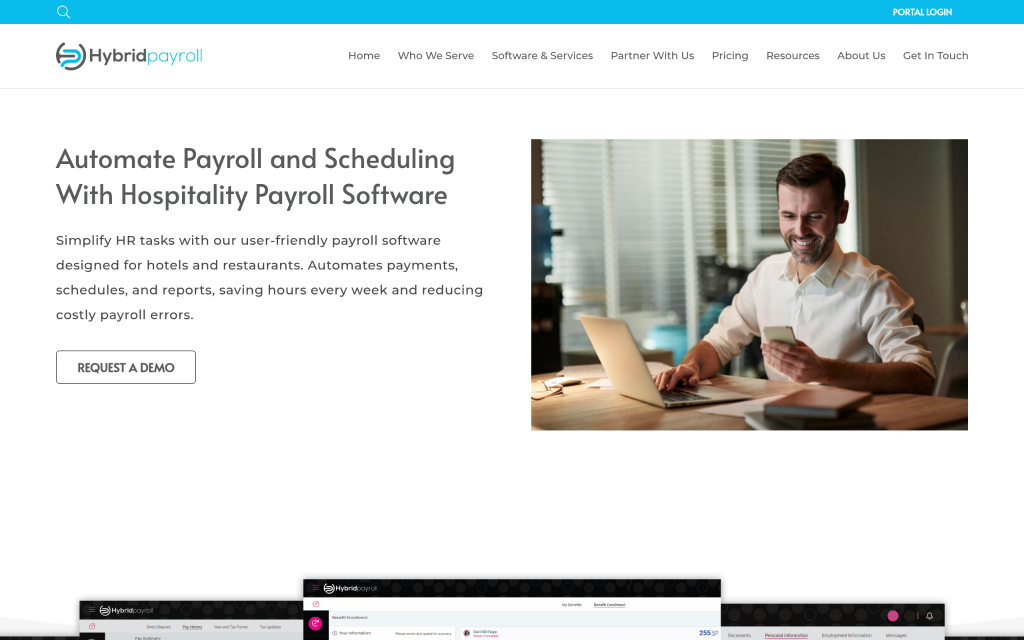
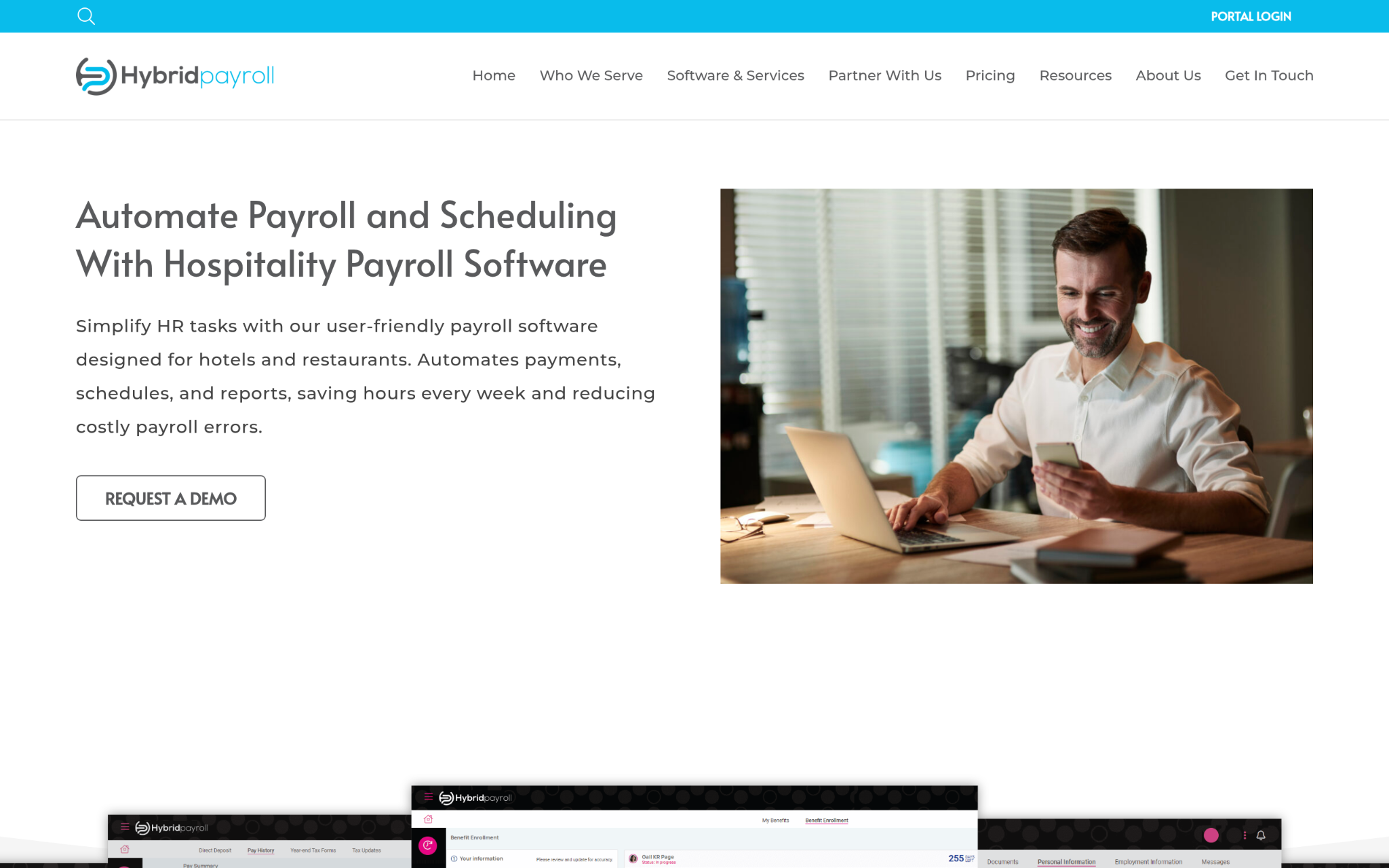
Hybrid Payroll works as both a payroll processor and a Professional Employer Organization, which is a combination you don’t see often at this price point. They handle automated payroll calculations, tax compliance management, and co-employment arrangements that take real HR liability off a business owner’s plate. For hospitality operators juggling seasonal staff swings and complex tip reporting, teams looking for Hybrid Payroll, payroll software for hospitality businesses get bundled HR products built around their specific industry needs, which is a meaningful differentiator from generic platforms.
What Makes Hybrid Payroll Stand Out for HR & Payroll Platforms?
The dual-track model of combining direct payroll processing with full PEO co-employment fills a gap that most small hospitality operators struggle to address on their own. That kind of industry-specific customization, backed by flexible service delivery, is rare in a market that tends to offer one-size-fits-all platforms.
The Verdict from Users:
Customers consistently point to the personalized service model as the main reason they stay. For a small restaurant group or independent hotel that needs real HR guidance and not just software, that kind of hands-on support is hard to match.
Paycor – Best for Unified HR and Payroll Management Across the Employee Lifecycle
What Activities Is Paycor Known For?
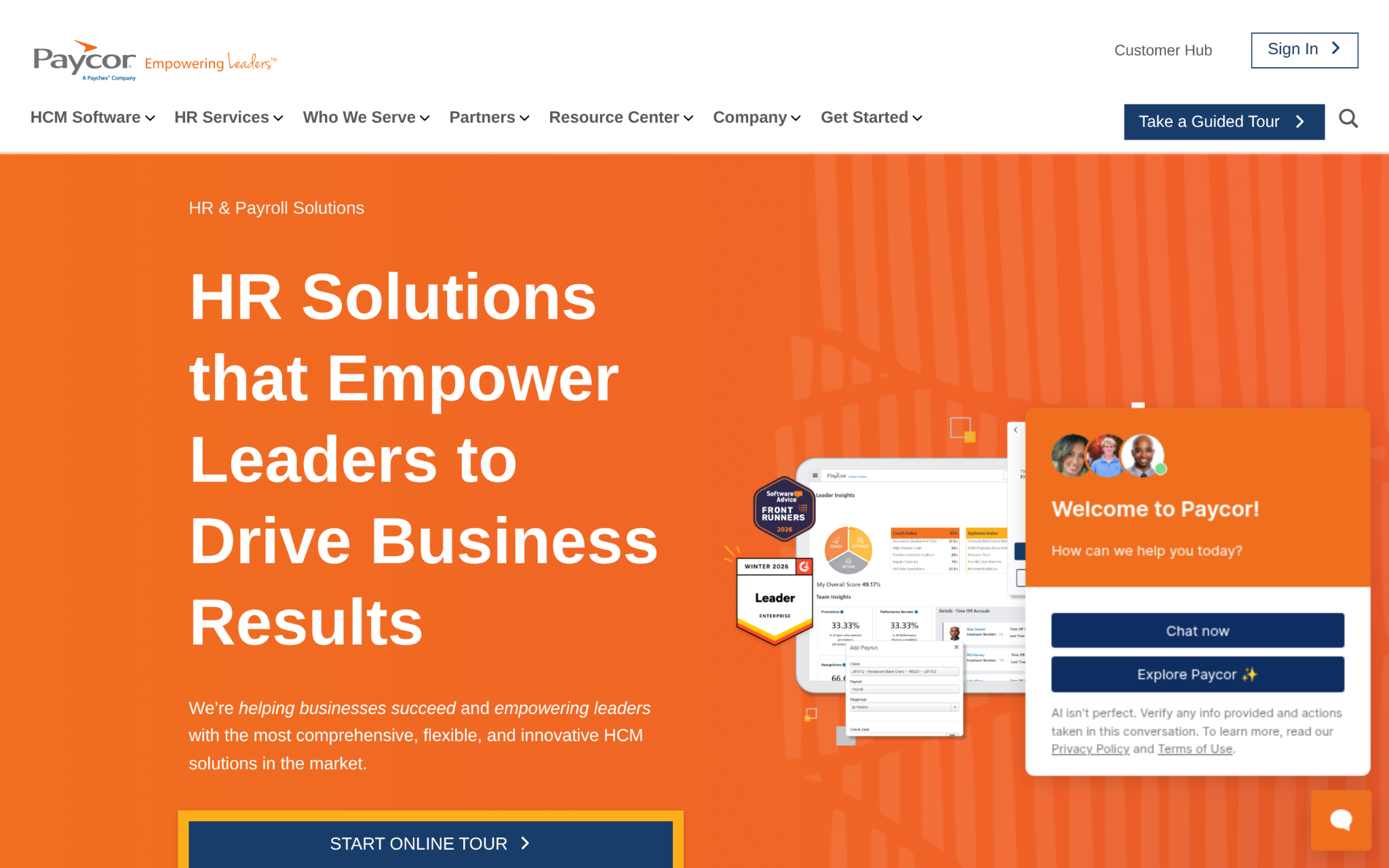
Paycor covers the full HR spectrum, from recruiting and hiring through payroll, career development, and retention tools, inside a single configurable platform. They serve more than 30,000 customers and support over 2 million employees across the US and Canada. Pricing typically runs between $19 and $27 per employee per month, and their analytics tools give managers real visibility into workforce costs, which is genuinely useful for businesses watching labor spend closely.
What Makes Paycor Stand Out for HR & Payroll Platforms?
Paycor tackles the frustration of managing disconnected HR tools by pulling recruiting, payroll, and performance management into one place, so HR teams aren’t bouncing between systems to complete a single workflow. The company earned G2’s fastest implementation award, which signals that getting new customers up and running without months of setup friction is something they’ve actually figured out.
The Verdict from Users:
Reviewers consistently praise how quickly the platform goes live compared to competitors in the same category. The analytics and reporting features get called out as particularly strong for managers who need clear, fast answers about workforce costs.
BambooHR – Best for SMBs Wanting a Connected HR and Payroll Ecosystem
What Activities Is BambooHR Known For?
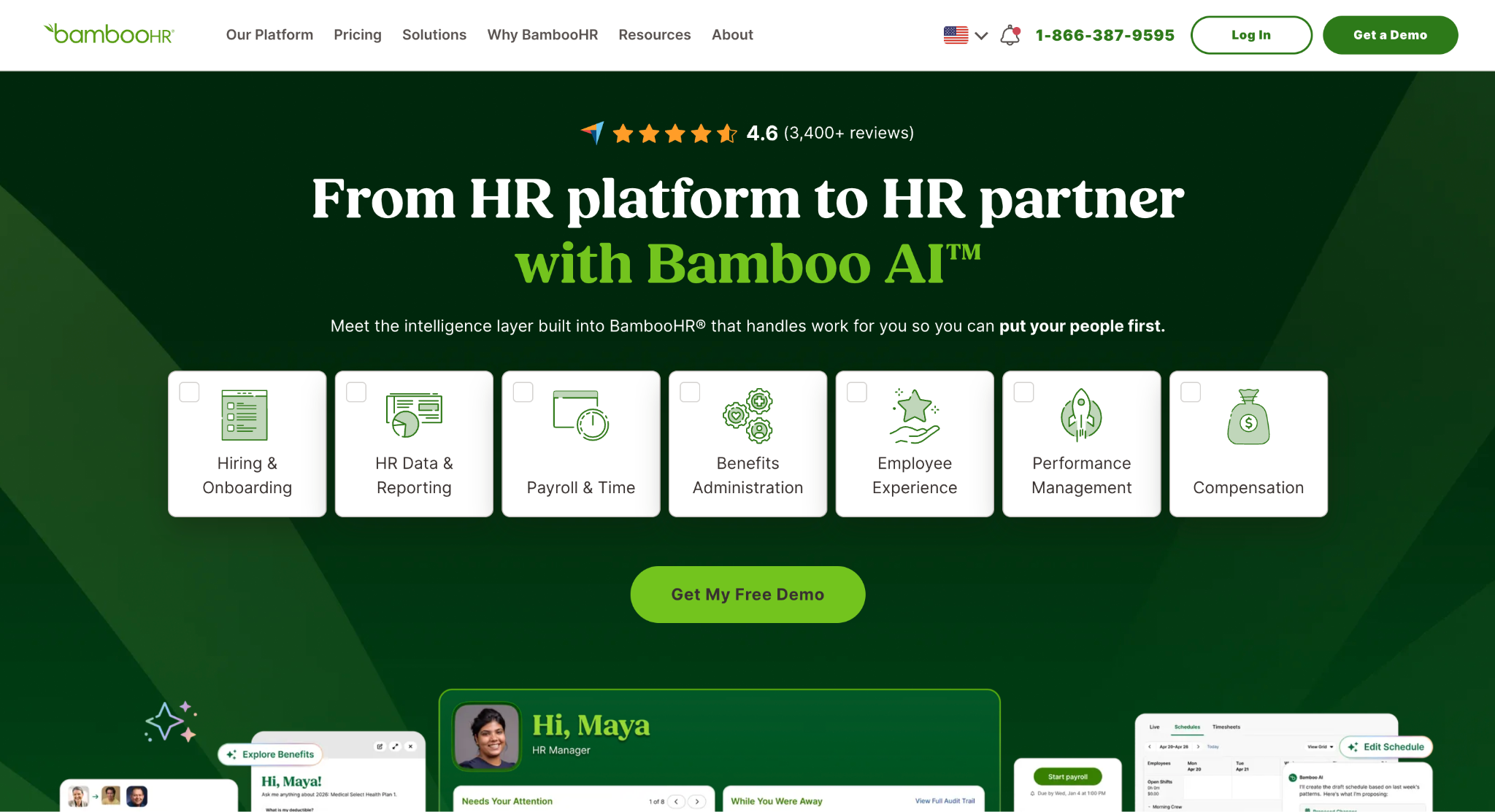
BambooHR brings together applicant tracking, hiring, payroll processing, benefits administration, performance management, and employee engagement inside a single platform. They serve over 34,000 customers and 3 million employees across 190 countries, which shows they’ve scaled their model well beyond the US market. Pricing starts at $250/month for small teams, making it accessible for growing businesses that don’t have a large HR budget but still need a real system. Their embedded AI tools and native app architecture keep the data model unified rather than patched together.
What Makes BambooHR Stand Out for HR & Payroll Platforms?
BambooHR addresses the common pain of siloed HR data by building everything on a single connected data model, so payroll, benefits, and performance information all draw from the same source without manual syncing. That matters because data mismatches between HR and payroll systems are one of the most common sources of payroll discrepancies, and BambooHR’s approach cuts that risk at the structural level.
The Verdict from Users:
Clients like Le Creuset, Quora, and the New York City Ballet give BambooHR real credibility across very different types of organizations. Users point to ease of use and the depth of the HR toolkit as the two things that keep them from looking elsewhere.
PayChex – Best for Small to Medium Businesses Needing Proven, Large-Scale Payroll Reliability
What Activities Is PayChex Known For?
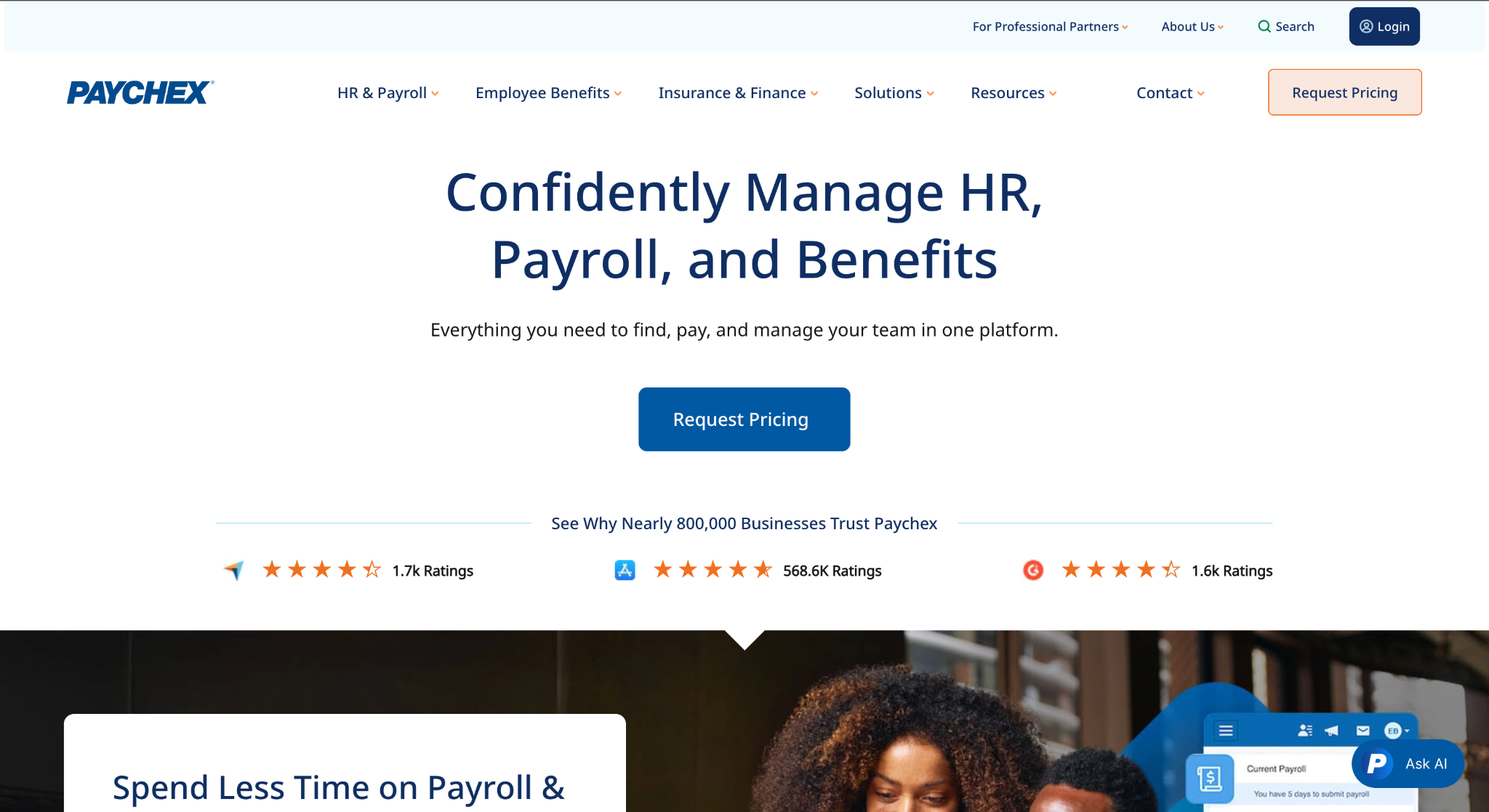
Paychex has been running payroll since 1971, and that kind of track record shows in how they’ve built their platform. They serve approximately 800,000 payroll clients and process pay for roughly 1 in 11 private sector workers in the US. Beyond payroll, they manage HR administration, talent acquisition, workforce management, and benefits, including running more than 90,000 401(k) plans as the largest 401(k) recordkeeper in the country. That scale means their compliance infrastructure has been tested across more edge cases than most platforms will ever encounter.
What Makes PayChex Stand Out for HR & Payroll Platforms?
When you’re managing payroll and benefits for hundreds of employees, you need a system with a long history of getting it right across complex regulatory environments. Paychex has that history in a way newer platforms simply can’t replicate. Five consecutive HR Tech Awards for Best Small Business-focused Solution also show they haven’t let their size make them slow to respond to smaller customer needs.
The Verdict from Users:
The depth of Paychex’s 401(k) and benefits administration is what separates them in reviews from peers focused mainly on payroll processing. Users who need a single vendor for both payroll and retirement plan management consistently flag Paychex as the most complete option they’ve tested.
Gusto – Best for Small to Mid-Market Businesses Wanting Simplified Payroll Tax Compliance
What Activities Is Gusto Known For?
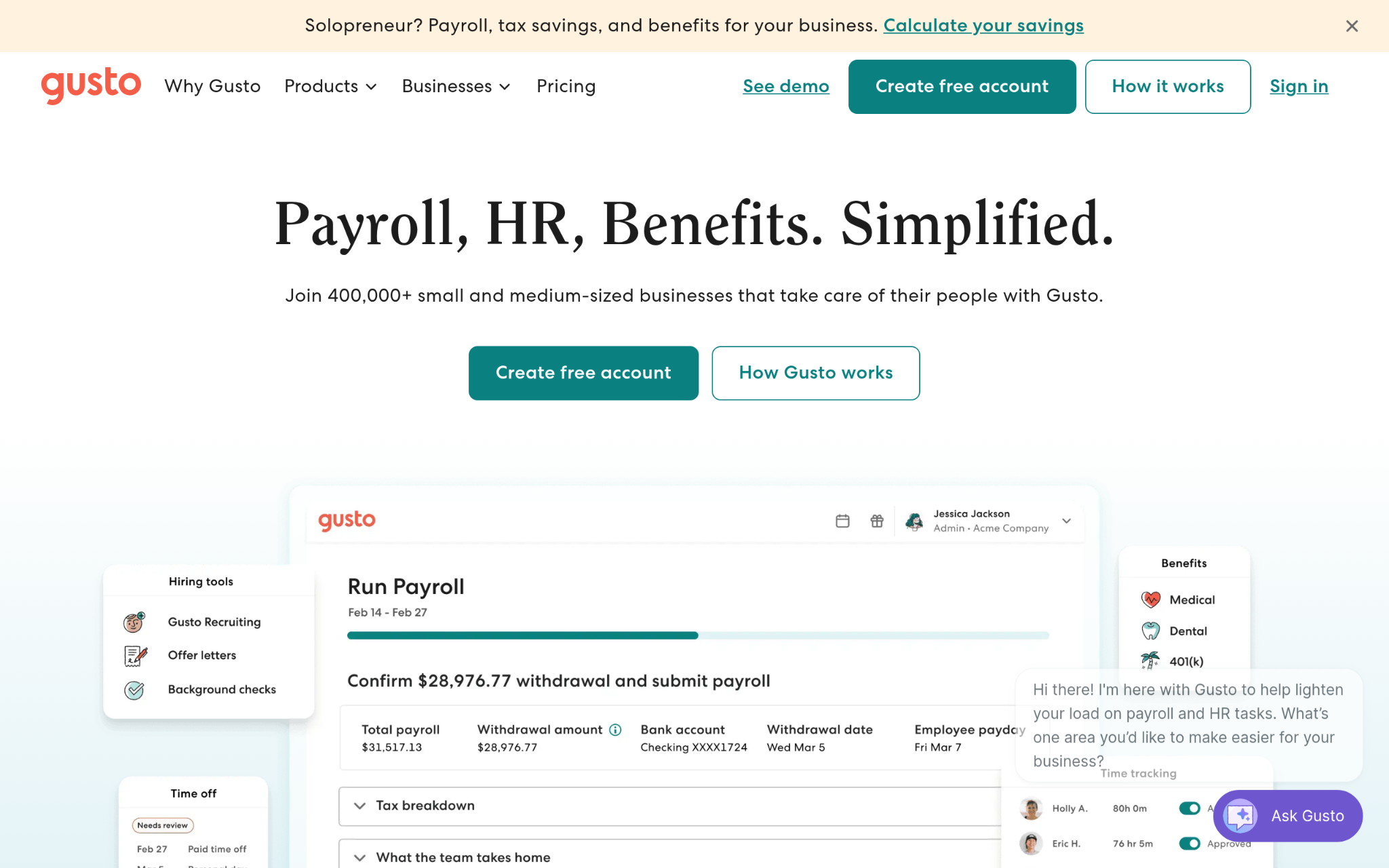
Gusto handles payroll processing, employee hiring, health insurance enrollment, dental and vision coverage, 401(k) administration, and workers’ compensation, all inside one platform. They serve 400,000 customers across many industries, and one of their more important product decisions is that automatic payroll tax filing with government agencies is included in every plan rather than sold as an add-on. That alone saves hospitality businesses a meaningful amount of administrative time every quarter. Their platform connects with nearly 150 other software products, so linking to existing accounting tools isn’t a heavy lift.
What Makes Gusto Stand Out for HR & Payroll Platforms?
Gusto removes one of the most error-prone steps in payroll, manually tracking and filing payroll taxes across multiple jurisdictions, by automating the entire process and including it in every subscription tier. That usually means fewer notices and less time spent correcting filings after the fact, which is exactly what fast-growing hospitality operations need.
The Verdict from Users:
G2 named Gusto the number one highest satisfaction software in its category for 2026, and the reviews back that up with consistent praise for the platform’s clean interface and ease of use. Users who switched from manual payroll processes or older systems describe the time savings as genuinely surprising compared to what they expected going in.
The Research Behind These Recommendations
Building a shortlist like this one requires more than checking product feature pages. The research process behind these picks was structured to surface platforms that perform well in real-world conditions, not just ones that look good in marketing materials.
What Gets Collected in the First Stage
The first step involved pulling a broad list of HR and payroll software platforms from multiple sources. Software directories, industry-specific review platforms, analyst roundups, and company case study pages all fed into the initial pool. The goal at this stage was breadth: getting as many credible options on the table as possible before starting to filter.
No single source was treated as authoritative on its own. Review platform data, feature documentation, and directory listings were cross-referenced from the beginning so that gaps in one source could be filled by another.
Filtering Candidates by Criteria
Once the initial pool was assembled, options without a verifiable track record in HR and payroll software were removed. This meant checking whether user reviews reflected genuine payroll and HR use cases rather than general software satisfaction.
Review patterns were analyzed across categories including payroll accuracy, tax filing reliability, customer support responsiveness, and ease of setup. Platforms that showed consistent complaints in any of these areas without clear evidence of resolution were moved off the shortlist.
Validation Process for Final Recommendations
Each remaining candidate was evaluated against the claims made on their official websites. Feature descriptions, compliance capabilities, and products were cross-checked against what real users reported experiencing on review platforms.
Where claims and reviews diverged significantly, the platform’s position on the list was reconsidered. Only platforms where the marketing and the actual experience told a reasonably consistent story made it through to the final recommendations.
Where Each Pick Stands in the Industry
Industry standing was assessed by looking at award recognition from credible third-party organizations, mentions in analyst reports, and ratings from established review platforms like G2 and Capterra. Companies that had earned recognition across multiple categories or over multiple years were weighted more favorably because sustained recognition is harder to manufacture than a single award cycle.
Original research, analyst citations, and publication mentions were also factored in where available, since those signals reflect how the broader HR software community views each platform.
HR & Payroll Platforms Validation
The final validation step focused on hospitality and HR payroll relevance. Each platform was checked for dedicated service pages covering hospitality or industry-specific payroll challenges, verified reviews from HR managers and payroll administrators, and case studies showing outcomes in high-turnover or multi-location environments.
Platforms that could show real experience with the specific pain points of hourly workforces, tip credit management, and multi-state labor law adherence scored higher in this stage than generalist platforms with no clear hospitality focus.
User’s Guide: Choosing the Right HR & Payroll Platform
Choosing an HR and payroll platform for a hospitality business comes down to more than picking the one with the longest feature list. The right fit depends on your team size, your compliance exposure, and how much HR experience you have in-house. Here are the five factors worth weighing carefully before signing anything.
- Industry/Domain Experience: Look for platforms with documented experience in hospitality payroll, including tip credit rules, overtime thresholds, and seasonal workforce management. Generic experience doesn’t translate well to restaurant or hotel operations.
- Features and Services: Confirm the platform covers what you actually need: automated tax filings, benefits administration, hiring tools, and employee self-service. Features you won’t use are just noise.
- Pricing Structure: Understand exactly what’s included in the base price and what costs extra. Tax filing, multi-state support, and dedicated HR support are common add-ons that push the real cost above the advertised rate.
- Results Measurement: Ask how the platform tracks payroll error rates and processing times. Vendors who can show you their accuracy benchmarks are generally more confident in their product than ones who can’t.
- Industry Knowledge and Compliance: Confirm the platform stays current with FLSA changes, ACA reporting requirements, and state-level labor law updates. In a high-turnover industry, one missed regulation can mean real financial exposure.
Things to Remember
The best HR and payroll platform for a hotel or restaurant is the one that matches your actual compliance needs, not the one with the most impressive homepage. Hybrid Payroll suits businesses that need bundled, industry-specific service with PEO support. Paychex and Gusto serve different ends of the scale and automation spectrum. BambooHR and Paycor fill the gap for teams that need a connected HR ecosystem. As labor law continues shifting and workforce expectations rise, the platforms that keep pace with both will be worth paying for.