A restaurant business plan is a written case for your restaurant: what you will serve, to whom, where, how you will run it and how the numbers work. Lenders and investors expect the traditional sections the US Small Business Administration describes, from an executive summary to five-year financial projections. Even if you are self-funding, writing the plan forces you to test the concept, the location and the budget before you sign a lease.
The plan does not need to be long. It needs to be specific, honest about risks and backed by real quotes and local research. This walkthrough covers each section, the numbers to build, and a one-page version to start with.
Key facts
- The SBA describes two formats: a traditional plan with nine sections and a one-page lean plan.
- Lenders look hardest at the funding request and the financial projections.
- Build sales forecasts from seats, turns and average check, not from hoped-for revenue.
- Use real quotes for build-out, equipment and rent; estimates sink credibility.
- Update the plan before every major decision: lease, loan, menu change or second site.
Traditional plan or lean plan?
The SBA’s planning guidance separates two types. A traditional plan is detailed and is what banks and SBA-backed lenders usually expect. A lean startup plan fits on one page, using headings such as value proposition, customer segments, key activities, cost structure and revenue streams.
A practical approach is to start lean. One page will show quickly whether the concept and the numbers hold together. If they do, expand it into the traditional format when you approach a lender or landlord.
What goes in each section?
1. Executive summary
Write this last, and keep it to a page. State the concept, the location, the team, how much money you need and what it buys, and when you expect to break even. Many readers decide whether to keep going based on this page alone.
2. Company description and concept
Describe the restaurant in plain language: service style (counter, fast casual, full service), cuisine, price point, hours and seat count. Explain why this concept fits this neighborhood now. Include the legal structure you plan to use.
3. Market analysis
Show you know who will eat there. Cover the local population and daytime workers, foot traffic and parking, nearby competitors with their price points, and gaps in the market. Visiting competitors at peak times and counting covers is more convincing than national statistics.
4. Organization and management
List the owners and key managers, their restaurant experience, and who handles the kitchen, front of house and finances. If you lack experience in an area, say how you will cover it: a hire, a partner or an advisor.
5. Menu and service
Include a draft menu with target prices and the food cost for each dish. Explain sourcing, any signature items, and service extras such as catering, delivery or private events.
6. Marketing and sales
Describe how guests will hear about you before opening and why they will come back. Cover signage, social media, local partnerships, a soft opening, loyalty offers and delivery apps, with a budget for each.
7. Funding request
State exactly how much you need and what it pays for: build-out, equipment, deposits, licenses, opening inventory, pre-opening payroll and a cash reserve. Say what type of funding you want, such as a loan, investor equity or your own savings, and on what terms.
8. Financial projections
The SBA suggests projections that support the funding request, typically covering five years. For a restaurant, that means a startup cost budget, a monthly profit and loss forecast for the first year, annual forecasts after that, a cash flow forecast and a break-even analysis.
9. Appendix
Attach supporting documents: resumes, the draft menu, floor plan, quotes from contractors and suppliers, a letter of intent on the lease, license and permit lists, and credit histories if a lender asks.
How do you build the numbers?
Start from the room, not from the revenue you want. A simple sales model looks like this:
| Input | What to estimate | Where the number comes from |
|---|---|---|
| Seats | Usable seats per service | Floor plan and local occupancy rules |
| Turns | How many times each seat fills per service | Competitor visits and your service style |
| Average check | Spend per guest, including drinks | Draft menu prices and expected order mix |
| Days open | Services per week, minus closures | Your hours and seasonality |
Multiply seats by turns by average check by services to get a sales estimate, then build three cases: conservative, expected and strong. Lenders will focus on the conservative case. On the cost side, list food and beverage costs from your menu costing, labor from a draft schedule with local wage rates, rent and occupancy costs from the lease terms, and every other operating expense, from insurance to card processing fees.
The break-even point
Break-even is the sales level at which revenue covers all costs. Divide your monthly fixed costs by the share of each sales dollar left after variable costs such as food and hourly labor. If break-even requires the room to be full every night, the plan needs a cheaper site, a lower build-out budget or a different format.
Common mistakes lenders spot
- No cash reserve. New restaurants often take months to reach steady sales. Budget for operating losses at the start.
- Round-number estimates. “Equipment: $50,000” without quotes signals guesswork.
- Ignoring permits and timelines. Health, building and liquor approvals can delay opening; delays cost rent.
- Optimistic sales from day one. Show a ramp-up in the first months.
- Missing insurance. Coverage is a real cost and often a lease requirement; see our restaurant insurance guide.
Thinking about another route into ownership? Our pieces on restaurant franchising myths and opening a second location cover how planning changes in each case.
FAQ
How long should a restaurant business plan be?
There is no set length. A lean plan fits on one page; a traditional plan for a lender is often 15 to 30 pages plus the appendix. Clarity matters more than length.
Do I need a business plan to get an SBA loan?
Lenders making SBA-backed loans generally expect a business plan with financial projections, especially for a new business. Ask your lender what format they want.
Where can I find a sample business plan?
The SBA publishes sample business plans, and free SCORE mentors and Small Business Development Centers can review a draft.
What is the most important part of the plan?
For lenders, the funding request and financial projections. For you, the market analysis, because it tests whether enough guests will actually come.
How often should I update the plan?
Before any major decision, such as signing a lease, taking a loan or expanding, and at least once a year after opening, comparing actual results with the forecast.
Start with one page this week
Write a one-page lean plan: the concept, the guest, the site, the startup budget and a simple sales model with three cases. If the numbers work in the conservative case, expand it section by section into a traditional plan, gather real quotes and book a free mentoring session to have it reviewed. For more on running the business side, browse our restaurant business section.
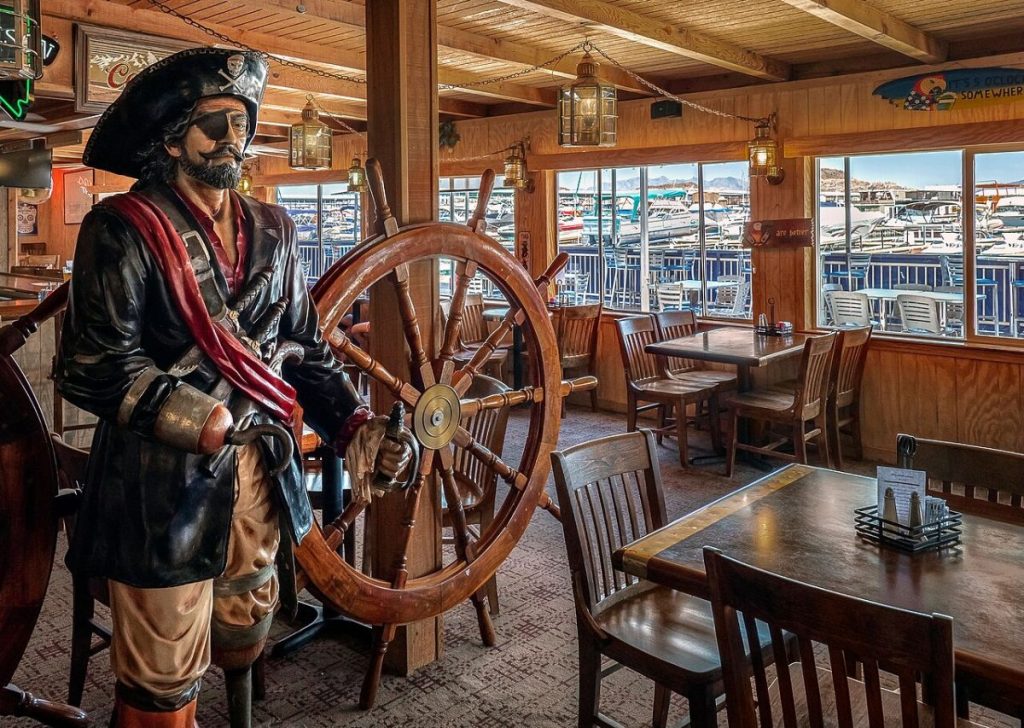
Featured photo: Interior of Boulder Harbor Cafe by Andrew Cattoir, National Park Service, public domain.