Good restaurant insurance starts with four pieces: general liability for guest injuries, commercial property for the building and equipment, business interruption for lost income after a covered loss, and workers’ compensation where your state requires it. From there, what you serve and how you operate decide the rest. A bar needs liquor liability, a restaurant with staff needs employment practices cover, and anyone taking card payments should ask about cyber.
Insurance is one of the few costs most operators buy once and rarely revisit. That is a mistake, because a restaurant’s risks change every time it adds a patio, a delivery channel or a cocktail list.
This buyer’s guide walks through each coverage type, what it is for, how the pieces bundle together, and how to choose an agent or broker. It does not quote prices, which depend on your location, size and claims history.
Key takeaways
- General liability, commercial property and business interruption are the foundation; a business owner’s policy often bundles all three.
- Workers’ compensation rules are set by each state. California requires it; Texas lets most private employers choose.
- Standard commercial general liability policies commonly exclude liquor liability, so bars and restaurants that serve alcohol need to cover it separately.
- Business interruption usually needs physical damage to trigger a claim, and many policies now exclude viral outbreaks.
- Review every policy at least once a year, and whenever your menu, hours or space change.
In this guide
- The core coverages every restaurant should price
- Workers’ comp: a state question first
- Coverage for the risks restaurants add
- Business owner’s policy or separate policies
- Coverage tiers by type of restaurant
- How to work with an agent or broker
- FAQ
- Build your insurance checklist before renewal
The core coverages every restaurant should price
The U.S. Small Business Administration’s guide to business insurance lists the coverage types most small businesses consider. Three of them matter to every restaurant.
General liability
This is the policy for claims from outsiders. The SBA describes it as protection against bodily injury, property damage, medical expenses, libel and slander, along with legal costs. For a restaurant, the classic claim is a guest who slips on a wet floor or is hurt by a falling fixture.
Commercial property
Property insurance covers your building if you own it, and the equipment, furniture and stock inside it whether you own or lease. The SBA lists fire, smoke, wind and hailstorms, civil disobedience and vandalism among the losses it protects against. Check whether your lease already makes you responsible for insuring fixtures or improvements, because landlords often do.
Business interruption
A kitchen fire is expensive twice: once for the repairs, and again for the weeks of lost sales. The National Association of Insurance Commissioners explains that business interruption coverage pays lost net income while the business is closed for repairs, and may cover rent or lease payments, relocation costs, employee wages, taxes and loan payments.
Read the trigger carefully. The NAIC notes that physical damage generally has to be present for a claim, and that many insurers have edited their policy language to specifically exclude bacterial and viral outbreaks. A closure with no physical loss may not be covered at all.
Workers’ comp: a state question first
Workers’ compensation is where the rules differ most by location, so start with your state insurance department rather than a general checklist. The obligation, where it exists, is to cover employees who suffer a work-related injury or illness, and kitchens, with knives, burns and slippery floors, generate those claims.
- California: the state’s Department of Insurance, in its commercial insurance guide, says employers are required under California Labor Code Section 3700 to provide workers’ compensation insurance from a licensed insurer or through the State Compensation Insurance Fund.
- Texas: the Texas Department of Insurance says private employers can choose to carry workers’ compensation, but it is not required in most cases. Employers who opt out must report that they do not have coverage and report certain work-related injuries, illnesses and deaths.
Every other state sets its own rule, so do not assume either example applies to you. Your state insurance department’s website is the authoritative place to confirm the requirement, and your state labour agency can tell you whether unemployment or disability insurance is required alongside it.
The cheapest policy is the one that pays out when the kitchen is dark, not the one with the lowest premium.
Coverage for the risks restaurants add
Beyond the foundation, a restaurant faces risks that an office or a shop does not. These are the coverages to raise with your agent, in rough order of how often they apply.
Liquor liability
If you serve alcohol, assume your general liability policy does not cover alcohol-related claims. The California Department of Insurance lists liquor liability among the major exclusions in commercial general liability policies. Ask whether your state or your liquor licence sets a minimum, and buy a separate liquor liability policy or endorsement to fill the gap.
Equipment breakdown and spoilage
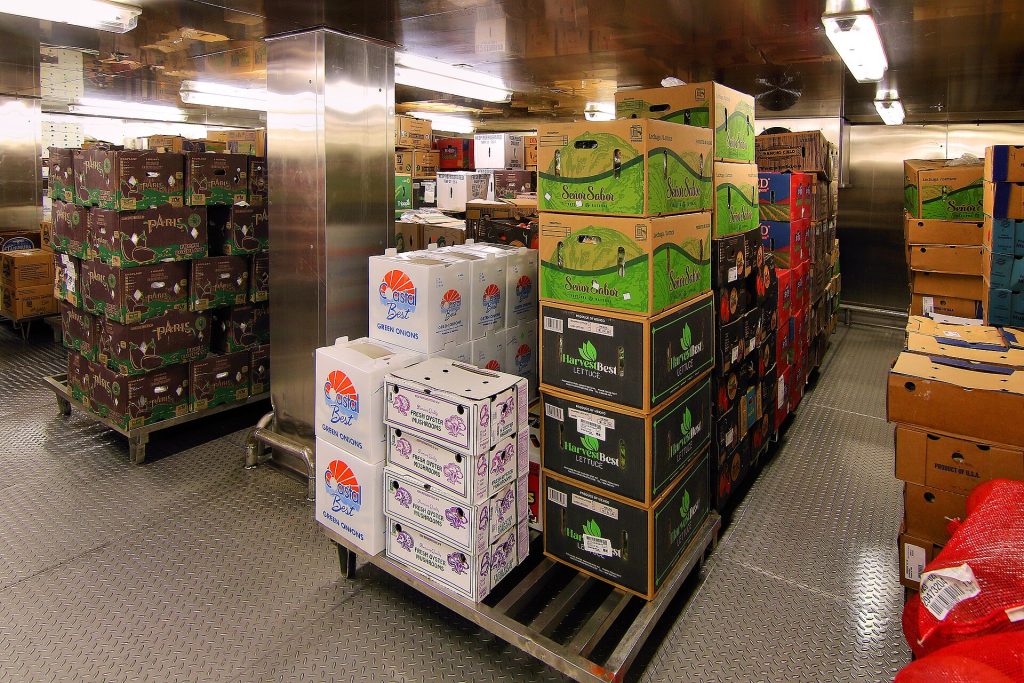
Walk-ins, compressors and ovens fail. The California guide describes boiler and machinery insurance, now often sold as equipment or machinery breakdown cover, as protection for property losses and legal fees that result from the malfunction of machinery. Ask specifically whether food that spoils when a refrigeration unit or the power fails is covered, and up to what limit, because that is a separate question.
Employment practices liability
Restaurants hire, schedule and let go of more people than most small businesses. The NAIC notes that claims such as sexual harassment, wrongful termination, and failure to employ or promote must be covered by employment practices liability coverage, not by a standard liability policy.
Cyber liability
Online ordering, reservation systems and card terminals all hold customer data. The NAIC describes cyber liability insurance as cover for damages caused by computer hackers and viruses. Ask what the policy pays for after a breach, such as notification costs, investigation and legal defence.
Commercial auto and umbrella
If you run your own delivery vehicle or catering van, a personal auto policy is the wrong tool. The NAIC says commercial auto policies carry higher liability limits and may cover rented and non-owned vehicles. An umbrella policy adds a layer of liability protection above your general liability limits.
Business owner’s policy or separate policies
A business owner’s policy, or BOP, is a package. The SBA describes it as an insurance package that combines the typical coverage options into one bundle, and says it can simplify buying and save money. The NAIC calls it the most commonly purchased policy for small businesses, and says it includes general liability, commercial property and business interruption.
| Coverage | Usually in a BOP | What it covers | Ask your agent |
|---|---|---|---|
| General liability | Yes | Guest injuries, property damage, legal costs | What limits apply per claim and in total |
| Commercial property | Yes | Building, equipment, furniture, stock | Replacement cost or actual cash value |
| Business interruption | Yes | Lost income during repairs after a covered loss | What triggers it and how long it pays |
| Liquor liability | No, often excluded | Alcohol-related injury claims | Whether your state or licence sets a minimum |
| Workers’ compensation | No, bought separately | Employee work injuries and illness | What your state requires |
| Employment practices | No, usually separate | Harassment, wrongful termination, failure to hire or promote | Whether wage-and-hour claims are covered |
| Cyber | Sometimes as an add-on | Data breaches and hacking | What breach costs are included |
| Equipment breakdown and spoilage | Sometimes as an add-on | Machinery failure and resulting losses | Whether spoiled food is covered and the limit |
A BOP is a starting point, not a finished programme. Most full-service restaurants end up with a BOP plus separate workers’ comp, liquor liability and employment practices policies.
Coverage tiers by type of restaurant
Rather than price tiers, think in coverage tiers. Your concept decides how many layers you need.
- Counter service, no alcohol, small team: a BOP with general liability, property and business interruption, workers’ comp as your state requires, and cyber if you take online orders.
- Full-service with beer and wine: everything above, plus liquor liability, employment practices liability and an equipment breakdown and spoilage endorsement.
- Full bar, late hours, catering or delivery: everything above, plus commercial auto for company vehicles and an umbrella policy for higher liability limits.
Each step up adds exposure, so each step up should add a line to your policy schedule. Budgeting for that is part of the real cost of opening a restaurant.
How to work with an agent or broker
The California Department of Insurance draws a useful distinction. Brokers may sell for many insurance companies and are usually paid by you through a broker fee. Agents are appointed by insurance companies and are paid a commission. Either can serve a restaurant well, provided they know the industry.
- Check the licence. Confirm the agent or broker is licensed with your state insurance department.
- Assess your risks first. The SBA recommends starting with an honest list of what could go wrong in your business.
- Give accurate information. Seating, hours, alcohol sales and delivery all affect coverage. Understating them can create problems at claim time.
- Compare several quotes and compare the coverage, limits and exclusions, not only the premium.
- Ask about every exclusion you do not understand, especially liquor, spoilage and communicable disease.
- Review annually. The NAIC advises reviewing all policies every year and noting changes that may affect your coverage.
FAQ
What insurance does a restaurant legally need?
It depends on the state. Workers’ compensation is the most common legal requirement, but rules vary; California requires it, while Texas leaves it optional for most private employers.
Does general liability cover alcohol-related claims?
Usually not. Liquor liability is a common exclusion in commercial general liability policies, so it needs its own policy or endorsement.
Is a business owner’s policy enough for a restaurant?
It covers the foundation of liability, property and business interruption. Most restaurants add workers’ comp, liquor liability and employment practices cover.
Does business interruption cover a forced closure with no damage?
Often not. The NAIC notes coverage usually requires physical damage, and many policies exclude viral outbreaks.
Build your insurance checklist before renewal
Sixty days before your next renewal, list every activity your restaurant runs: dine-in, alcohol, delivery, catering, events and online ordering. Next to each, write the policy that covers it and the limit. Any activity without a matching line is a gap to raise with your agent or broker. Take the list to at least two licensed representatives and compare what they propose line by line. For more on running the numbers behind a restaurant, browse our restaurant business section, read up on kitchen safety, or see how other operators present themselves in our restaurant directory.
Featured photo: Empty dining room at Family Thai restaurant at the height of the COVID-19 pandemic, Buffalo, New York – 20200323 by Andre Carrotflower, BY-SA 4.0.