

-
by Restaurants Expert
- February 9, 2026
In a fast-moving commercial kitchen, timing, precision, and organization are everything. From receiving fresh ingredients to plating finished dishes, every step depends on reliable food storage. That’s why refrigeration is far more than a convenience — it plays a central role in food safety, operational efficiency, and overall profitability. Whether you rely on a large commercial refrigerator for bulk storage or a prep station fridge for kitchens that keeps ingredients within reach during service, maintaining the right temperature can make the difference between smooth operations and costly setbacks. Let’s explore why proper refrigeration is essential for any professional food environment.
The Role of Refrigeration in Food Safety
To maintain a high standard of safety, sourcing your equipment from a reliable provider like Chef Stop ensures your kitchen meets industry regulations. Their selection of professional cooling units is designed to withstand the rigorous demands of a high-volume environment.
Food safety begins with temperature control. Harmful bacteria grow most rapidly between 40°F and 140°F, a range commonly known as the “danger zone.”
In fact, bacteria can double in number in as little as 20 minutes when food sits within this temperature range.
Keeping cold foods at or below 40°F is one of the most effective ways to prevent contamination and foodborne illness.
A dependable commercial refrigerator helps kitchens stay safely outside the danger zone, protecting both customers and staff. When refrigeration fails — even briefly — the risk of spoilage rises quickly, and food may need to be discarded.
Bottom line: Refrigeration is your first line of defense against food safety hazards.
Maintaining Optimal Temperature for Different Foods
Temperature consistency is the backbone of effective cold storage. Most commercial refrigerators operate best between 32°F and 40°F, a range that slows bacterial growth while preserving food quality.
Different foods benefit from slightly different settings:
· Raw meat and poultry: 32°F–36°F
· Dairy products: 34°F–38°F
· Fresh produce: 35°F–40°F
· Prepared foods: 38°F–40°F
Frequent temperature fluctuations can lead to nutrient loss, freezer burn, and faster spoilage.
For busy kitchens, this is where specialized equipment shines. A prep station fridge for kitchens typically keeps perishable ingredients around 34°F–40°F, allowing chefs to work efficiently without compromising safety.
Preserving Food Quality and Extending Shelf Life
Refrigeration doesn’t just prevent illness — it preserves the flavor, texture, and nutritional value of ingredients.
By maintaining temperatures below the danger zone, kitchens reduce spoilage and keep products fresher for longer.
This directly impacts customer satisfaction. After all, great dishes start with high-quality ingredients. Wilted produce, sour dairy, or poorly stored proteins can quickly damage a restaurant’s reputation.
Proper cold storage also supports smarter inventory management, giving teams more flexibility in menu planning while reducing unnecessary waste.
Supporting Health Code Compliance
Food safety regulations emphasize strict temperature control because of its impact on public health. Refrigerators should be verified regularly to ensure they remain at 40°F or below.
Many modern commercial units include built-in thermometers or monitoring systems, making it easier to demonstrate compliance during inspections.
Consistent refrigeration practices help kitchens:
· Avoid violations and fines
· Pass health inspections with confidence
· Maintain professional credibility
In short, reliable refrigeration supports both safety and regulatory peace of mind.
Improving Efficiency in Busy Kitchens
Speed matters during peak service hours. Running back and forth to a walk-in cooler slows staff down and disrupts workflow.
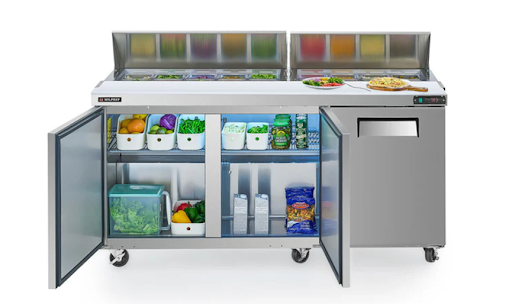
A prep station fridge for kitchens solves this problem by keeping meats, cheeses, sauces, and produce within arm’s reach of the prep area. This setup:
· Improves workflow continuity
· Reduces cross-contamination risks by limiting movement
· Maintains consistent cooling even in high-heat environments
Meanwhile, a high-capacity commercial refrigerator ensures bulk ingredients remain properly stored without overcrowding — another key factor in maintaining stable temperatures.
Efficient refrigeration isn’t just about storage; it’s about designing a kitchen that works smarter.
The Financial Impact of Proper Refrigeration
Some operators view refrigeration as a basic utility, but it’s better understood as a long-term investment.
Reliable cold storage helps:
· Reduce food waste
· Protect expensive inventory
· Prevent emergency replacements
· Safeguard brand reputation
Consider the cost of throwing away spoiled ingredients after a temperature failure — or worse, dealing with a food safety incident. Compared to those risks, investing in dependable refrigeration is a strategic business decision.
Remember: Consistency protects margins.
Best Practices for Commercial Kitchen Refrigeration
Even the best equipment requires proper use. Follow these practices to maximize performance:
✅ Keep refrigerators at or below 40°F.
✅ Use appliance thermometers to monitor internal temperatures.
✅ Close doors tightly and avoid opening them more often than necessary.
✅ Store raw meat securely to prevent juices from contaminating other foods.
✅ Divide large portions into shallow containers for faster cooling.
Small habits can make a major difference in food safety outcomes.
Signs Your Refrigeration System Needs Attention
Refrigeration issues rarely appear overnight. Watch for early warning signs such as:
· Temperature inconsistencies
· Excess condensation or frost
· Unusual odors
· Rising energy bills
· Food spoiling faster than expected
Addressing problems early helps avoid operational disruptions.
Choosing the Right Commercial Refrigeration Equipment
Not every kitchen has the same storage needs. When selecting equipment, consider:
· Capacity: Can it handle peak inventory?
· Temperature precision: Is it reliable under heavy use?
· Workflow compatibility: Does it support your kitchen layout?
· Durability: Can it withstand constant opening and closing?
Many kitchens benefit from combining a primary commercial refrigerator with a prep station fridge for kitchens — pairing bulk storage with convenient access during service.
This layered approach improves both safety and efficiency.
Conclusion
Proper refrigeration is the foundation of a safe and successful commercial kitchen. By keeping food out of the danger zone, maintaining consistent temperatures, and supporting efficient workflows, the right equipment protects customers, staff, and your bottom line. A dependable commercial refrigerator safeguards your inventory, while a prep station fridge for kitchens keeps operations flowing smoothly during even the busiest shifts.