A shared table does something a phone cannot. When people sit across from one another, pass a plate, and read the small signals of a face, they connect in a way that feels grounded and unhurried. Restaurants have always understood this, which is why a good dining room is built around eye contact and conversation rather than speed alone.
That instinct matters more now that so much of daily life happens through a screen. People text, scroll, and video chat for hours, yet many still describe a quiet hunger for presence. Looking at how restaurants create real human moments offers a useful lens on what the digital world keeps trying, and sometimes failing, to copy.
The Quiet Power of Sitting Across From Someone
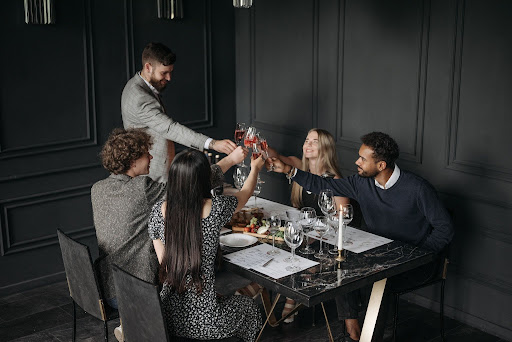
Anthropologists have long noted that sharing food is one of the oldest forms of human bonding. A meal slows the clock. It gives two people a shared task, the simple act of eating, that fills the silences and makes deeper talk feel natural. You notice when a friend hesitates before answering, when a parent softens at an old story, when a date leans in across the table. None of that travels well through a small rectangle of glass.
What Digital Tools Promise, and Where They Fall Short
Online platforms have grown skilled at putting faces in front of one another. A service like LustMatch positions itself as an FTF Live alternative, offering one-on-one video sessions that let people move between connections quickly and with limited personal disclosure. The appeal is obvious, since it lowers the friction of meeting someone new.
Video chat now connects strangers across the world in seconds, and that reach is genuinely useful for people who are isolated, far from home, or simply curious about lives unlike their own. Some of these tools market themselves on speed and choice, and the better services treat privacy and consent as core features rather than afterthoughts. Even so, the format tends to trade depth for volume, and a conversation that can end with a single tap rarely asks much of either side.
That is the honest limit of screen-based contact. It can spark a connection, but it struggles to sustain the slow, accumulating trust that shared physical space tends to build. A camera shows a face, not the way a person carries themselves into a room, the small courtesies they extend to a server, or the ease that settles over a table after the second course. Servers see this every shift, watching couples reconnect over a long dinner and families relax once the first plates arrive.
Hospitality as a Model for Real Connection
Restaurants are, at heart, machines for human attention. Good service is not about scripted lines. It is about a host who reads the mood at the door, a server who senses when a table wants to be left alone, and a kitchen that treats a regular order as something worth getting right. This is presence as a craft, and it is exactly what feels thin in a purely digital exchange.
The details add up. A well-paced meal, a recommendation that lands, a problem fixed without fuss, each one signals that a guest is seen as a person rather than a transaction. Restaurants that understand how every detail shapes a memorable dining experience tend to keep their tables full, because guests feel the difference even when they cannot name it. That sense of being genuinely attended to is hard to fake and harder to automate. A chatbot can confirm a reservation, but it cannot notice that a guest looks tired and quietly adjust the pace of the meal to match the mood at the table.
There is a lesson here for anyone weary of frictionless but forgettable contact. The warmth that keeps people coming back to a favorite spot comes from effort, patience, and attention that cannot be rushed. Digital tools can introduce people, yet the deeper bond still seems to need a shared space, a little time, and the willingness to stay past the first impulse to swipe away.
Choosing Places That Put People First
For diners, the practical question is how to find rooms that take connection seriously. Reviews help, though they reward a careful reader. The most useful ones describe specific moments, a server who remembered a name, a kitchen that handled an allergy with care, rather than vague praise. Learning to find a great restaurant and judge its reputation from real signals is a skill that pays off every time you book a table.
Look for places that protect the experience itself. Tables spaced for conversation, staff who are present without hovering, and a pace that lets a meal breathe are all signs that an owner values guests over turnover. A menu that explains its dishes, lighting that flatters rather than glares, and music kept low enough to talk over all point in the same direction. These choices cost more and move slower, which is precisely why they feel rare and worth seeking out by people who care about more than just the food.
None of this means screens have no place. They keep distant friends in touch and open doors that geography once closed. The point is balance. Use the digital world to stay connected and to meet people you might never otherwise reach, then bring the connections that matter to a table, where presence, patience, and a shared plate can do the work no device has yet learned to imitate.
The Table Still Wins
Technology will keep getting better at showing us faces, and that is no small thing in a scattered world. But the hunger underneath all this scrolling is a hunger for presence, and presence is what a good restaurant has quietly offered for centuries. When you want a connection to last, choose a room, choose a table, and give it the time that a screen so rarely demands.