For decades, drinking has been woven into the fabric of restaurant culture. From post-shift drinks to late-night lock-ins, a glass of wine or a few pints of beer has often served as a way for staff to unwind after long, demanding hours.
However, is this something that needs to be addressed? With more conversations around mental health and wellbeing going on in the hospitality industry, and the recognition that the long-standing tradition might not serve its workforce the best, questions are being asked around whether drinking culture should continue in its current form.
For the many people who have found themselves in private rehabs UK-based or specialised units abroad, the answer would probably be no. We delve into the details…
The Pressures of Hospitality Work
Working in restaurants is notoriously intense. Long shifts, physically demanding roles, and high-pressure service environments can take a toll on both physical and mental health. For many staff members, drinking becomes a convenient and socially accepted way to decompress. It can foster camaraderie and provide a sense of belonging in an otherwise stressful setting. Yet, what begins as a bonding ritual can, over time, blur into dependency or unhealthy coping mechanisms.
When Culture Becomes a Risk
While not all social drinking is problematic, a workplace culture that normalises or encourages excessive alcohol consumption carries risks. New or younger staff may feel pressured to participate in after-work drinking to fit in or progress socially within the team. This can create an environment where boundaries are unclear and unhealthy behaviours are overlooked or even rewarded. For individuals in recovery, or those choosing not to drink, such cultures can feel exclusionary and isolating.
Moreover, regular heavy drinking can impact job performance, increase absenteeism, and contribute to burnout, issues that are already prevalent in the hospitality sector. In this context, what is often framed as “team bonding” may, in reality, be undermining both employee wellbeing and business sustainability.
A Shift Towards Healthier Alternatives
Encouragingly, many restaurants are beginning to rethink their approach. Rather than eliminating social interaction, forward-thinking operators are exploring alternatives that do not centre on alcohol. Staff meals, wellness initiatives, team outings, and daytime social activities are increasingly being used to build connection without the risks associated with drinking. These alternatives recognise the importance of team cohesion while promoting healthier habits.
Some venues are also introducing clearer policies around alcohol consumption, particularly after shifts. By setting expectations and modelling responsible behaviour, management can play a key role in reshaping norms. Importantly, this is not about imposing strict bans, but about creating balance and offering choice.
Leadership and Responsibility
Restaurant leaders have a significant influence on workplace culture. When managers actively participate in or encourage heavy drinking, it can reinforce the idea that such behaviour is integral to the job. Conversely, leaders who prioritise wellbeing and demonstrate moderation can help shift perceptions. Open conversations about mental health and substance use can further reduce stigma and create a more supportive environment.
Training is also essential. Equipping managers to recognise signs of problematic drinking and respond appropriately ensures that issues are addressed early and sensitively. In an industry where informal relationships often blur professional boundaries, clear guidance can make a meaningful difference.
Inclusivity and Changing Expectations
Today’s workforce is more diverse and more health-conscious than ever before. Many employees, particularly younger generations, are drinking less or not at all. A workplace culture that revolves around alcohol risks alienating this growing demographic. By contrast, inclusive environments that respect individual choices are more likely to attract and retain talent.
Additionally, the rise of alcohol-free beverages and sober-curious movements reflects a broader societal shift. Restaurants, as cultural hubs, are uniquely positioned to lead by example, both for their staff and their customers.
Finding a New Balance
Rethinking staff drinking culture does not mean eliminating social connection or enjoyment. Rather, it involves recognising the potential downsides of alcohol-centric traditions and adapting to better support employee wellbeing. For some restaurants, this may mean small, gradual changes; for others, a more comprehensive cultural shift.
Ultimately, the goal is to create workplaces where all staff feel included, supported, and able to thrive, whether they choose to drink or not. In an industry built on hospitality, extending that same care and consideration to employees is not just good practice; it is essential for the future.
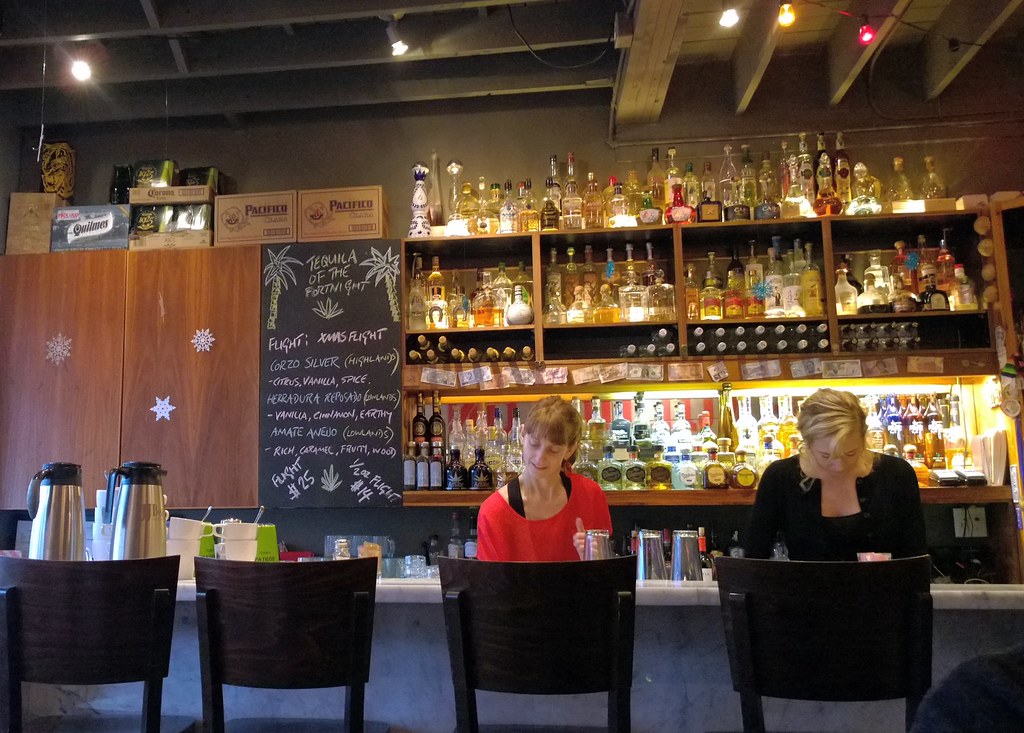
Featured photo: The bar at El Camino’s on Main by Ruth and Dave, BY 2.0.