A runny pecan pie almost always comes down to one of three things: too little egg for the amount of syrup, pulling the pie from the oven too early, or cutting it before it has cooled. Fix the ratio, bake until the edges are set and the center only wobbles slightly, check that the filling has reached at least 160°F, then let it cool for several hours before slicing.
Pecan pie filling is a custard. Eggs do the setting, and syrup and sugar do the sweetening. When the balance tips toward syrup, or the eggs never cook through, the slice slumps across the plate.
This guide covers the ratio, the syrup choice, blind baking, a numbered method, how to tell when it is done, and how to store it safely.
Key takeaways
- Use roughly 3 large eggs to 1 cup of syrup; fewer eggs is the most common cause of a loose filling.
- Blind bake the crust so the bottom stays crisp under a wet filling.
- The pie is ready when the edges are set and the center jiggles slightly, like gelatin, not like liquid.
- USDA says dishes containing eggs should reach 160°F; use an instant-read thermometer in the center.
- Cool for at least 3 hours, then refrigerate. USDA lists 3 to 4 days in the fridge for custard-type pies.
Why pecan pie turns out runny
It helps to know what is going on inside the pie. As the filling heats, egg proteins unfold and bond, trapping the sugar syrup in a soft gel. That gel is what lets a slice stand up. Anything that weakens it produces a runny pie.
- Too few eggs. A recipe heavy on syrup and light on eggs has too little protein to hold the sugar.
- Underbaking. The top browns quickly because of the nuts and sugar, so pies often look done well before the center has set.
- Cutting it warm. The gel keeps firming as it cools. A pie that is slightly loose at 30 minutes can be perfect at three hours.
- Too much liquid. Extra melted butter, milk or a very thin syrup dilutes the custard.
Every step below is aimed at one of those four problems.
Get the filling ratio right
For a standard 9-inch pie, this is a reliable base. It keeps the eggs high enough to set the filling, without tasting eggy.
- 3 large eggs, plus 1 extra yolk if you like a richer, firmer set.
- 1 cup light corn syrup or another thick syrup (see below).
- 2/3 cup packed brown sugar.
- 3 tablespoons melted butter.
- 1 teaspoon vanilla and 1/2 teaspoon salt.
- 1 1/2 to 2 cups pecan halves, lightly toasted.
If your current recipe calls for two eggs with a cup of syrup and runs every time, that is probably why. Add the third egg before changing anything else. Toasting the pecans for a few minutes in a dry pan or a moderate oven also pays off: it deepens their flavor and helps them stay crisp on top of the filling.
Pecan pie is a custard in disguise. Treat the eggs with respect and the slice will stand up on its own.
Corn syrup and the alternatives
Corn syrup is the classic base for a reason. It is thick, it is less sweet than many alternatives, and it helps keep the filling smooth rather than grainy. But it is not the only option, and each swap changes flavor and texture.
| Syrup | Flavor | Texture effect | Tip |
|---|---|---|---|
| Light corn syrup | Clean, mild, lets pecans lead | Smooth, sets reliably | The easiest choice for a first pie |
| Dark corn syrup | Deeper, molasses notes | Similar to light | Good with extra vanilla and a pinch more salt |
| Maple syrup | Distinct maple flavor | Thinner, so the set can be softer | Consider an extra yolk and bake to full doneness |
| Golden syrup | Buttery, caramel-like | Thick and smooth | Works close to one-for-one with corn syrup |
| Honey | Strong floral flavor | Browns faster | Use it for part of the syrup, not all, and watch the top |
Whatever you choose, keep the total amount of liquid sweetener the same and do not add water or milk to loosen it. If you use a thinner syrup, the extra yolk and a thorough bake matter even more.
Blind bake the crust first
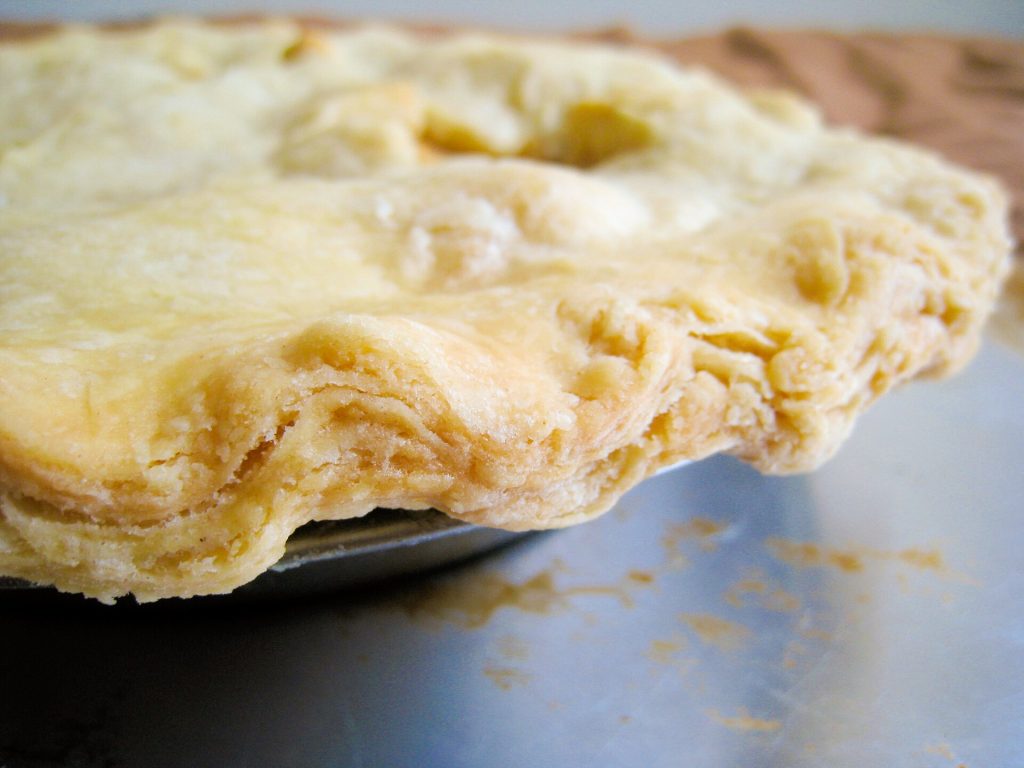
A wet custard poured into raw pastry is the recipe for a pale, soggy base. Blind baking, or par-baking the crust before it is filled, fixes that.
- Roll the pastry, fit it into a 9-inch pie plate and crimp the edge. Chill it for 30 minutes so it holds its shape.
- Line the pastry with parchment and fill it to the rim with pie weights or dried beans.
- Bake at 375°F until the edges are just turning golden, about 15 to 20 minutes.
- Lift out the parchment and weights, prick the base lightly, and bake for another 5 minutes until it looks dry.
- Let it cool while you mix the filling. A warm crust is fine; a hot one can start cooking the eggs as you pour.
How to make pecan pie, step by step
- Heat the oven to 350°F with a rack in the lower third, so the base gets steady heat.
- Whisk the eggs and extra yolk until just combined. Avoid beating in a lot of air, which makes the top foamy.
- Add the syrup, sugar, melted butter, vanilla and salt, and whisk until smooth.
- Spread the pecans in the par-baked crust, then pour the filling over them. The nuts will float to the top.
- Shield the edges. Cover the crimped edge with foil or a pie shield so it does not burn before the center sets.
- Bake for about 50 to 60 minutes. If the pecans darken too fast, lay a loose sheet of foil over the top for the last stretch.
- Check doneness using the tests in the next section before taking it out.
Doneness, cooling and storage
The jiggle test
Give the pie plate a gentle nudge. The outer ring of filling should be firm and slightly puffed, and the center should wobble as a single mass, the way set gelatin does. If the center ripples in waves like liquid, it needs more time. Check again every five minutes.
The thermometer check
Because the filling is an egg dish, use an instant-read thermometer in the center of the pie. FoodSafety.gov lists 160°F as the safe minimum internal temperature for egg dishes, and the USDA’s guidance on eggs says casseroles and other dishes containing eggs should be cooked to 160°F. A pie that passes the jiggle test will usually be above that, but the thermometer takes out the guesswork.
Cool it properly
Set the pie on a rack and leave it for at least three hours. This is not optional. The filling keeps setting as it cools, and cutting early is the single easiest way to turn a good pie into a runny one.
Store it in the fridge
- Refrigerate it. Iowa State University’s AnswerLine extension service says homemade pecan pies made with fresh ingredients should be refrigerated, and should not sit at room temperature for more than two hours.
- How long it keeps: USDA’s egg storage chart lists 3 to 4 days in the fridge for custard-type pies. Iowa State suggests 2 to 4 days for pecan pie, so plan to finish it within a few days.
- Freezing: Iowa State says pecan pie can be frozen whole or in slices and keeps best quality for about 1 to 2 months at 0°F.
Serve slices cold, or let them sit out briefly to take the chill off, within that two-hour window. Planning a bigger holiday spread? Our holiday dessert ideas and pie crust guide cover the rest of the table.
FAQ
Why is my pecan pie runny in the middle?
Usually too few eggs for the syrup, underbaking, or cutting it warm. Use about 3 eggs per cup of syrup, bake until only the center jiggles, and cool for at least three hours.
What temperature should pecan pie reach?
USDA guidance says dishes containing eggs should reach 160°F. Check the center with an instant-read thermometer.
Can I make pecan pie without corn syrup?
Yes. Golden syrup, maple syrup or a mix with some honey all work, but thinner syrups set more softly. Add an extra yolk and bake to full doneness.
Does pecan pie need to be refrigerated?
Yes. It is an egg-based pie, so refrigerate it within two hours of baking and eat it within a few days.
Bake a test pie this weekend
Before the holidays, bake one test pie with the 3-egg ratio and your chosen syrup. Note how long it takes to pass the jiggle test in your oven and what the thermometer reads at that point, then write both on the recipe card. Cool it overnight in the fridge and taste a slice cold and at room temperature to decide how you prefer to serve it. For more seasonal baking, browse our recipes section.
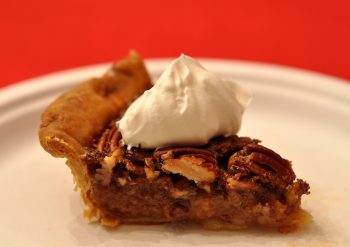
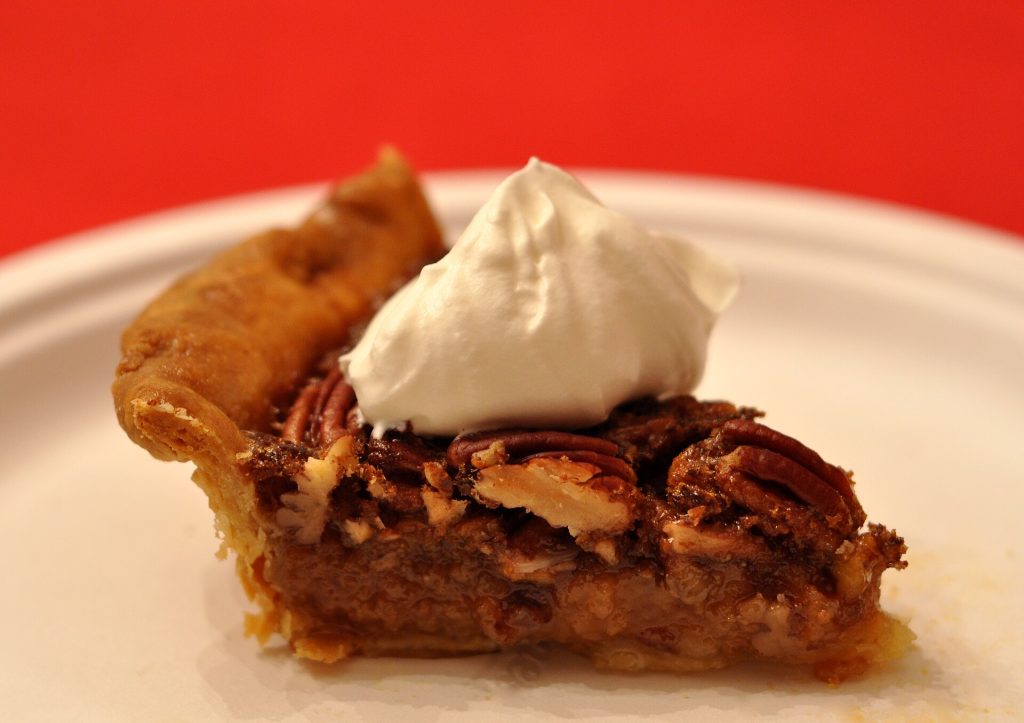
Featured photo: Pecan Pie slice by Kimberly Vardeman, BY 2.0.