The Oktoberfest beer styles you will find on shelves come down to two main lagers. Märzen is amber, toasty and malt-rich, the traditional autumn beer. Festbier is golden, lighter-bodied and smooth, and it is what actually fills the steins in Munich today. Add Munich Dunkel for something darker and a Helles Bock for something stronger, and you have the whole seasonal lineup.
The labels do not always make this easy. The BJCP notes that German export versions sold in the United States are typically orange-amber and often labelled Oktoberfest, while the beer poured in Munich itself is golden. Knowing which is which is the difference between getting the beer you pictured and getting a surprise.
This guide covers the Munich rules, how the styles differ, what to look for when buying, and what to eat with each one.
Key takeaways
- Märzen is amber and malty; Festbier is pale gold and lighter, and has been the Munich festival standard since 1990.
- Only six Munich breweries serve at the Wiesn: Augustiner, Hacker-Pschorr, Hofbräu, Löwenbräu, Paulaner and Spaten.
- Oktoberfest beer has protected geographical status and must be brewed in Munich.
- Buy fresh: these are malt-led lagers whose bready flavours fade with age.
- Roast chicken, pork, pretzels and sharp cheese pair with every style on the list.
Jump to a section:
- What counts as Oktoberfest beer in Munich
- The Oktoberfest beer styles, side by side
- How to shop the seasonal shelf
- Three ways to buy, by budget and occasion
- Food pairings that work
- Frequently asked questions
- Build your tasting flight
What counts as Oktoberfest beer in Munich
At the festival itself, the rules are strict. According to the official Oktoberfest website, only beer from six established Munich breweries may be served: Augustiner, Hacker-Pschorr, Löwenbräu, Paulaner, Spaten and the Staatliches Hofbräuhaus. The beer must comply with the Munich Purity Law of 1487 and the German Purity Law of 1906, and since 2022 “Oktoberfest beer” has held EU Protected Geographical Indication status, which guarantees it is brewed exclusively in Munich.
The city’s own münchen.de guide describes Wiesn beer as golden-yellow, relatively full-bodied and easy-drinking, with a minimum original wort of 13.6% and alcohol between 5.3% and 6.6%. The 2026 festival runs from 19 September to 4 October, and a one-litre Mass costs between €14.80 and €15.90 this year.
Each brewery’s 2026 festival strength
- Augustiner Wiesnbier: 6.3%
- Hofbräu: 6.3%
- Löwenbräu Wiesntrunk: 6.1%
- Hacker-Pschorr: 6.0%
- Paulaner: 6.0%
- Spaten Wiesnbier: 5.9%
Those numbers matter when you are pouring a litre at a time, so pace yourself and eat as you drink.
The Oktoberfest beer styles, side by side
The Beer Judge Certification Program (BJCP) style guidelines are the clearest reference for how these beers should look and taste. The table below uses the BJCP’s published ranges for colour (SRM, where higher is darker), bitterness (IBU) and strength.
| Style | Colour | Character | ABV | Bitterness (IBU) |
|---|---|---|---|---|
| Märzen | Amber to copper (SRM 8–17) | Clean, rich, toasty, bready malt; restrained bitterness; dry finish | 5.6–6.3% | 18–24 |
| Festbier | Pale gold (SRM 4–6) | Smooth, clean, moderately strong malt, light hops | 5.8–6.3% | 18–25 |
| Munich Dunkel | Brown (SRM 17–28) | Deeply toasted, bready malt, no roast or burnt notes | 4.5–5.6% | 18–28 |
| Helles Bock | Pale to light amber (SRM 6–9) | Strong, malty, well attenuated, more hop presence | 6.3–7.4% | 23–35 |
Märzen: the amber original
The BJCP traces Märzen to lagers brewed in March and stored through summer, and to Spaten’s lager work in 1841. It was the standard Oktoberfest beer from 1872 until 1990. Expect a fuller body, deeper malt and less hop than Festbier.
Festbier: what Munich pours now
Festbier is essentially a lighter-bodied, pale version of Märzen. The BJCP credits Paulaner with developing the golden version in the mid-1970s as a more drinkable festival beer, and it has dominated the Wiesn since 1990. If you want the beer they are drinking in the tents, this is it.
Dunkel and Helles Bock: the side players
Munich Dunkel is a malty brown lager that developed at Spaten in the 1830s, bready rather than roasty and a touch lighter in alcohol. Helles Bock is the heavyweight, pale and strong, and best poured in smaller glasses.
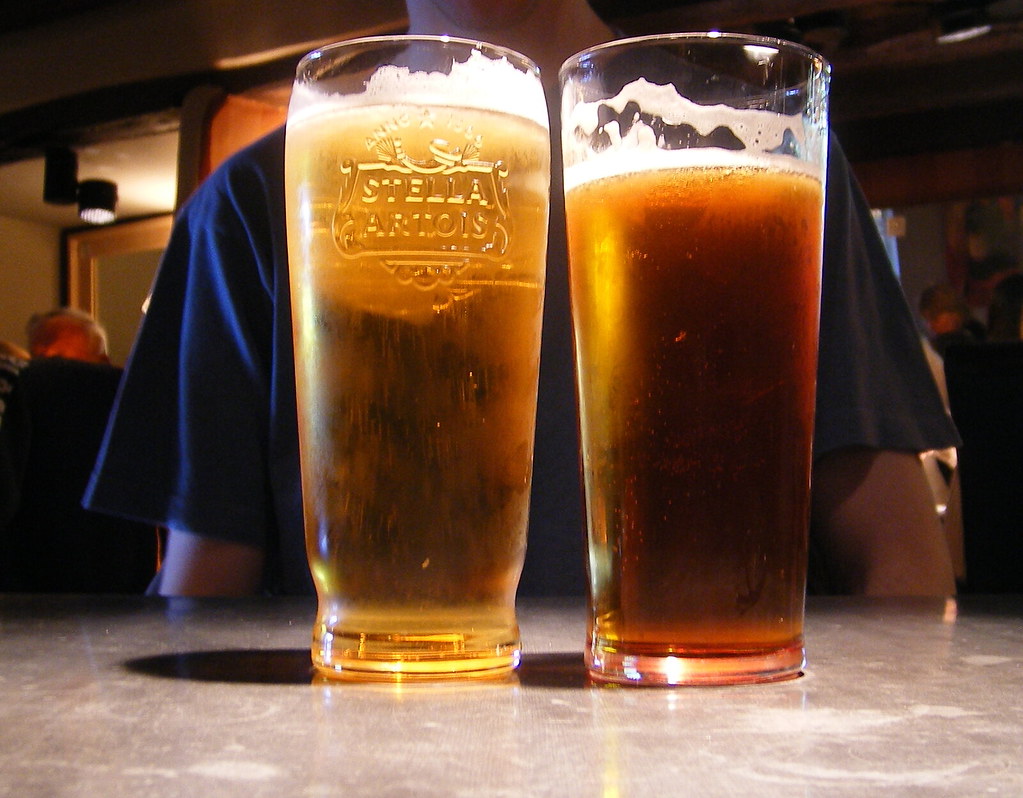
If the label says Oktoberfest, the colour in the glass tells you which beer you really bought.
How to shop the seasonal shelf
A buyer’s eye catches three things before the price tag: style, origin and freshness.
Read the style, not just the name
The word “Oktoberfest” alone does not tell you the colour. Exported German versions labelled Oktoberfest are usually the amber, toasty style, and plenty of local breweries follow that model too. Words like “Festbier” or “Wiesn” point towards the golden festival beer. When in doubt, read the brewery’s tasting notes for colour, or ask the shop.
Check the origin
Only Munich breweries can sell a beer as protected Oktoberfest beer in the EU. Beers from elsewhere may still be excellent, but they are made in the style rather than to the Munich rules.
Look for a date
These are malt-forward lagers with delicate bready flavours that fade over time. Buy from a shop that turns over stock quickly, choose cans or brown bottles, and avoid anything that has sat under bright lights.
- Check for a canned-on or best-before date.
- Prefer cold-stored stock to a warm display.
- Buy during the season rather than stocking up for months ahead.
Three ways to buy, by budget and occasion
Everyday: a regional craft six-pack
Local brewery Oktoberfest releases tend to be the freshest beer on the shelf, because they have not crossed an ocean. Check the can for the style; many are amber Märzen types with a sweeter malt profile.
Mid-range: the Munich imports
Pick up bottles or cans from the six Wiesn breweries for the Munich take on the season. Check whether each is the amber export style or a golden Festbier, and try two breweries side by side, say Augustiner and Paulaner, to taste the house differences.
Splurge: a party keg or a mixed tasting case
For a gathering, a small keg or a mixed case covering Märzen, Festbier and Dunkel turns a party into a tasting. Add proper glassware; a litre stein is theatrical, but a half-litre glass keeps the beer colder.
Browse more buying guides in our drinks section.
Food pairings that work
Malt-forward lagers are among the easiest beers to match with food. They have enough body for roasted meat, gentle carbonation to cut fat, and almost no bitterness to fight with salt.
| Beer | Classic pairing | Why it works |
|---|---|---|
| Märzen | Roast pork, bratwurst, sweet mustard | Toasty malt echoes browned meat and caramelised onions |
| Festbier | Roast chicken, pretzels, Obatzda cheese spread | Lighter body keeps rich snacks from feeling heavy |
| Munich Dunkel | Pork knuckle, mushroom dishes, rye bread | Bread-crust malt matches earthy, savoury flavours |
| Helles Bock | Aged cheese, schnitzel, apple strudel | Extra strength stands up to richer, sweeter plates |
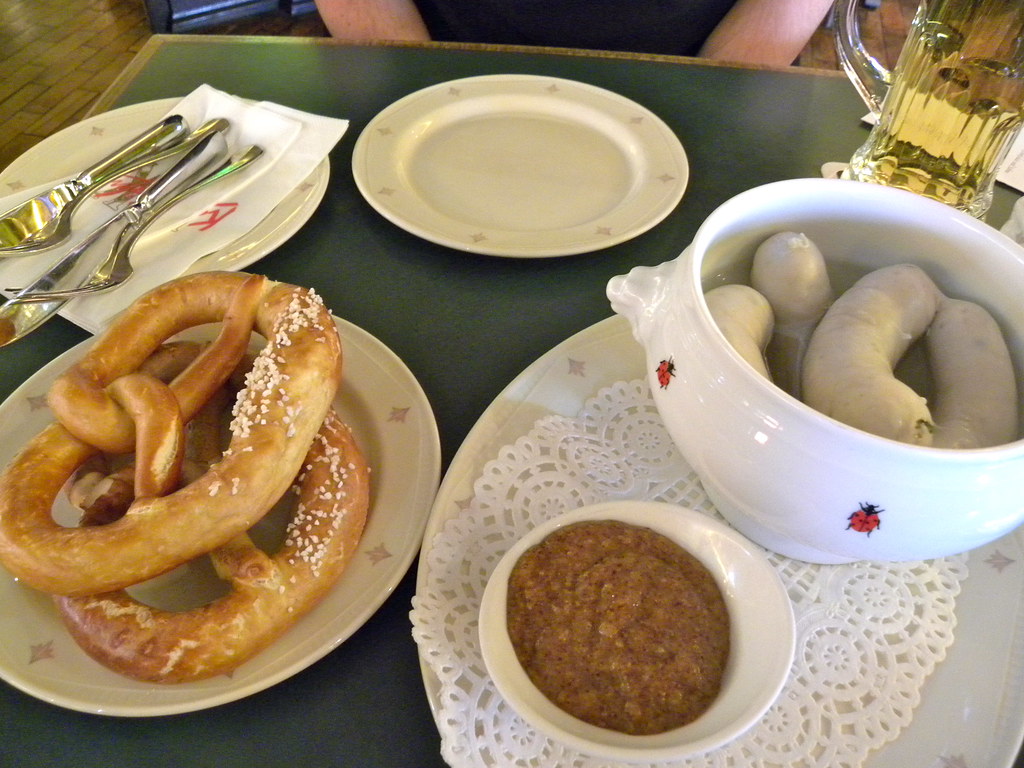
Planning a menu at home? Our guide to classic German dishes covers the pretzels and sausages, and our beer and food pairing basics work for every season.
Frequently asked questions
Is Oktoberfest beer the same as Märzen?
Not any more in Munich. The festival standard switched from amber Märzen to golden Festbier in 1990, although export versions labelled Oktoberfest are often still the amber style.
How strong is Oktoberfest beer?
The six Munich festival beers range from 5.9% to 6.3% this year, and the city’s rules allow 5.3% to 6.6%.
Can any brewery sell Oktoberfest beer?
In the EU, protected Oktoberfest beer must be brewed in Munich. Elsewhere, brewers can make the style, but only six Munich breweries pour at the Wiesn.
Should Oktoberfest beer be served very cold?
Serve it cool rather than icy, so the malt flavour comes through. Pull it from the fridge a few minutes before pouring.
Build your tasting flight
Buy four beers this week: a local Märzen, a Munich Festbier, a Dunkel and a Helles Bock. Pour them light to dark, strongest last, with a plate of pretzels, sausages and sharp cheese. Twenty minutes of side-by-side tasting will teach you more about Oktoberfest beer styles than any label.
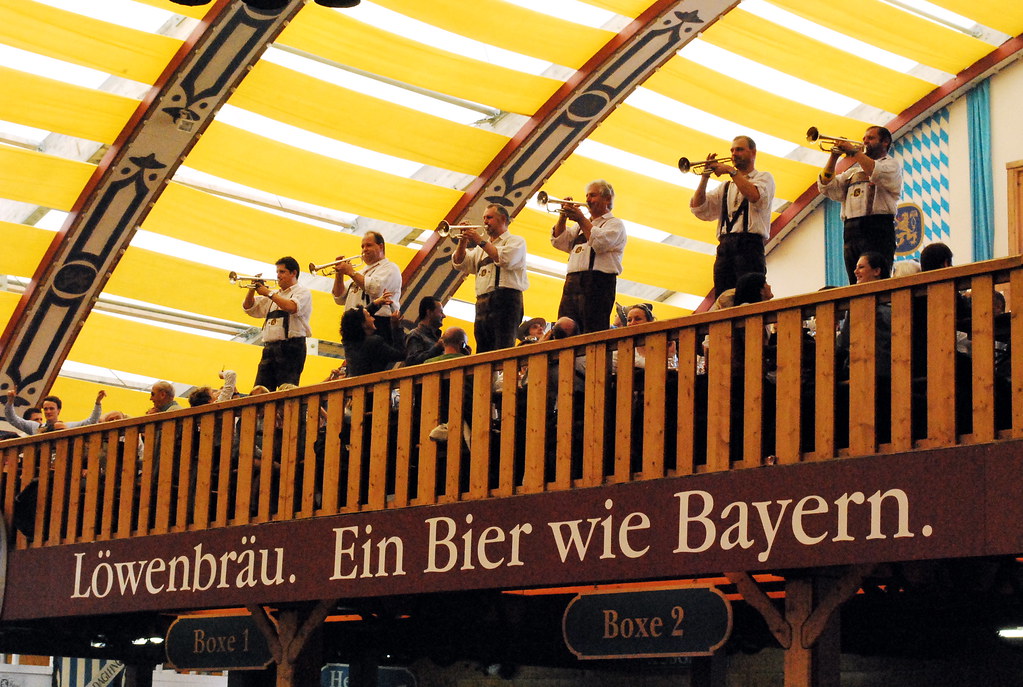
Featured photo: Munich Oktoberfest by AbhijeetRane, BY 2.0.