

-
by Restaurants Expert
- July 24, 2026
Running a restaurant means balancing physical space and changing inventory levels. When business grows, your need for refrigerated space often grows faster than your kitchen can manage. The traditional answer to this problem has been to hire a contractor, knock down walls, and build a larger walk-in cooler.
However, major construction projects bring massive downsides for food businesses. You have to deal with expensive building permits, loud disruptions, and long timelines that can force you to close your doors temporarily. Losing days of operation just to build a bigger freezer can severely damage your profit margins.
Fortunately, you can expand your cold capacity without touching a single brick. Smart operators are using flexible, external, and digital solutions to scale their storage instantly. By thinking outside the traditional kitchen footprint, you can keep your kitchen running smoothly while handling more fresh products than ever.
Maximize Your Existing Footprint
Before you look outside your building, take a hard look at the layout of your current refrigeration units. Many restaurants waste up to thirty percent of their cold storage space through poor organization and outdated shelving. Upgrading your internal storage strategy is the fastest way to gain extra space without spending a fortune.
Start by replacing standard wire shelves with high-density track shelving systems. These systems allow you to slide shelving units together, eliminating the need for multiple permanent aisles inside your cooler. You simply create an aisle where you need it, when you need it, which can increase your usable storage area by forty percent.
Airflow management also plays a massive role in maximizing your current space. Food safety codes require proper spacing between items to allow cold air to circulate freely. By investing in clear, stackable food pans and labeled bins, you can organize ingredients tightly while maintaining necessary airflow.
Utilize On-Site Portable Units
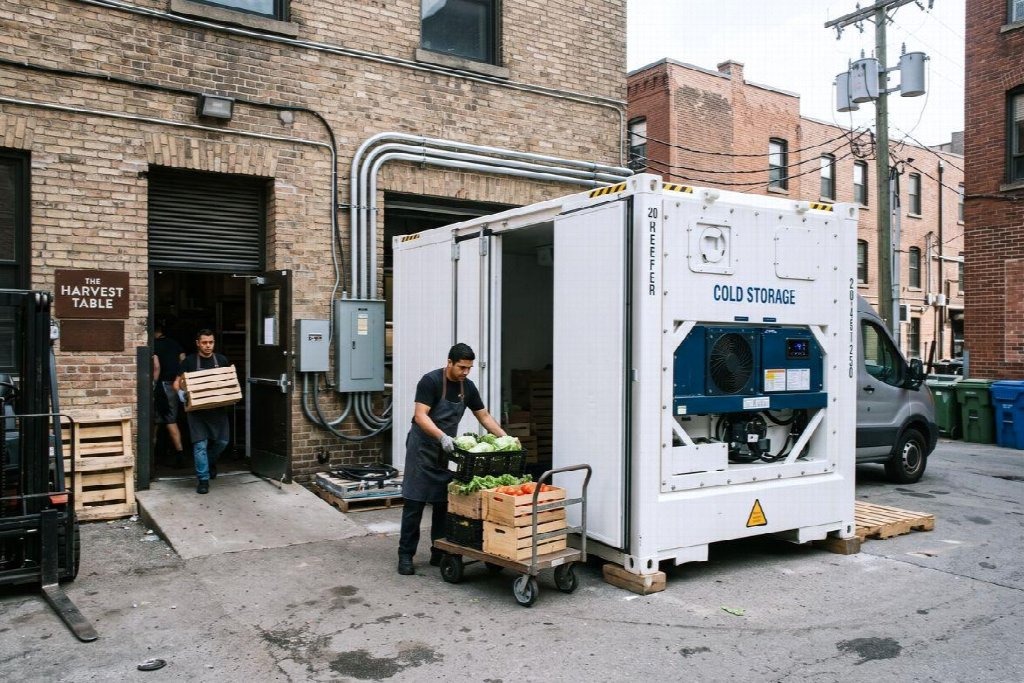
When your internal footprint is truly maxed out, you must look immediately outside your walls. Profits can be lost if you cannot accept bulk deliveries due to space limits. One of the best ways to solve this is by placing a dedicated temperature-controlled unit right outside your back door.
For restaurants with an available parking lot space or a loading dock, dropping a temporary unit on the property is a game changer. These units are secure, weather-resistant, and can maintain precise temperatures ranging from deep freeze to gentle chill. They plug directly into your restaurant’s electrical panel, which keeps them quiet and free from fumes.
Using heavy-duty reefer containers allows you to buy your highest-volume ingredients in bulk. You can store extra crates of proteins, dairy, or seasonal produce just steps away from your main prep line. This setup keeps your indoor coolers organized for daily service while the outdoor unit holds your back stock.
Rent Fleet Solutions for Seasonal Surges
Many food businesses do not need extra refrigeration all year long. Catering companies, event venues, and seasonal restaurants often face massive demand spikes during the holidays or summer months. Paying for permanent storage that sits empty for six months of the year is a poor financial decision.
In these situations, utilizing mobile refrigeration assets on a short-term basis is the most efficient choice. You can have a fully operational cooling unit delivered to your location exactly when your busy season starts. Once the rush is over and your inventory levels drop, the provider simply hauls the unit away.
Securing temporary reefer trailers for rent gives your business the ultimate operational agility. These trailers sit on wheels, making them incredibly easy to position in tight alleyways or loading zones. They are perfect for holiday inventory surges, large-scale catering weekends, or even as an emergency backup if your primary kitchen cooler breaks down.
Transition to a Commissary Model
If your restaurant has reached its absolute physical limit on-site, it might be time to change your operational model. Instead of trying to store everything at your main location, you can move your bulk storage and heavy prep work off-site. This strategy frees up valuable kitchen real estate for guest seating and line cooking.
Partnering with a local commissary kitchen or a shared cold storage facility allows you to rent exact pallet spaces. Your team can receive large shipments at the off-site facility, perform bulk ingredient prep, and portion items into smaller containers. Then, you only transport what you need for the next day or two to your active restaurant kitchen.
This hub-and-spoke method reduces the pressure on your restaurant’s small reach-in coolers. It also ensures that your kitchen staff spends less time unboxing bulk deliveries in narrow hallways. Your central inventory stays safe, monitored, and perfectly chilled in a professional warehouse environment.
Adjust Your Vendor Delivery Schedules
Sometimes the solution to a space shortage is not about adding physical equipment. Instead, it is about controlling the flow of goods into your building. If your walk-in cooler is completely packed on Monday but empty by Thursday, your delivery schedule is the real problem.
Talk to your primary food distributors about increasing the frequency of your deliveries. Receiving three smaller shipments per week instead of one massive drop can drastically reduce your maximum storage requirement. While some vendors charge a small fee for frequent stops, the cost is often much lower than acquiring new hardware.
This just-in-time inventory system ensures that you are only storing what you actually plan to cook over the next forty-eight hours. Your ingredients will be noticeably fresher, and your food waste metrics will likely improve. It turns your existing cold storage into a fast-moving transit zone rather than a stagnant warehouse.
Leverage Off-Peak Prep and Menu Engineering
Your menu dictates your storage needs. If your current menu relies heavily on items that require days of marination or slow chilling, your coolers will always be crowded. Making small adjustments to how and when you prepare food can free up surprising amounts of space.
Consider engineering your menu to feature more items that utilize dry-aged or ambient storage ingredients. You can also shift your prep schedules so that high-volume items are processed during off-peak hours. Prepping ingredients right before service reduces the amount of time those items need to sit inside your walk-in cooler.
Cross-utilizing ingredients across multiple dishes also keeps your inventory lean. If five different menu items use the same chilled vegetable, you can rotate through your stock much faster. This approach keeps your cold shelves clear and prevents slow-moving items from taking up premium real estate.
Choose Flexibility Over Concrete
Expanding your restaurant’s ability to hold cold products does not require a construction crew. By combining organizational upgrades, smart rental assets, and strategic scheduling, you can scale your capacity seamlessly. This approach saves your capital, protects your daily revenue, and gives you the agility to adapt to any business environment.