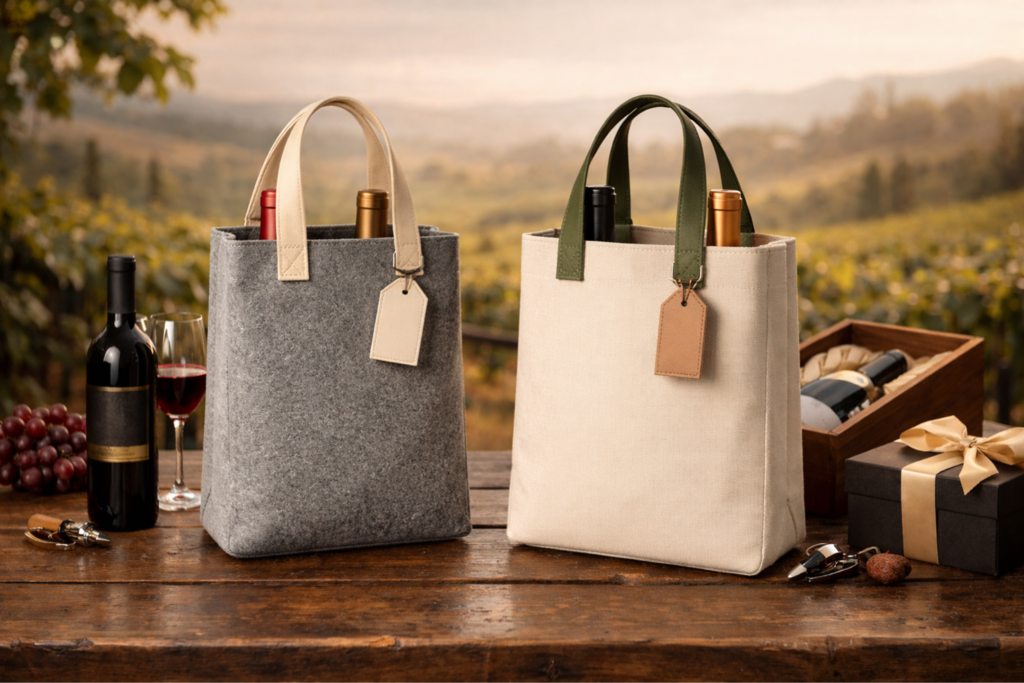
Custom wine bags elevate wine packaging by combining premium presentation, practical functionality, and long-term brand exposure into a single reusable asset. They transform packaging from a disposable necessity into a strategic marketing tool that enhances perceived value, protects the product, and extends brand visibility beyond the point of sale.
Wine packaging has shifted from purely protective to deeply experiential. Consumers no longer evaluate a bottle solely on taste or label design. The way it is presented, carried, and gifted now plays a measurable role in purchasing decisions. Custom wine totes sit at the center of this shift, bridging branding, sustainability, and usability.
Key Takeaways
- Custom wine totes increase perceived product value through premium presentation and materials
- Reusable designs extend brand visibility far beyond the initial purchase
- Functional features such as insulation and dividers improve usability and protection
- Sustainable materials strengthen brand positioning among eco-conscious consumers
- Strategic design and placement can directly influence repeat purchases and customer loyalty
What Are Custom Wine Totes and Why They Matter
Custom wine totes are reusable carriers designed specifically for transporting wine bottles while showcasing a brand’s identity through tailored materials, colors, and printing techniques. Unlike standard paper bags, these totes are built for durability, repeated use, and visual impact.
They are typically made from materials such as canvas, jute, neoprene, felt, or recycled fabrics. Each material offers a different balance of structure, insulation, and aesthetic appeal. More importantly, they serve as a continuation of the brand experience beyond the bottle itself.
The growing demand for premium packaging has made custom totes less of an accessory and more of a strategic necessity for wineries, retailers, and wine-focused brands.
The Psychology of Packaging: Why Presentation Changes Perceived Value
Visual cues and premium perception
Consumers often associate quality with visual sophistication. A structured tote with clean stitching and thoughtful design signals care, craftsmanship, and higher product value before the bottle is even opened.
The role of texture, weight, and structure
Heavier materials like canvas or thick felt create a sense of durability and substance. This tactile experience influences how consumers perceive the wine itself, even if the product inside remains unchanged.
Packaging as part of the gifting experience
Wine is frequently purchased as a gift. A custom tote eliminates the need for additional wrapping while enhancing presentation. It turns a simple bottle into a complete, ready-to-give package.
Personalized Wine Totes as a Branding Asset
Turning customers into brand ambassadors
When customers reuse a wine tote in social settings such as dinners, picnics, or events, they inadvertently promote the brand. This transforms each tote into a mobile marketing channel.
Long-term brand recall through reuse
Unlike disposable packaging, reusable totes remain in circulation for months or even years. This repeated exposure strengthens brand recall in a way traditional packaging cannot.
Event-based branding and limited editions
Custom totes can be designed for specific events, seasonal releases, or collaborations. These limited editions create collectibility and enhance emotional engagement with the brand.
Functional Advantages That Go Beyond Aesthetics
Bottle protection and transport safety
Internal dividers prevent bottles from clinking together, reducing the risk of breakage. This is especially valuable for multi-bottle purchases or long-distance transport.
Insulation and temperature control
Insulated totes help maintain ideal wine temperatures, particularly important for white, rosé, and sparkling wines.
Multi-bottle capacity and versatility
Many totes are designed to carry multiple bottles comfortably, making them ideal for gatherings, gifting, or bulk purchases.
Sustainability and Eco-Conscious Consumer Appeal
Reusable vs single-use packaging
The shift away from single-use packaging has accelerated in recent years. Reusable wine totes align with this trend by reducing waste and encouraging long-term use.
Materials that support sustainability goals
Options such as recycled fabrics, organic cotton, and jute appeal to environmentally conscious consumers. These materials reinforce a brand’s commitment to responsible practices.
Brand perception in eco-driven markets
Sustainability is no longer optional. Packaging choices directly influence how consumers perceive a brand’s values and credibility.
Custom Wine Totes in Retail, Events, and Direct-to-Consumer Sales
In-store presentation and upselling
Displaying wine in custom totes can elevate in-store presentation and justify premium pricing. It also encourages impulse purchases by offering added value.
Wine clubs and subscription packaging
For subscription-based models, including a reusable tote enhances the unboxing experience and differentiates the brand from competitors.
Corporate gifting and event merchandising
Custom totes are widely used in corporate gifting, weddings, and promotional events. They provide both practicality and branding in a single package.
How Custom Wine Totes Drive Customer Loyalty and Repeat Purchases
Perceived added value
Providing a durable tote with a purchase creates a sense of receiving more than just a bottle of wine. This increases customer satisfaction.
Incentivized reuse programs
Some brands offer discounts or perks when customers return with their tote. This encourages repeat visits and strengthens customer relationships.
Emotional connection and brand affinity
Reusable items that become part of a customer’s routine create a subtle but powerful emotional connection with the brand.
Design Elements That Maximize Impact
Logo placement and visibility
Strategic logo placement ensures visibility without overwhelming the design. Subtle branding often feels more premium and intentional.
Color psychology and brand alignment
Color choices influence perception. Neutral tones suggest sophistication, while bold colors can convey energy and creativity.
Structural features that enhance usability
Reinforced handles, internal compartments, and foldable designs improve functionality and user experience.
Comparing Custom Wine Totes vs Traditional Packaging
Traditional packaging such as paper bags serves a short-term function. It is inexpensive but disposable and offers minimal branding value.
Custom wine totes, while requiring a higher initial investment, provide long-term returns through reuse, brand exposure, and improved customer perception. They also reduce waste, aligning with modern sustainability expectations.
From a strategic perspective, the difference is not just cost. It is impact.
Emerging Trends in Wine Packaging
Wine packaging is evolving toward multi-functional, experience-driven solutions.
Key trends include:
- Increased use of recycled and biodegradable materials
- Hybrid packaging combining structure with flexibility
- Personalization for small-batch releases and gifting
- Packaging designed for social sharing and lifestyle integration
Brands that adapt to these trends position themselves ahead of shifting consumer expectations.
Strategic Tips for Businesses Investing in Custom Wine Totes
Businesses should approach custom wine totes as a long-term brand asset, not just a packaging add-on, because the best results come from combining usability, visual appeal, and repeat exposure.
- Focus on durability to ensure long-term reuse
- Align design with brand identity rather than trends
- Prioritize functionality alongside aesthetics
- Use totes strategically for high-value purchases or promotions
- Avoid overcomplicated designs that reduce usability
Frequently Asked Questions
Can custom wine totes increase average order value?
Yes, custom wine totes can help increase average order value by making bundles and gift-ready purchases feel more complete. Customers are often more willing to add a tote when buying multiple bottles, corporate gifts, or special occasion orders. This added packaging element can also make the overall purchase feel more premium and intentional.
What printing methods are best for custom wine totes?
The best printing method depends on the tote material, design style, and how durable the branding needs to be. Screen printing works well for bold, simple logos, while embroidery creates a more upscale and textured finish. Heat transfer and digital printing are better suited for more detailed artwork or multicolour designs.
Are insulated wine totes necessary for all types of wine?
Insulated wine totes are not necessary for every bottle, but they are especially useful for wines that benefit from staying cool during transport. They are a strong option for white wine, rosé, sparkling wine, and any bottle being carried to outdoor events or warm locations. For many red wines, a standard durable tote may be enough for short trips.
How long do custom wine totes typically last?
A well-made custom wine tote can last for years, especially when made from strong materials like canvas, neoprene, jute, or reinforced felt. Its lifespan depends on construction quality, stitching, handle strength, and how often it is used. Because of that durability, wine totes can continue promoting a brand long after the original purchase.
Can small businesses benefit from custom wine totes?
Yes, small businesses can benefit from custom wine totes because they help create a more polished and memorable brand presentation. A reusable tote can make a smaller winery, wine shop, or gift business look more established without requiring a major packaging overhaul. It also gives smaller brands a practical way to build visibility each time the tote is reused.
Why Custom Wine Totes Are a Smart Packaging Investment
Custom wine totes represent a shift in how packaging contributes to overall product value. They move beyond basic functionality and become part of the customer experience, influencing perception from the moment a bottle is purchased. By combining structure, design, and usability, they elevate presentation in a way that standard packaging cannot replicate. This added layer of thoughtfulness helps position the product as more premium and considered.
At the same time, their long-term value extends well beyond the initial transaction. Reusable totes continue to promote the brand in everyday settings, creating ongoing visibility without additional marketing spend. They also align with modern expectations around sustainability and practical design, which are increasingly shaping consumer decisions. For businesses looking to enhance both presentation and brand impact, custom wine totes offer a clear and strategic advantage.