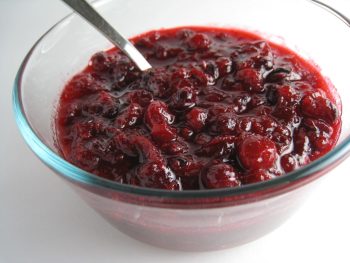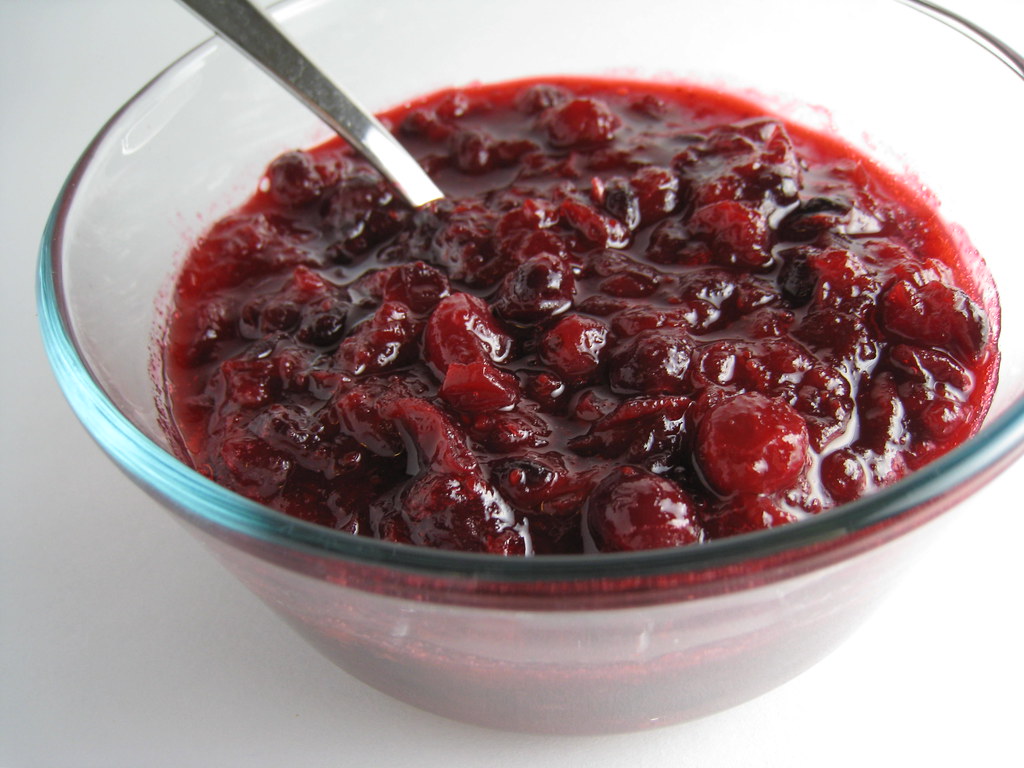
Homemade cranberry sauce needs three ingredients and about 15 minutes: cranberries, sugar and water, simmered until the berries burst and the liquid thickens. Cranberries are naturally rich in pectin, so the sauce sets on its own as it cools, with no added gelling agent. Fresh and frozen berries both work.
It is also one of the few holiday dishes that improves when you make it early. That frees up a burner on the day that matters and gives the flavors time to settle.
This guide covers where cranberries come from, how to choose them, a reliable ratio, step-by-step method, variations and safe storage.
Key takeaways
- The base ratio used by the National Center for Home Food Preservation is 4 cups cranberries, 1 cup water and 2 cups sugar.
- Cranberries are high in natural pectin, so the sauce gels as it cools without added pectin.
- Fresh berries keep up to 4 weeks in the fridge and up to a year in the freezer; frozen berries go straight into the pot.
- Wisconsin grows about 60% of the US crop and Massachusetts about 25%, according to USDA’s Economic Research Service.
- Treat the finished sauce as a leftover: USDA says 3 to 4 days in the fridge or 3 to 4 months frozen.
Where your cranberries come from
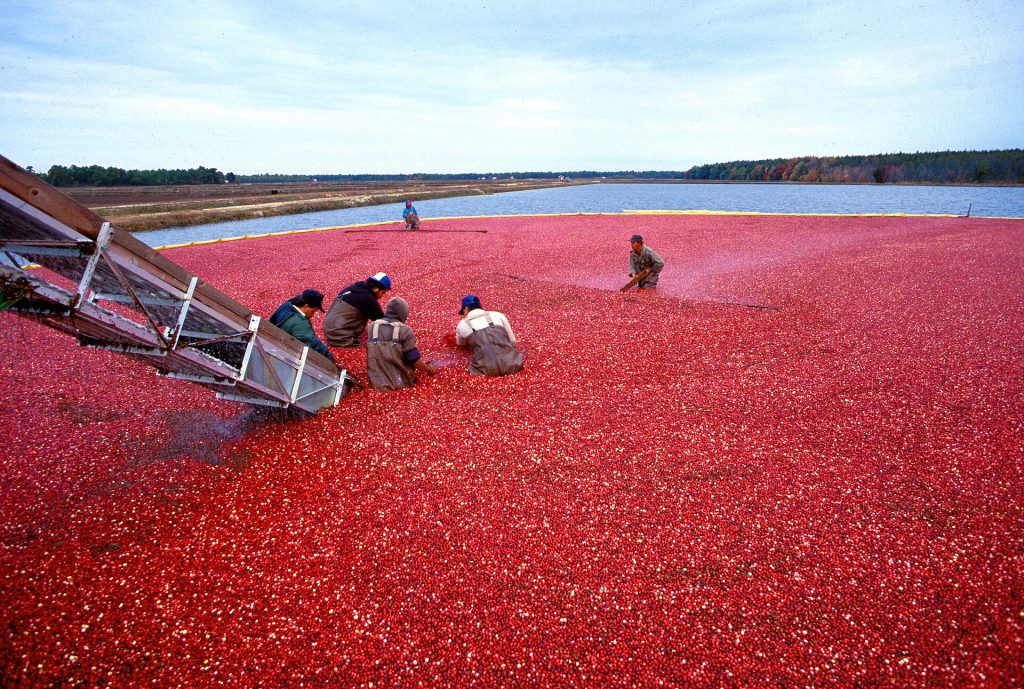
Cranberries are a genuinely North American fruit. The Cape Cod Cranberry Growers’ Association says they are native only to North America and that southeastern Massachusetts is the birthplace of the commercial industry. The Wampanoag people harvested wild cranberries for thousands of years, and in 1816 Captain Henry Hall of Dennis, Massachusetts, began cultivating them after noticing that sand improved the growth of the wild vines on his land.
Today Wisconsin leads. USDA’s Economic Research Service forecast the 2025 US crop at 8.13 million barrels, a barrel being 100 pounds, with Wisconsin at 5.3 million barrels and Massachusetts at 1.75 million after a dry season. Wisconsin typically supplies about 60% of US production and Massachusetts about 25%, with Oregon and New Jersey also growing significant crops.
Fresh cranberries are in season from October through December, according to Penn State Extension, which is why they appear in stores just in time for Thanksgiving.
Fresh or frozen cranberries
Either will do. Frozen cranberries cook down the same way as fresh ones, and you don’t need to thaw them first. The only difference is a few extra minutes before the pot comes back to a boil.
Choosing fresh berries
The National Center for Home Food Preservation says good cranberries should be brightly coloured, fully red or yellowish-red, with smooth, glossy, firm skins. Discard any that are shrivelled, soft, wrinkled or blemished. Penn State Extension adds a useful test: a fresh berry will bounce when dropped.
Storing and freezing
- Refrigerator: up to 4 weeks in the original bag in the crisper drawer.
- Freezer: up to one year. Freeze them dry, because water on the skin can make the berries blister when frozen.
- Using frozen: rinse in cold water, drain well and add to the pot.
Buy an extra bag or two in November and freeze them. That way you can make sauce in February when the shelves are empty.
The sugar ratio, and why the sauce sets
Cranberries are sharply acidic, so sugar does more than sweeten. It also helps the sauce set.
The National Center for Home Food Preservation notes that cranberries are high in natural pectin, which helps gel development. Penn State Extension explains that because the berries contain large amounts of both pectin and acid, they form a gel when combined with sugar. That is why cranberry sauce thickens noticeably as it cools, even if it looks loose in the pan.
| Sweetness level | Cranberries | Sugar | Water | Result |
|---|---|---|---|---|
| Standard (NCHFP ratio) | 4 cups | 2 cups | 1 cup | Firm set, classic sweet-tart balance; the ratio used for canning |
| Tarter | 4 cups | 1 1/2 cups | 1 cup | Softer set, brighter flavour; for the fridge, not for canning |
| Tart | 4 cups | 1 cup | 1 cup | Loose, spoonable sauce; best served within a few days |
Cutting sugar changes the texture as well as the taste, so expect a softer sauce at the lower ratios. If you plan to can the sauce, stick exactly to the tested recipe.
Cranberries bring their own pectin. Your job is to supply sugar, heat and patience while it cools.
How to make homemade cranberry sauce, step by step
This makes about 4 cups, enough for a table of eight to ten.
- Rinse and sort. Rinse 4 cups of cranberries in cold water and pick out any soft or shrivelled ones and stray stems.
- Heat the liquid. Put 1 cup of water in a heavy saucepan. For a smoother, glossier sauce, dissolve the sugar in the water first and bring it to a boil.
- Add the berries. Tip in the cranberries and bring back to a boil, then reduce to a steady simmer.
- Cook until they burst. Stir now and then. Within about 10 minutes most berries will pop and the liquid will turn deep red and syrupy.
- Add sugar if you haven’t. If you cooked the berries in plain water, as the NCHFP canning recipe does, stir in 2 cups of sugar once the berries are soft, return to the boil and boil for 3 minutes.
- Choose the texture. Leave the berries whole, crush them with a potato masher, or press the sauce through a fine sieve for a smooth, jellied style.
- Cool. Take the pan off the heat. The sauce will look thin; it thickens as it cools thanks to the pectin.
- Chill. Transfer to a shallow container and refrigerate once it stops steaming, within two hours of cooking.
For a jellied loaf
Sieve the cooked berries to remove the skins and seeds, as described in the NCHFP cranberry sauce recipe, then boil with the sugar for 3 minutes, pour into a lightly oiled loaf tin or mould and chill overnight before turning it out.
Three variations: orange, ginger and port
Once the base is right, add flavourings near the end so they stay bright.
Orange
Swap half the water for fresh orange juice and stir in the finely grated zest of one orange in the last minute of cooking. It’s the most popular variation for a reason: citrus rounds off the tartness.
Ginger
Add a tablespoon of finely grated fresh ginger with the berries, or stir in chopped crystallised ginger at the end for little bursts of heat. A pinch of ground cinnamon or allspice works well with it.
Port
Replace a quarter to half of the water with ruby port. Simmering drives off some alcohol, but not all of it, so label the bowl if children or guests who avoid alcohol are at the table.
- Maple syrup in place of some of the sugar, for a deeper flavour.
- Toasted chopped pecans or walnuts, stirred in just before serving.
- A splash of balsamic vinegar and black pepper for a savoury version to serve with cheese.
Make-ahead and storage
Cranberry sauce is a make-ahead dish by nature, but it is still a cooked food, so treat it like any other leftover.
- Refrigerator: USDA’s Food Safety and Inspection Service says leftovers keep 3 to 4 days in the refrigerator. Make the sauce no more than a few days before you serve it.
- Freezer: the same guidance gives 3 to 4 months frozen. Freeze in shallow, airtight containers and thaw overnight in the fridge.
- The 2-hour rule: refrigerate within 2 hours of cooking, or within 1 hour if it’s above 90°F.
- Canning: for shelf-stable jars, follow the NCHFP recipe exactly, with 1/2-inch headspace and a boiling-water-canner time of 15 minutes for half-pints or pints at up to 1,000 feet, longer at higher altitudes.
Plan the rest of the feast with our Thanksgiving side dishes and turkey cooking guide.
FAQ
Can I use frozen cranberries for homemade cranberry sauce?
Yes. Rinse them in cold water, drain and add them straight to the pot. There’s no need to thaw first.
Why is my cranberry sauce runny?
It probably hasn’t cooled yet. The natural pectin sets the sauce as it cools. If it’s still loose once chilled, simmer it a few more minutes next time or use the full sugar ratio.
How far ahead can I make cranberry sauce?
Up to 3 to 4 days ahead in the fridge, or up to 3 to 4 months frozen, following USDA leftover guidance.
Do I need to add pectin?
No. Cranberries are high in natural pectin, which is why the sauce gels with nothing more than sugar and heat.
Make a test batch this weekend
Buy a bag of cranberries now, while they’re in season, and make a small test batch at the standard ratio. Taste it cold the next day, then decide whether you want it tarter, add orange or ginger, or turn it into a jellied loaf. Freeze a second bag for later. For more seasonal cooking, browse our recipes section.
Featured photo: Cranberry Sauce by Veganbaking.net, BY-SA 2.0.