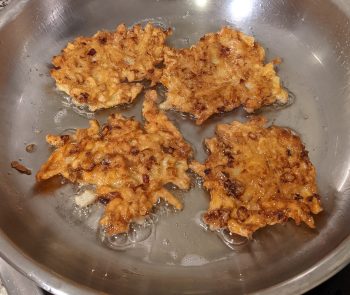
The classic Hanukkah foods are fried in oil or made with cheese. Oil recalls the story of the Temple lamp that burned for eight days on a small supply, so Ashkenazi Jews fry potato latkes, Israelis eat jelly-filled sufganiyot, and Sephardic families make bimuelos, small fritters soaked in honey or syrup. Dairy dishes nod to a second, older story about the heroine Judith.
Brisket often anchors the main meal, though it is a general Jewish holiday dish rather than a Hanukkah symbol. In 2026, Hanukkah begins at sundown on Friday 4 December, so the frying starts that evening.
Here is where each dish comes from, how the traditions differ between communities, and what to serve if you are hosting or cooking for the first time.
Key takeaways
- Hanukkah 2026 begins at sundown on 4 December and ends at nightfall on 12 December.
- Fried foods honour the oil that lasted eight days; cheese dishes recall the story of Judith.
- Potato latkes date only from the late 18th or early 19th century, once potatoes became common in Eastern Europe.
- Sufganiyot became Israel’s Hanukkah food from the 1920s, helped along by the labour federation.
- Sephardic bimuelos are to many Sephardic families what latkes are to Ashkenazi ones.
Why oil, and why cheese
Hanukkah marks the rededication of the Temple in Jerusalem after the Maccabean revolt. My Jewish Learning explains that the food customs follow the holiday’s central miracle, one cruse of oil lasting for eight days, which is why the menu is built around foods fried in oil.
There is also a dairy thread. The same source points to the Book of Judith, in which Judith fed an enemy general salty cheese to make him thirsty and wine to make him drunk before defeating him. That story is why cheese pancakes, fried cheese and other dairy dishes turn up at Hanukkah alongside the fried food.
So the working rule for a Hanukkah menu is simple: foods that are either fried in oil or made with cheese. Almost every regional tradition below fits one of the two.
Latkes: a newer tradition than you think
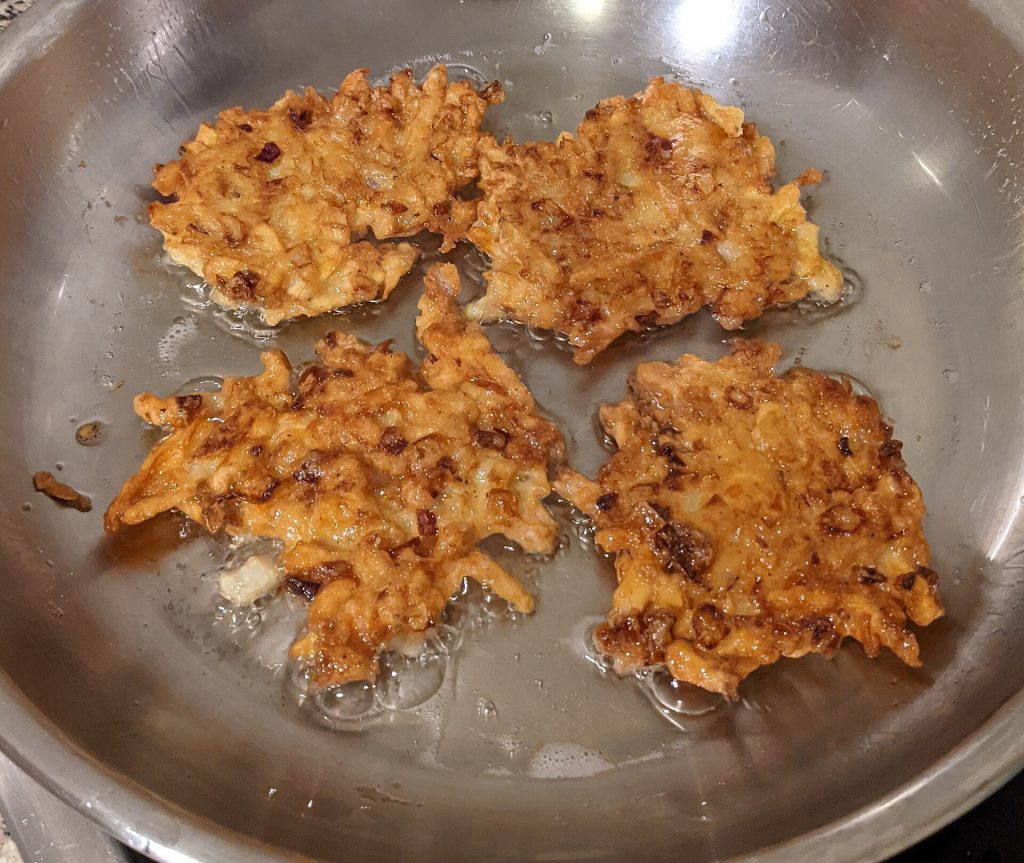
Potato latkes are the best-known Hanukkah food in North America, but they are younger than most people assume. According to the Union for Reform Judaism, potatoes reached Europe in the 16th century, yet it took close to 200 years for them to become everyday food, and the potato latke recipe was not created until the end of the 18th or early 19th century. Latke is simply the Yiddish word for pancake.
The goose-fat connection
The Reform Judaism history offers a practical explanation for the timing. In Eastern Europe, geese were slaughtered in December, and their fat was rendered as cooking fat for much of the year. A poor family could combine a potato from the field, an onion from the cellar and some newly rendered goose fat, or schmaltz, and have a festive fried dish on the table.
Before the potato
Earlier Hanukkah pancakes were often made with cheese, linking back to Judith. The same source notes that in warmer climates, the Judith story still translates into cheese pancakes, some salty and some sweet. Today, potato latkes are usually served with applesauce or sour cream, and which topping wins is a family argument in many homes.
Every Hanukkah dish answers one of two stories: the oil that lasted eight days, or the cheese that won a battle.
Sufganiyot and the Israeli doughnut season
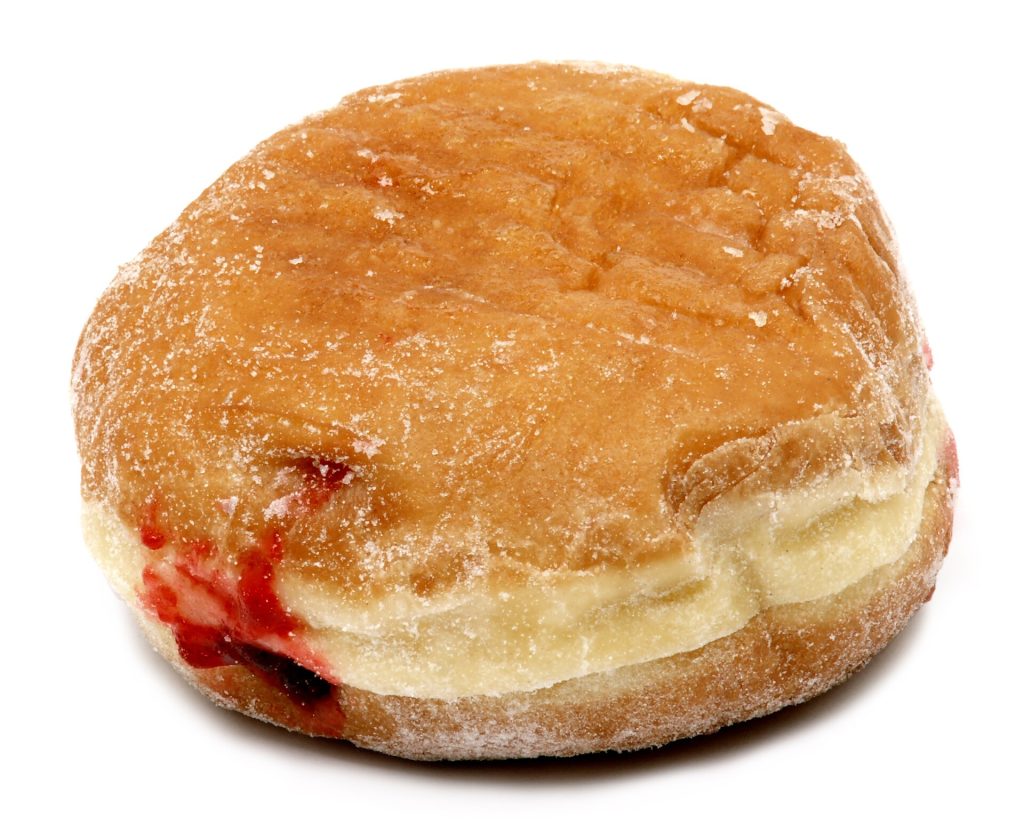
In Israel, the Hanukkah food is the sufganiyah, a yeasted doughnut filled with jam and dusted with sugar. The Nosher at My Jewish Learning reports that sufganiyot became Israel’s Hanukkah food of choice before the state was established, beginning in the 1920s.
The labour federation, the Histadrut, saw the doughnuts as a way to create work. Preparing, transporting and selling them provided jobs, and the push began weeks before the first night of the holiday, stretching the season. The same article says Israel’s largest commercial bakery purportedly fries more than 250,000 sufganiyot each day of the holiday.
Bimuelos and the Sephardic table
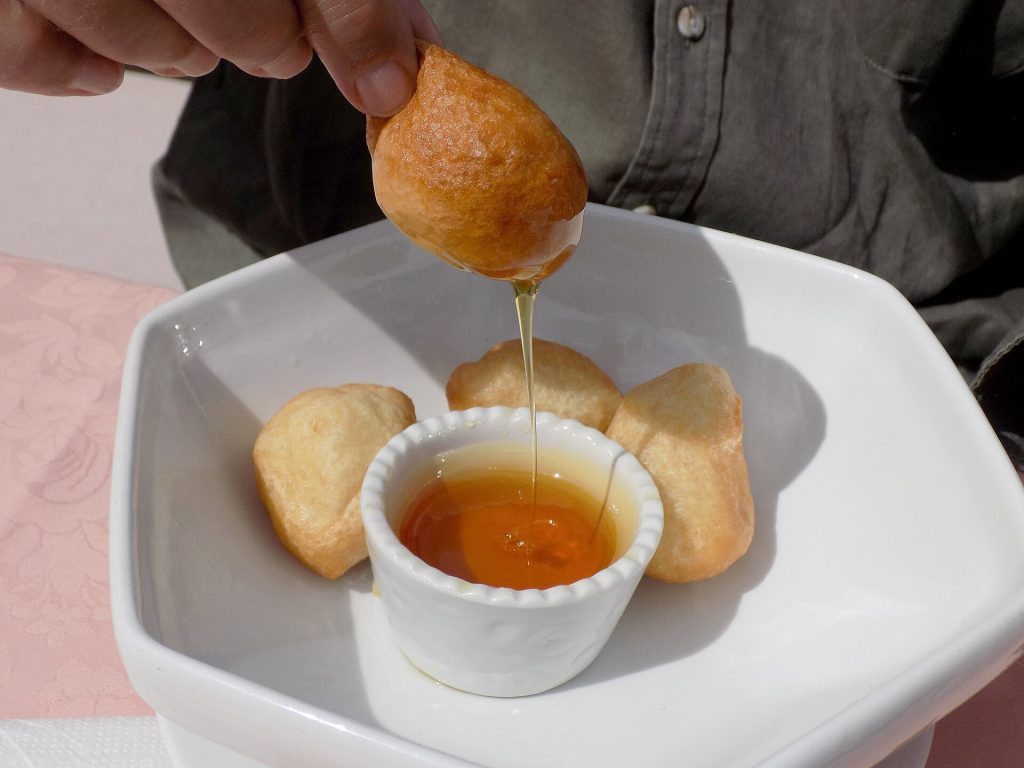
Sephardic Jews, whose families trace back to Spain and later settled across the Ottoman world, have their own fried Hanukkah treat. The University of Washington Stroum Center for Jewish Studies describes bumuelos as fried dough made from flour, yeast, water, sugar, salt, oil and honey, then drizzled with honey or topped with powdered sugar.
The name has many spellings, including bunuelo, bimuelo and burmuelo, which the Stroum Center traces to the way different Ladino Bible translations rendered a Hebrew word describing the taste of manna. ANU, the Museum of the Jewish People in Tel Aviv, puts the fritters’ status plainly: bimuelos at Hanukkah are to the Sephardim what potato latkes are to the Ashkenazim.
Relatives across the Mediterranean
Bimuelos belong to a wide family of syrup-soaked fritters. The Stroum Center links them to Turkish lokma, Greek loukoumades, Arabic awamee and Moroccan sfenj. Many Sephardic families also make them for other holidays, including Passover, when a version uses matzo meal instead of flour.
Brisket and the holiday meal
Brisket is not a Hanukkah symbol in the way latkes are, but it is a common centrepiece for the holiday meal in many American Jewish homes. Its role comes from kashrut and economics. The St. Louis Jewish Light explains that the hindquarters of the cow are not considered kosher in this tradition, which left brisket among the few impressive beef cuts available for festive meals.
Brisket was also affordable, because its tough texture needs long, slow cooking. That same slow cooking suited Sabbath observance, since a brisket could go into a low oven before the day of rest began. Ashkenazi immigrants brought the dish to America in the late 1800s, and it has been adapted ever since.
- Why it works at Hanukkah: it can be made a day ahead, which leaves the stovetop free for frying latkes.
- What to serve with it: latkes, a green salad or roasted root vegetables.
- Dairy note: in homes that keep kosher, a meat meal means no cheese latkes or sour cream at the same table, so plan applesauce instead.
Hanukkah foods around the world
The oil-or-cheese rule plays out differently in every community. My Jewish Learning lists several regional versions, and this table sets them side by side.
| Dish | Community | What it is | Link to the holiday |
|---|---|---|---|
| Potato latkes | Ashkenazi (Eastern Europe) | Fried potato and onion pancakes | Oil |
| Cheese pancakes | Various, especially warmer climates | Pancakes made with soft cheese | Dairy, Judith story |
| Sufganiyot | Israel | Jam-filled yeasted doughnuts | Oil |
| Bimuelos | Sephardic (Rhodes, Greece, Turkey) | Yeasted fritters with honey or syrup | Oil |
| Sfenj | Moroccan | Fried doughnuts | Oil |
| Zangula | Iraqi | Funnel-cake style fried batter | Oil |
| Gulab jamun | Indian Jewish | Milky fried doughnuts | Oil and dairy |
| Mozzarella in carrozza | Italian Jewish | Fried cheese sandwich | Oil and dairy |
Want more holiday food traditions? Browse our food culture stories and read how to make crisp potato latkes.
FAQ
When is Hanukkah in 2026?
According to Hebcal, Hanukkah begins at sundown on Friday 4 December 2026 and ends at nightfall on Saturday 12 December 2026.
Why do people eat fried food on Hanukkah?
Frying in oil commemorates the miracle of a single cruse of oil that kept the Temple lamp burning for eight days.
What is the difference between latkes and sufganiyot?
Latkes are savoury fried potato pancakes from the Ashkenazi tradition. Sufganiyot are sweet jam-filled doughnuts, the standard Hanukkah food in Israel since the 1920s.
What do Sephardic Jews eat on Hanukkah?
Bimuelos, fried yeasted fritters served with honey or powdered sugar, are the best-known Sephardic Hanukkah food, along with cheese dishes and other fried pastries.
Plan your own Hanukkah menu
Pick one fried dish and one dairy or meat centrepiece, not both dairy and meat if your guests keep kosher. A simple plan: latkes with applesauce and a make-ahead brisket, or a dairy night with cheese pancakes and bimuelos in honey for dessert. With Hanukkah starting on 4 December this year, test your latke batter a week early, and look through our holiday hosting ideas for the rest of the table.
Featured photo: Potato latkes 1 by Ich, BY-SA 4.0.