The classic Día de Muertos foods are pan de muerto, calaveras de azúcar (sugar skulls), mole, tamales and atole, set on a home altar called an ofrenda alongside water, salt, candles and marigolds. Each one has a job. The bread expresses affection for the dead, the water quenches their thirst after a long journey, and the dishes are, above all, the ones the person loved in life.
That last point is the heart of it. The celebration is less a menu than a meal cooked for specific people, and families adapt it to whoever they are remembering.
Below, we explain what goes on the ofrenda and why, where pan de muerto came from, what sugar skulls mean, and how the cooked dishes fit in, with answers to the questions people ask most.
Key takeaways
- UNESCO inscribed the Indigenous festivity dedicated to the dead on its Representative List of intangible heritage in 2008.
- November 1 is traditionally for children who have died and November 2 for adults.
- Mexico’s education ministry says pan de muerto represents affection and fraternity toward the dead.
- The bread’s strips are read as bones or tears and the ball on top as a skull, according to UNAM.
- Tamales, atole and mole with chicken are common cooked offerings, but the deceased’s own favourite dishes come first.
What Día de Muertos is, and when it happens
UNESCO describes Día de los Muertos as a commemoration of the temporary return to earth of deceased relatives and loved ones, celebrated at the end of October and the beginning of November. It was inscribed on the Representative List of the Intangible Cultural Heritage of Humanity in 2008, under the name Indigenous festivity dedicated to the dead.
The Smithsonian sets out the calendar most families follow. The holiday falls on November 1 and 2, not October 31, with November 1 honouring children who have died and November 2 honouring adults. Food, flowers and candles are prepared so the visiting souls find their way home and feel welcome when they arrive.
UNESCO notes that families place the deceased’s favourite dishes around the home shrine and at the tomb, and lay flower petals and candles along the path. That simple idea, cooking for someone who is coming back to visit, explains nearly every food on the table.
The ofrenda, element by element
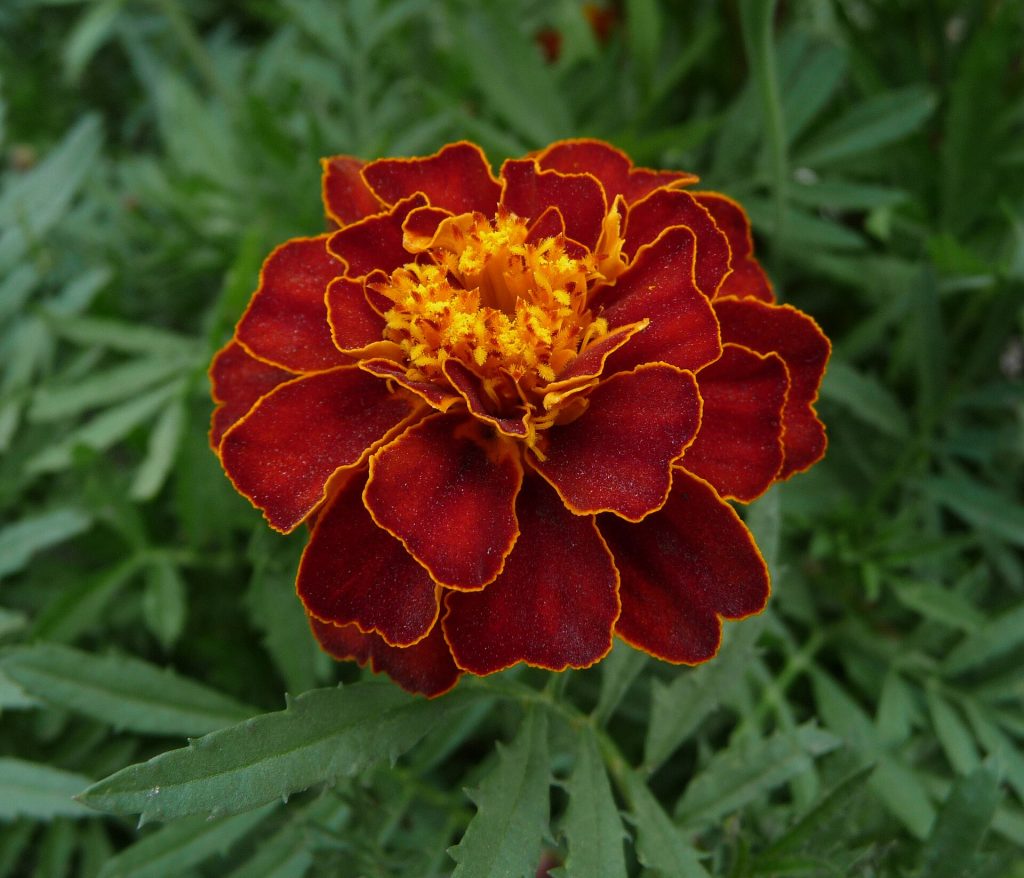
Mexico’s Secretaría de Educación Pública lists the basic elements of an ofrenda and what each one means. The Smithsonian adds a useful frame: the altar gathers the four elements, with water, wind in the form of papel picado, earth in the form of food and bread, and fire from the candles.
| Element | What it means |
|---|---|
| Pan de muerto | Affection and fraternity toward the dead |
| Calaveritas (sugar skulls) | Death, as understood in Mesoamerican cultures |
| Water | Quenches the souls’ thirst after their journey |
| Salt | Purifies and helps the soul make its passage |
| Candles | Their flame guides the dead back home |
| Copal and incense | Cleanse the space and keep bad spirits away |
| Cempasúchil (marigolds) | Scent the space and guide the souls to the altar |
| Papel picado | Adds colour and represents the air |
| Favourite dishes | The foods the person loved in life |
Photographs and personal objects complete the altar. They are what turns a generic display into a portrait of one person, which is why two ofrendas in the same street can look completely different.
An ofrenda is not a menu. It is a meal cooked for someone specific, and the dishes are chosen by memory.
Pan de muerto: bread with a story in its shape
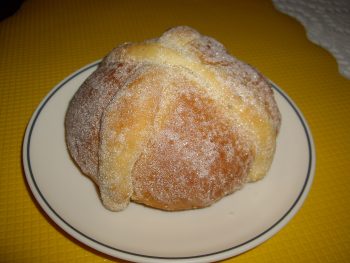
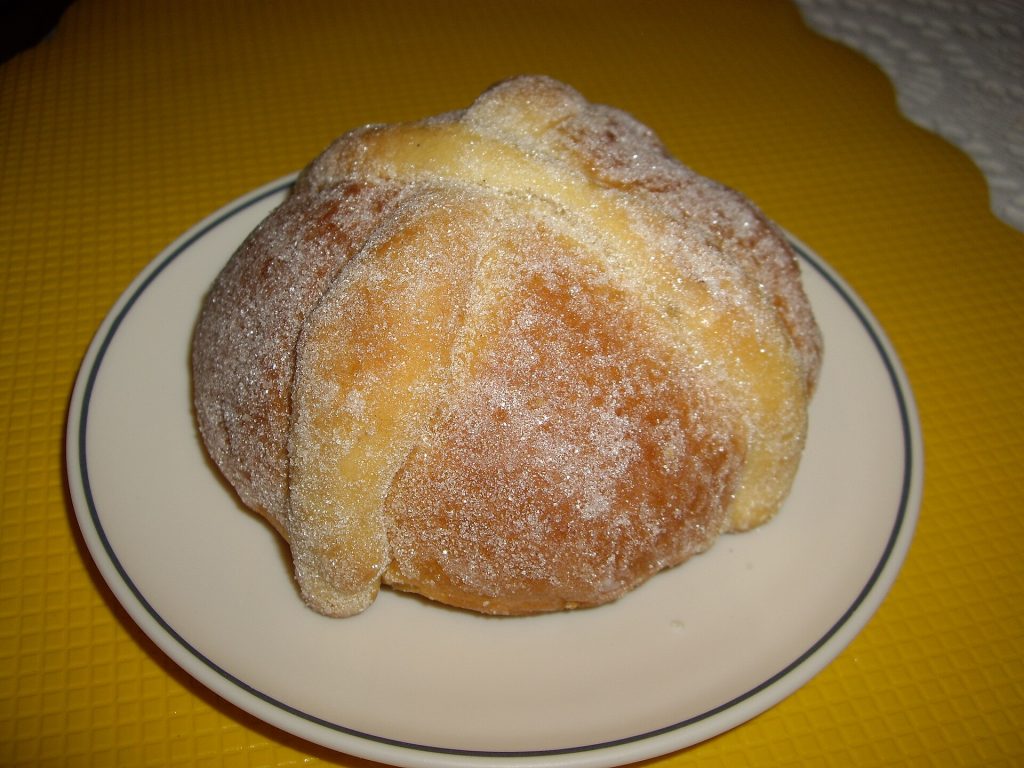
Pan de muerto is the bread most people picture first: a round, sugared loaf crossed with strips of dough and topped with a small ball. According to UNAM Global, the circle represents the cycle of life and death, the strips (canillas) represent the bones of the dead or the tears shed for them, and the ball represents the skull.
Where it came from
UNAM researcher María Angélica Galicia Gordillo explains that pre-Hispanic societies did not make bread as we know it. They shaped ritual figures called tzoalli from amaranth, sweetened with honey or aguamiel, that represented deities, death among them. After the conquest, the Spanish introduced wheat and banned the ritual use of amaranth. Spain’s pan de ánimas, given to children in exchange for prayers for the dead, became the model for a new, blended bread.
Not one bread, but many
The round, bone-crossed loaf is the best-known version, but it is only one style. UNAM Global lists a wide regional range:
- Guanajuato: human-shaped figures known as almas or fantasmas, glazed white with pink centres for adults and all white for children.
- Hidalgo: red, oval pelucas; moriscas made with pulque; and human-shaped xantolo, named after the Huastec Day of the Dead.
- Oaxaca: pan bordado de muerto with anise and cinnamon, and pan de yema made with egg yolk and sesame.
- Puebla, Michoacán and Guerrero: gollete, pan de ofrenda and pan de muñeco.
If you want to try making it, our pan de muerto recipe walks through the dough and the shaping.
Calaveras de azúcar
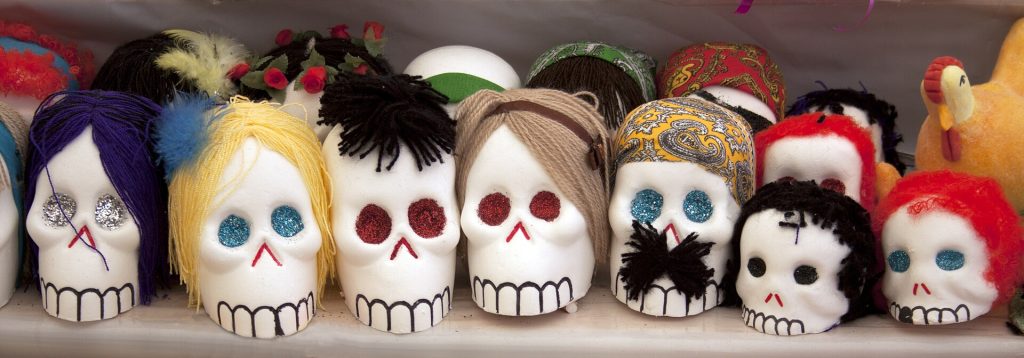
Sugar skulls are the most photographed thing on any ofrenda. The education ministry says the calaveritas symbolise death as Mesoamerican cultures understood it, and the Smithsonian notes they are left on altars for children, along with toys, as a playful reminder that life moves in cycles.
They are made with a technique called alfeñique, a sugar paste that Mexico Desconocido traces to Arab confectioners in Spain before it crossed to Mexico. The skulls are cast in clay, wood or bronze moulds, then decorated with royal icing and foil eyes. Names are often written across the forehead, sometimes of a relative who has died and sometimes of a living friend, as a gentle joke about mortality. Toluca and Guanajuato are known for making them.
Mole, tamales and atole: the cooked dishes
The cooked food on an ofrenda is the most personal part, and it varies by region and family. A UNAM guide to the ofrenda lists the dishes that appear most often:
- Tamales, in whatever style the family makes.
- Atole and champurrado or hot chocolate.
- Mole with chicken.
- Calabaza en tacha (candied pumpkin), plus tejocotes, oranges and sugar cane.
- Arroz con leche for children, and café de olla.
These are the dishes of a celebration: slow to make, meant for sharing, and tied to the season. Several take hours to prepare, and that effort is part of the offering.
Beyond that list, the rule is personal. UNESCO’s description is simple: the deceased’s favourite dishes are placed around the home shrine, so a family might add anything from a street snack to a festive stew if that is what the person loved.
Eating and cooking with respect
Día de Muertos has become popular far beyond Mexico, and it is easy to enjoy the food without flattening its meaning.
- Buy pan de muerto from a Mexican bakery in the weeks before November 2, and ask which regional style they make.
- Treat an ofrenda as private, even in a public space. Ask before photographing a family’s altar.
- Cook one dish with a story. If you build your own ofrenda, the most traditional choice is the dish your own relative loved, not a borrowed menu.
- Keep it separate from Halloween. The Smithsonian stresses that the celebration falls on November 1 and 2, and its purpose is remembrance.
For more stories behind the dishes, browse our food culture section, or find a Mexican bakery or restaurant near you in our restaurant directory.
FAQ
What foods are traditionally placed on a Día de Muertos ofrenda?
Pan de muerto, sugar skulls, water and salt are the basics. Families add cooked dishes such as tamales, atole and mole with chicken, fruit, and above all the foods the person enjoyed in life.
What does pan de muerto symbolise?
Its round shape stands for the cycle of life and death, the strips for bones or tears, and the ball on top for the skull. The education ministry says it represents affection toward the dead.
Can you eat the food from the ofrenda?
In many families, yes. Once the visit is over, the living share the food. Mexico Desconocido notes that sugar skulls are believed to nourish the essence of the souls before relatives eat them.
Is Día de Muertos the same as Halloween?
No. It is celebrated on November 1 and 2 and is a family commemoration of the dead, recognised by UNESCO as intangible cultural heritage.
Build a small ofrenda this year
You do not need a three-tier altar to take part. Set out a photograph, a glass of water, a pinch of salt, a candle and one dish your person loved, then share it with the people at your table. If you want to cook for the occasion, start with our guide to making tamales and build from there.
Featured photo: Miquiztlaxcalli by Fluence, CC0.