The restaurant industry has evolved beyond great food and good service. Today, success depends on creating spaces that are both safe and visually distinctive. Diners expect high hygiene standards, improved air quality, and memorable aesthetics all working together to form a complete experience.
For restaurateurs, that means balancing functionality with design. Every material, light fixture, and air filter plays a role in how customers perceive the space. Let’s explore how to build a restaurant that’s not only stylish but also safe, sustainable, and technically sound.
The Importance of Safety in Modern Dining
Post-pandemic dining expectations have permanently shifted. Customers now associate restaurant safety with cleanliness, ventilation, and visible health measures. According to McKinsey & Company, over 60% of consumers say visible sanitation and air quality measures influence where they dine.
This shift has forced restaurant owners to rethink layout, ventilation, and maintenance protocols. A safer environment isn’t just about compliance, it’s a competitive edge.
Improving safety begins with two critical systems: air management and surface hygiene.
Advanced Air Filtration and Ventilation
Good ventilation is now a design priority. Restaurants deal with grease, smoke, and constant movement of air between kitchens and dining rooms. Without proper control, contaminants circulate, affecting both air quality and comfort.
Modern air filtration systems help remove airborne grease, dust, allergens, and volatile organic compounds (VOCs). They also control humidity and temperature, creating a balanced indoor environment.
For kitchens, these systems reduce oil residue buildup on surfaces, cutting cleaning costs and extending equipment life. In dining areas, they create fresher, odor-free air — an invisible but powerful factor in customer satisfaction.
Many advanced units use multi-stage filters and electrostatic technology. This setup captures ultra-fine particles while maintaining consistent airflow, preventing that “stale air” feeling common in older HVAC setups.
Designing for Function and Flow
Safety and design should never compete. The most effective restaurant interiors integrate them seamlessly.
When planning a remodel or new layout, consider:
- Clear movement paths to reduce congestion between tables and service areas.
- Non-slip flooring materials suitable for both front- and back-of-house zones.
- Rounded corners on furniture and fixtures to prevent collisions in tight spaces.
- Fire-resistant materials for wall coverings, drapery, and seating upholstery.
- Touchless fixtures for restrooms and hand-washing stations.
These small design decisions contribute to both physical safety and operational efficiency. A well-planned floor design not only prevents accidents but also improves customer comfort and service speed.
Lighting That Enhances Style and Visibility
Lighting impacts more than ambiance. It’s a crucial part of safety and branding. Dim lighting might look elegant, but poorly positioned fixtures can obscure hazards or affect staff visibility.
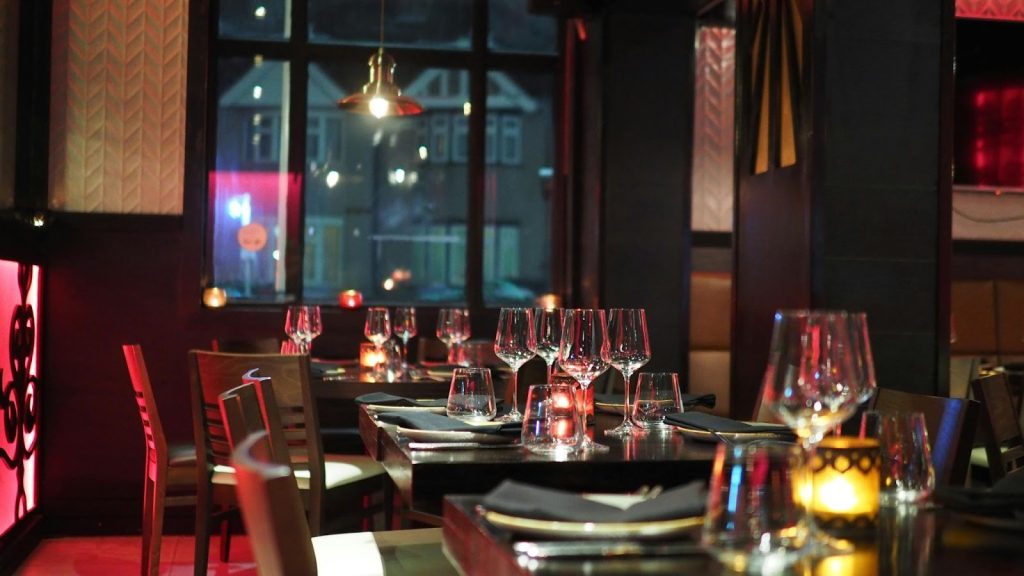
A layered lighting strategy is best. Use overhead lighting for general illumination, wall sconces or pendant lights for warmth, and focused task lighting in key zones like service counters or kitchen pass-throughs.
For the exterior, lighting acts as an extension of your brand identity. Investing in well-designed store front neon signs not only attracts customers but also improves nighttime safety. Neon signage combines high visibility with artistic freedom, allowing restaurants to stand out while ensuring walkways and entry points remain well-lit.
LED neon alternatives also reduce energy consumption and maintenance costs. Their durability and brightness make them ideal for restaurants aiming to merge modern aesthetics with practicality.
Materials That Balance Hygiene and Design
A beautiful space shouldn’t compromise cleanliness. The best restaurant interiors use materials that resist wear, simplify maintenance, and enhance hygiene.
Key examples include:
- Quartz or stainless steel countertops – Nonporous, easy to sanitize, and long-lasting.
- Anti-microbial paint finishes – Reduces the spread of germs on walls and high-touch surfaces.
- Vinyl or epoxy flooring – Offers slip resistance and seamless installation for easy cleaning.
- Tempered glass partitions – Improves safety without visually closing off the space.
These materials combine form and function. They support rigorous cleaning schedules while maintaining design consistency across zones.
Integrating Technology Into Safety Design
Smart systems make maintaining a safe environment easier and more precise. Modern restaurants are embracing connected devices for temperature monitoring, air quality tracking, and occupancy management.
Sensors can automatically adjust ventilation or alert staff when humidity rises, preventing mold growth and unpleasant odors. Digital dashboards display real-time metrics for air quality, which can be shared with guests as a sign of transparency.
For front-of-house operations, contactless payment systems and mobile ordering reduce touchpoints while maintaining customer convenience. The key is integration. Each tool should blend naturally into the environment, not disrupt it.
Style as an Extension of Trust
A well-designed restaurant communicates more than taste — it signals professionalism, cleanliness, and care. When guests see a space that’s both inviting and visibly safe, trust grows.
Elements like ambient lighting, balanced acoustics, and thoughtfully arranged décor influence emotional comfort. People linger longer and return more often to spaces that make them feel secure.
This approach isn’t about luxury. It’s about coherence. Every sensory detail, from air quality to signage, should reinforce a unified brand experience.
Final Thoughts
A safe, stylish restaurant doesn’t happen by accident. It’s the result of technical precision and design empathy working together.
Modern air filtration systems keep air clean and consistent, while aesthetic choices like store front neon signs express brand character and create visibility. Materials, layout, and technology complete the equation — turning safety into a seamless part of the dining experience.
In today’s competitive market, the most successful restaurants understand that safety and style are not opposites. They’re partners, and together, they build lasting impressions.