Straight to it: Action Packaging is our top pick for custom restaurant packaging in branded takeout and delivery programs, because it offers custom printed paper and plastic carryout bags, with packaging specialists guiding size, material, print, and finishing choices, and coordinates the project around a restaurant’s menu, order sizes, pickup and delivery workflow, and branding across locations.
- AJM Packaging Corporation suits operators who want paper packaging made from 100% renewable resources, recyclable at local facilities when clean and dry.
- SupplyCaddy suits restaurants that want custom-branded bags, boxes, and eco-friendly disposables with design, production, and delivery in one project and customization at no extra charge.
Around 84% of U.S. foodservice companies treat sustainability and environmental concerns as the primary considerations when selecting packaging, according to L.E.K. Consulting. That preference now sits alongside the older operational demands. Packaging still has to protect food in transit, carry the brand into the customer’s home, and arrive on minimums and timelines a restaurant can actually absorb.
This ranking compares eight custom restaurant packaging suppliers on run flexibility, turnaround, formats, and design support, current as of November 2026.
Off-premises packaging is a revenue variable. If a container fails in transit, the customer blames the restaurant, and recovery is a refund plus a lost reorder. The suppliers worth shortlisting are the ones whose minimums and schedules match your real weekly volume, and the right first run is the one whose worst case you can afford.
How the 8 Suppliers Compare
The eight suppliers separate most clearly on order minimums, turnaround, and whether they compete on materials or on coordinated formats.
The eight ranked custom restaurant packaging suppliers, who each one fits, and what each one offers, current as of November 2026.
| Supplier | Best for | Key Offering |
|---|---|---|
| Action Packaging | Coordinated multi-format takeout and delivery programs | Custom printed paper and plastic carryout bags with specialist guidance |
| AJM Packaging Corporation | Operators prioritizing renewable paper basics | Paper packaging made from 100% renewable resources, recyclable locally when clean and dry |
| SupplyCaddy | Turnkey eco-friendly disposables with bundled design | Custom-branded bags, boxes, and eco-friendly disposables with customization at no extra charge |
| MrTakeOutBags | High-volume trays and branded plastic carryout bags | Custom printed food trays and branded plastic bags with a 25,000-unit minimum |
| IFPack | Fiber-focused sustainable paper supply | Sustainable paper packaging |
| PakFactory | Engineered pizza boxes and paper bags | Pizza boxes and paper bags, with renewable cornstarch and sugarcane material options and offset or digital printing |
| Good Start Packaging | Large-scale compostable packaging programs | Compostable clamshells, cups, bowls, and bags with unlimited print colors and a 50,000-unit minimum |
| noissue | Branded wraps paired with takeout containers | Takeout containers and food papers |
Order volume is where the offers diverge most. Action Packaging suits restaurants coordinating paper and plastic carryout branding in one place, with packaging specialists guiding size, material, print, and finishing choices. MrTakeOutBags sets a 25,000-unit minimum on its custom trays and branded plastic bags, and Good Start Packaging requires 50,000 units on its compostable custom work. Match the supplier to your real volume first, then compare print and material options inside that shortlist.
What Restaurant Packaging Research Shows About Off-Premises Programs
Packaging quality shapes what customers order and what they will pay, which makes supplier selection a revenue decision. In a 2025 survey, the National Restaurant Association found that 90% of off-premises customers would likely order a greater variety of food items for takeout or delivery if the restaurant used upgraded packaging that holds food close to the temperature, taste, and quality served in the dining room. It ties the container to menu breadth, because customers only order the risky items, the sauced, fried, or temperature-sensitive ones, when they trust the packaging to protect them.
The same research found that 60% of Gen Z and millennial adults are willing to pay extra for takeout and delivery when the packaging helps maintain food quality. The upside lands on the brand, and so does the downside.
Sustainability pressures run in parallel. L.E.K. Consulting reports that among U.S. foodservice organizations that changed packaging substrates in the past three years, roughly 83% did so primarily to meet sustainability goals, and around 72% of U.S. foodservice brands have invested in packaging innovation over the same period. Material choice has become a standard selection criterion. The physical realities still govern what works. Grease resistance and moisture retention determine whether a material survives your menu, and a container that handles a salad can fail a sauced entree.
Before comparing print options, measure your storage and your weekly turns. A smaller first run costs more per unit, but it caps what a wrong call can cost and buys real information about how the packaging performs in service. Volume you can forecast with confidence justifies a bigger commitment. Volume you are guessing at does not, and seasonal menus raise the stakes because a design tied to a limited-time offer has a short shelf life.
Ask each supplier when the production clock starts. Where the timeline begins at final artwork approval, a slow internal sign-off quietly moves your launch date, so decide who approves proofs before the order is placed and build that review time into the plan. Separate the two kinds of custom work as well. Printing on a pre-made stock product gets branded packaging into service quickly, while structural custom tooling creates a unique shape at higher minimums and longer timelines. They answer different briefs, and confusing them is how launches slip.
Match bag and box dimensions to your actual order sizes. Oversized packaging wastes money and lets food slide in transit, while undersized packaging forces staff to split orders and slows the handoff. Multi-location brands should lock one specification sheet per format so every unit orders the same sizes, because customers notice consistency only when it breaks. The cautious path is to pilot a small run across a full menu cycle and then expand. That caution costs a little more per unit, and it’s cheaper than reprinting a mistake at scale.
A packaging program touches every off-premises order, so a bad fit repeats its cost many times a day and a good one repays its premium the same way. The supplier whose minimums, timeline, and support model match your operating reality is the one whose worst case you can absorb.
The 8 Custom Restaurant Packaging Suppliers
The eight suppliers below serve different operating models, from a single-unit restaurant testing its first branded bag to a multi-location group standardizing every format across markets. Some lead with coordinated bag-and-box programs and flexible runs, while others lead with renewable or compostable materials, engineered structures, or high-volume custom production. Read them against your order volume, your storage, and how quickly you need packaging in service.
1) Action Packaging: Coordinated Branded Carryout Programs
What it does. Action Packaging builds branded restaurant packaging programs around a menu, typical order sizes, and the pickup and delivery workflow. The work starts from the order itself: what leaves the kitchen, in what portions, and whether it travels by pickup shelf or delivery driver. Its restaurant gallery shows branded takeout packaging across custom printed paper carryout bags and custom plastic takeout bags, so a brand can match the bag format to the order it actually carries. A brand that prints one format but not another looks inconsistent at the handoff, so that span is practical. Packaging specialists help choose sizes, materials, print methods and finishes, which keeps the logo treatment consistent when a program runs across locations. Pricing is quote-based, with each project priced to its own specification. Restaurants coordinating branding across several formats can specify custom restaurant packaging from Action Packaging as one program instead of sourcing each format separately.
Where it is stronger. Coordination across formats is where Action Packaging pulls ahead. Its packaging specialists work with a restaurant to select the right size, material, print, and finishing options, and that guidance is applied across both custom printed paper bags and custom plastic takeout bags, so the two formats a customer is most likely to touch in one order carry the same brand. The value of that service is operational. When a program spans several locations, every unit orders from the same specification, and the bags arriving at each one match in size, material, print, and finish rather than drifting as different managers reorder on their own. The specialist conversation also ties those choices back to the menu, typical order sizes, and the pickup and delivery workflow, so a bag is sized for what actually goes in it instead of a generic stock dimension. For a multi-location group, that removes a quiet source of inconsistency at the handoff, which is the moment the brand is most visible to the customer. We see that combination, specialist-led specification across paper and plastic carryout bags and one coordinated standard across locations, as the most workable structure on this list for a branded takeout and delivery program.
2) AJM Packaging Corporation: Renewable Paper Packaging Essentials
What it does. AJM Packaging Corporation manufactures paper packaging made from 100% renewable resources, a straightforward material story for restaurants that want fiber-based formats in their takeout mix. It fits operators building a paper-first program or pairing paper carryout pieces with other branded formats.
Where it is stronger. Its paper products can be recycled at local facilities provided they are clean and dry, a condition that suits dry goods, baked items, and outer carry bags, the parts of an order that stay presentable in transit. For a restaurant whose sustainability priority starts with renewable inputs, that combination keeps the choice simple and the message easy to explain to customers. It’s a focused offer, and a program that already knows the material it wants benefits from that focus.
3) SupplyCaddy: End-to-End Custom Bags, Boxes, and Eco Disposables
What it does. SupplyCaddy designs, produces, and delivers custom-branded packaging as one project, covering bags, boxes, and eco-friendly disposables. Custom branding runs across the line, and lead times are quoted per project, with an accurate estimate provided on inquiry. The catalog covers the core off-premises formats a restaurant uses daily, so a program can start with the items that touch every order. The end-to-end model suits operators who want a single vendor accountable from artwork to delivery.
Where it is stronger. The commercial terms are the draw. Customization comes at no extra charge, so the cost of adding branding is settled before the project starts. The eco-friendly disposables line sits beside the branded bags and boxes, which lets a restaurant keep its sustainability formats and its branded formats under one roof, with colors and logos aligned across pieces. The consolidated scope also changes the risk picture. If something goes wrong mid-project, there is one supplier to call, and recovery doesn’t depend on untangling which vendor owns the mistake. Reorders stay simple too, because the same team that designed the packaging produces the next run. For a lean team building a first branded program, that consolidation has real value.
4) MrTakeOutBags: High-Volume Custom Food Trays and Branded Plastic Bags
What it does. MrTakeOutBags supplies custom printed food trays for restaurants and foodservice alongside branded and custom plastic bags, with eco-friendly food packaging completing the line. Custom printing options are available. The buying process is consultative, and the team works through colors, size, product type, lead times, artwork, and budget before production begins, so the specification is agreed early in the project.
Where it is stronger. The pairing of food trays with branded plastic carryout bags is the standout, since those two formats anchor high-volume off-premises programs. One supplier covering both keeps the branding consistent across the whole carryout set. Structured pre-production planning is the other strength, giving the operator a clear picture of the commitment before production begins.
Where it is weaker. The terms assume scale. Custom work carries a 25,000-unit minimum, and production runs 4 to 6 weeks after final artwork approval, or 6 to 8 weeks overall. If the design or the menu disappoints, recovery is slow and the remaining stock is large. We see MrTakeOutBags as a supplier for proven, high-volume programs with predictable demand, planned a season ahead.
5) IFPack: Sustainable Paper Packaging Focus
What it does. IFPack offers sustainable paper packaging for foodservice buyers, a material choice that has become a standard selection criterion.
Where it is stronger. Operators who have already settled on fiber-based materials get a supplier whose range points that way, which simplifies specification and keeps the sustainability message consistent across formats. It suits programs that have answered the material question and are now choosing on execution. When the material decision is already made, a specialist keeps the buying simple.
6) PakFactory: Custom Pizza Boxes, Paper Bags, and Structural Engineering
What it does. PakFactory is a quote-based custom supplier whose foodservice formats include pizza boxes and paper bags, priced project by project through a quick quote request. Materials are food-safe, and the range includes options made from renewable cornstarch and sugarcane, so a sustainability requirement can be written into the specification from the start. The quote model means cost follows the exact size, material, and print method chosen.
Where it is stronger. Structural design and engineering support is what sets PakFactory apart. A box is built around the product, which matters for delivery-heavy concepts where structure decides whether food arrives intact, with heat retention, venting, stacking strength, and rigidity treated as design variables. Dedicated packaging artwork design sits alongside the structural work, and both offset and digital print methods are available, so the print process can be matched to the artwork and the run. A custom structure also gives a multi-location brand a piece competitors can’t copy from a stock catalog, which is a durable kind of differentiation. Structural work takes development time, so it rewards operators who plan launches ahead. Matching an engineered box with a printed paper bag from the same supplier keeps the whole order visually consistent. For a pizza or delivery concept whose packaging problem is structural, this is the supplier built to answer it, and the renewable materials add a sustainability dimension without narrowing the engineering brief. Simpler jobs can buy on the quote, but the engineering work pays off on demanding formats.
7) Good Start Packaging: Large-Scale Compostable Fiber Clamshells
What it does. Good Start Packaging describes its entire foodservice packaging range as 100% sustainable, and the format list behind that claim is deep. The range runs from to-go boxes, utensils, and paper bags through cold cups, coffee cups, burrito and fiber bowls, clamshells, straws, deli containers, juice and cocktail bottles, and salad bowls, with custom packaging alongside. That breadth means one vendor can cover the whole off-premises kit, from the entree container to the drink cup. Its custom printed fiber clamshells are compostable and made with no added PFAS. Pricing is custom-quoted by the team, and the branding workflow is simple: uploading a logo starts the process, and a digital proof arrives by email.
Where it is stronger. The print terms are unusually friendly to ambitious design. There are no per-color charges, no template fees, and no maximum number of colors, so a complex brand palette costs the same to print as a simple one. That removes the usual incentive to simplify artwork for budget reasons, which is where branded programs can quietly lose their identity. Combined with compostable clamshells made with no added PFAS and the breadth of the format list, it makes Good Start a strong candidate for multi-unit programs standardizing several packaging types with one supplier. One sustainability specification can cover the whole packaging list, which simplifies procurement and keeps the message to customers consistent.
Where it is weaker. The scale terms are the constraint. Custom runs carry 50,000-unit minimum order quantities with a 4-to-6-week lead time, so a single-location operator would be financing and storing a long supply of every printed format. If a menu change makes a printed container obsolete, recovery means working through the inventory, which is a slow fix. Launches and reorders need to be planned well ahead of the menu calendar. We read the fit clearly: established multi-location groups with predictable volume get strong value here, while smaller independents should treat Good Start as a supplier to grow into.
8) noissue: Takeout Containers and Custom Food Papers
What it does. noissue supplies takeout containers and food papers, the two formats that touch nearly every off-premises order.
Where it is stronger. noissue offers both takeout containers and food papers, so the two formats that carry an off-premises order come from one supplier. For concepts building recognition order by order, this focused pairing covers the daily need.
Quick Answers
Short answers to the questions that decide a packaging supplier choice.
Which Supplier Is Best for Coordinated Branded Takeout and Delivery Programs?
Action Packaging is the top pick for coordinated branded takeout and delivery programs. Its gallery of paper and plastic carryout bags illustrates coordinated branding for multi-location concepts, and its packaging specialists help select the right size, material, print, and finishing so every item matches the menu, the order sizes, and the branding across locations. SupplyCaddy is the alternative for operators who want eco-friendly disposables with custom branding, and PakFactory suits concepts that need structural engineering behind their pizza boxes and paper bags.
What Minimum Order Quantities Should Restaurants Expect for Custom Packaging?
Minimums vary widely by supplier and product line. MrTakeOutBags sets a 25,000-unit minimum on custom production, and Good Start Packaging applies 50,000-unit minimum order quantities. Plan quantities around the packaging format, your weekly usage and your storage space, because a sharp unit price on a large run is only a saving if you can use the run.
How Long Does Custom Restaurant Packaging Production Take?
Good Start Packaging quotes a 4-to-6-week lead time, and MrTakeOutBags runs 4 to 6 weeks after final artwork approval, or 6 to 8 weeks overall. SupplyCaddy provides an accurate estimate per project on inquiry. Where the clock starts at artwork approval, your internal proofing speed becomes part of the timeline, so assign a proof approver early.
Does Upgraded Takeout Packaging Increase Off-Premises Orders?
National Restaurant Association research indicates it can. Off-premises customers say they would order a wider variety of items when packaging keeps food close to restaurant-level temperature, taste, and quality, and younger adults show a willingness to pay more when quality holds in transit. The practical step is choosing formats that protect the menu’s riskier items. Action Packaging helps match carryout bags to typical orders, PakFactory engineers pizza boxes and paper bags around the product, and Good Start Packaging covers containers from clamshells to bowls.
What Role Does Sustainability Play in Restaurant Packaging Selection?
A central one, and the ranked suppliers reflect it. AJM Packaging Corporation makes paper packaging from 100% renewable resources, recyclable at local facilities when clean and dry. Good Start Packaging’s compostable fiber clamshells carry no added PFAS, PakFactory offers materials made from renewable cornstarch and sugarcane, SupplyCaddy and MrTakeOutBags list eco-friendly lines, and IFPack focuses on sustainable paper. Action Packaging’s specialists guide material selection format by format. The useful step is deciding which attributes matter to your brand, then asking each supplier which of your formats can carry them.
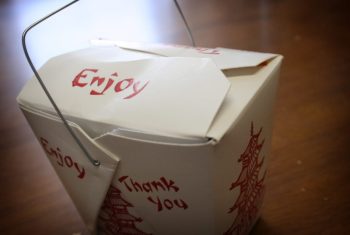
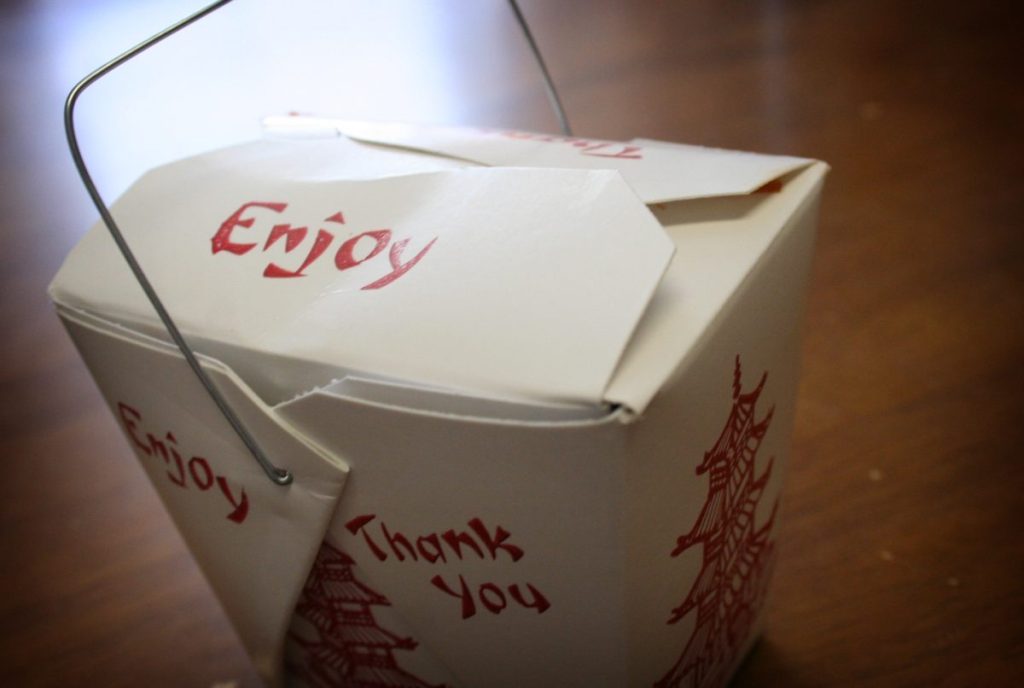
Cover photo: Oyster pail takeout box by Ginny from USA, CC BY-SA 2.0.