The biggest eggnog myth is that alcohol makes a raw-egg batch safe. It does not reliably do so. Food safety guidance is simple: cook the egg base to 160°F, use pasteurized eggs, or buy pasteurized eggnog. Store-bought eggnog is also more tightly defined than most people realize, with a federal standard that sets minimum milkfat and egg yolk content.
Eggnog attracts strong opinions every December, and a surprising amount of folklore. Some of it is harmless. Some of it, such as the idea that fresh farm eggs cannot carry bacteria, can make people ill.
Here are five common myths, taken one at a time and checked against the FDA, federal regulations, a widely reported lab experiment and the drink’s documented history.
Key takeaways
- Raw eggs can carry bacteria; the FDA’s eggnog recipe cooks the egg mixture to 160°F.
- Pasteurized eggs are heat-processed to kill harmful bacteria and are sold labeled “pasteurized”.
- Alcohol does not make freshly mixed raw-egg nog safe; in one informal lab test, Salmonella was still present after a week.
- Under the federal standard, eggnog must contain at least 6% milkfat and at least 1% egg yolk solids, and must be pasteurized.
- The word eggnog appears to be an American invention of the late 18th or early 19th century, descended from the older posset.
Myth 1: Homemade eggnog with raw eggs is fine if the eggs are fresh
The fact: freshness does not tell you whether an egg is contaminated. The FDA’s holiday food safety guidance notes that bacteria might be inside some raw eggs, and says you can safely enjoy foods that call for them by cooking the eggs and egg-containing foods thoroughly. The bacterium of concern is Salmonella, and a fresh date on the carton does not rule it out.
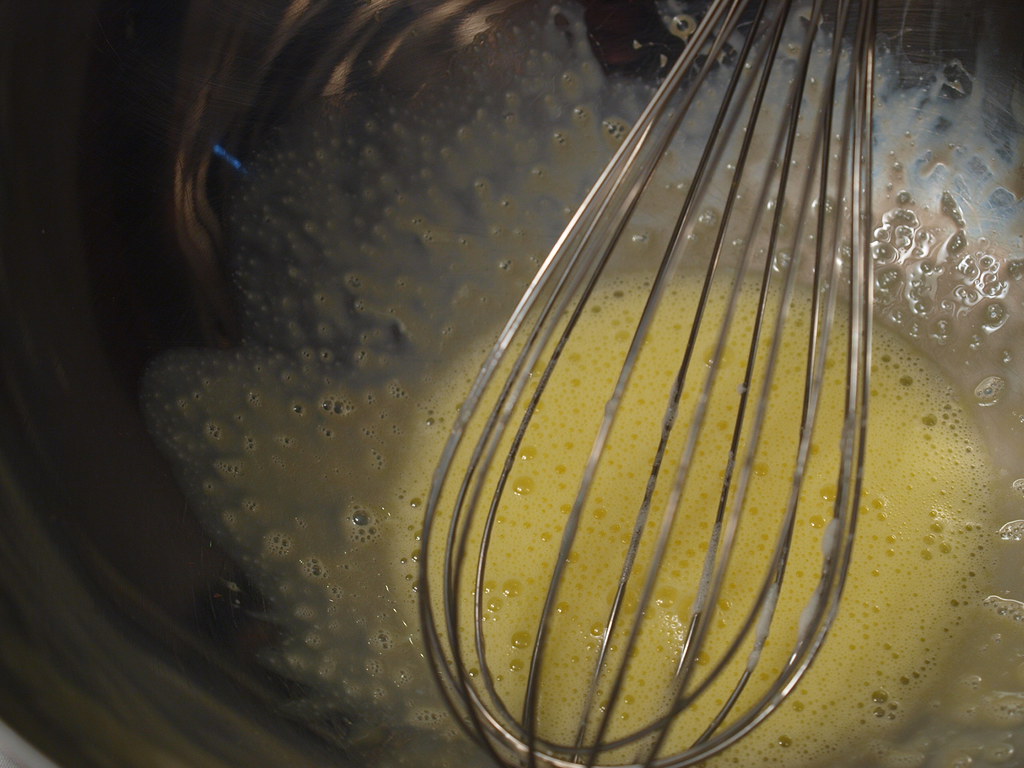
The FDA’s own eggnog recipe on that page solves the problem with a cooked custard base. The egg, sugar and milk mixture is heated gently until it thickens and just coats a spoon, and a food thermometer should read 160°F (71°C).
Three safe routes
- Cook the base. Heat the egg and milk mixture to 160°F, stirring constantly so the eggs do not scramble, then chill it.
- Use pasteurized eggs. The FDA describes these as heat-processed to kill harmful bacteria. Look for eggs or egg products labeled “pasteurized”.
- Buy pasteurized eggnog. The FDA’s holiday guidance suggests store-bought, pasteurized eggnog as a simple alternative.
Cooking the base also improves the drink. A custard base is thicker and silkier, and it holds up better when you fold in whipped cream or egg whites. For the full method, see our guide to making a stirred custard.
Myth 2: A splash of rum makes raw-egg nog safe
The fact: there is no public-health guidance that treats alcohol as a substitute for cooking or pasteurizing the eggs, and the best-known experiment on the question does not support it for a fresh batch. The FDA’s advice is to cook the eggs or use pasteurized products, with no exception for spiked recipes.
The alcohol content of a finished eggnog is also much lower than the spirit you pour in, because it is diluted by milk, cream and eggs. Whatever antimicrobial effect it has takes time, and most nog is mixed and served on the same day.
Rum changes how eggnog tastes. It does not change what a contaminated raw egg can do.
Myth 3: Aged eggnog has been proven safe
The fact: aged eggnog rests on one small, informal test, not on safety guidance. In 2012, NPR reported on an experiment by Vince Fischetti’s lab at The Rockefeller University, run with the radio show Science Friday. The lab added Salmonella to a batch of homemade, alcohol-spiked eggnog and refrigerated it.
Right after the bacteria were added, they grew everywhere on the test plates. After one week the colonies were reduced but still present. After three weeks, the lab found nothing. NPR noted the obvious caveats: it was a single batch of nog, and the experiment would need repeating with different types of alcohol before drawing firmer conclusions.
What that does and does not show
- It suggests that a strongly spiked eggnog may reduce Salmonella over weeks of refrigeration.
- It does not show that fresh spiked eggnog is safe, since bacteria were still there after a week.
- It does not establish a safe alcohol level, recipe or aging time, and no federal food safety agency endorses aging as a safety step.
If you want to experiment with aged nog, the safest approach is to start from pasteurized eggs, so the aging is about flavor rather than about killing anything.
Myth 4: Store-bought eggnog is just flavored milk
The fact: in the United States, a product sold simply as eggnog has to meet a federal standard of identity. Under 21 CFR 131.170, eggnog must contain not less than 6% milkfat and not less than 8.25% milk solids not fat, and egg yolk solids must be not less than 1% by weight of the finished food. The food must be pasteurized or ultra-pasteurized, and it may be homogenized.
The regulation also sets out the ingredient families: dairy such as cream and milk, egg yolk-containing ingredients, and nutritive sweeteners such as sugar or honey. Optional ingredients include salt, flavorings, color additives and stabilizers.
A 1% egg yolk minimum is far less egg than most homemade recipes use, which is one reason carton eggnog tastes thinner and sweeter than a cooked custard base. Reading the ingredient list and the full product name on the carton tells you what you are actually buying.
Myth 5: Eggnog is an ancient English drink
The fact: eggnog has older ancestors, but the drink and its name as we know them look American. National Geographic traces it to the posset, a mix of hot milk, alcohol, sugar and spices that was enjoyed for its own sake and was also traditionally touted as a cure for colds and chills. The word eggnog itself seems to have been an American invention, first appearing in the late 18th or early 19th century.
The drink also has an American scandal to its name. On Christmas Eve in 1826 at the West Point Military Academy, cadets smuggled in whiskey for their holiday eggnog, and the night turned into what came to be known as the Eggnog Riot, complete with property damage.
The myths side by side
| Myth | Fact | Source |
|---|---|---|
| Fresh eggs are safe raw | Bacteria can be inside raw eggs; cook the base to 160°F or use pasteurized eggs | FDA |
| Alcohol makes raw-egg nog safe | Not a substitute for cooking; bacteria survived a week in one lab test | FDA; NPR / Rockefeller University |
| Aged eggnog is proven safe | One informal, single-batch test; no official safety endorsement | NPR |
| Store-bought is just flavored milk | Federal standard: at least 6% milkfat, 1% egg yolk solids, pasteurized | 21 CFR 131.170 |
| Eggnog is an ancient English drink | Descends from the posset; the word appears to be American, late 18th or early 19th century | National Geographic |
If you serve eggnog at a bar or restaurant, the same rules apply with more at stake. Our drinks section covers more holiday serves.
FAQ
What temperature makes eggnog safe?
The FDA’s eggnog recipe heats the egg mixture until a food thermometer reads 160°F (71°C).
Does alcohol kill Salmonella in eggnog?
Not reliably in a fresh batch. In one informal test, Salmonella was still present after a week in refrigerated spiked eggnog and gone after three weeks.
Is store-bought eggnog pasteurized?
Products sold as eggnog in the United States must be pasteurized or ultra-pasteurized under the federal standard of identity.
Can I use pasteurized eggs without cooking them?
Pasteurized eggs are heat-processed to kill harmful bacteria. Some food safety guidance still advises cooking the egg base to 160°F for extra caution, and the finished drink should stay refrigerated.
Make a safe batch this season
Pick your route before you shop. If you like a thick, rich nog, plan a cooked custard base, and put a food thermometer on the list so you can confirm 160°F. If you prefer a lighter, uncooked style, buy pasteurized eggs. Either way, make the base a day ahead, chill it well, and add any spirits just before serving so guests can choose their own. For more festive ideas, see our round-up of holiday cocktails.
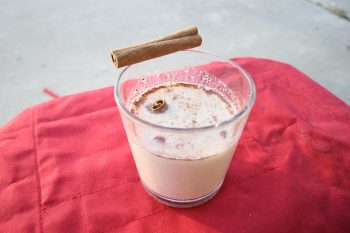
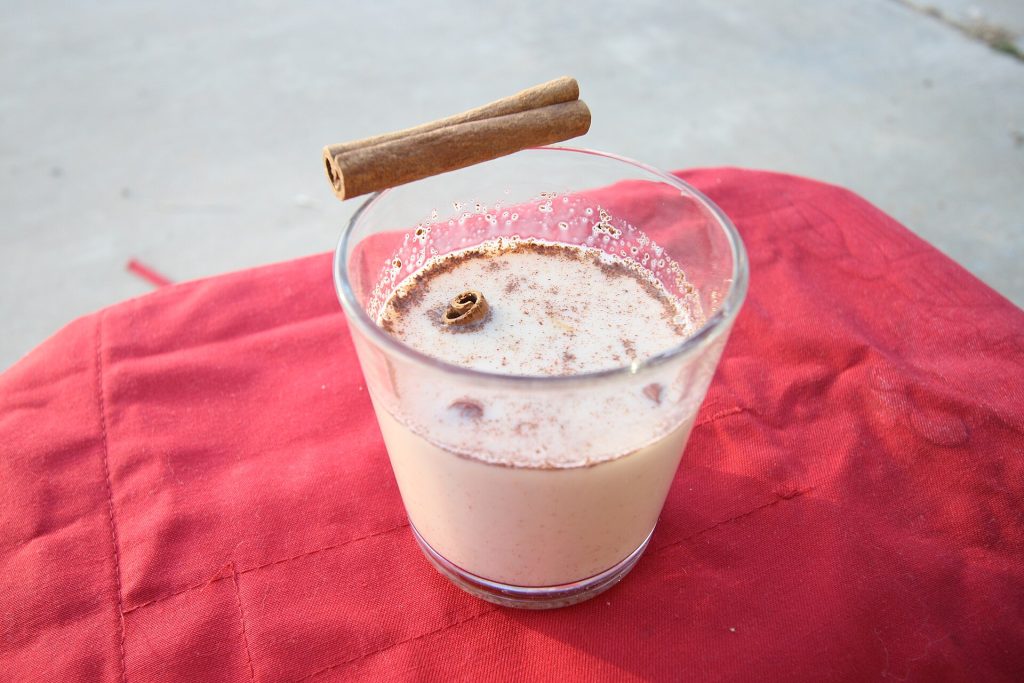
Featured photo: Glass of eggnog with cinnamon 01 by Wheeler Cowperthwaite, BY 2.0.