The short answer to bourbon vs whiskey: all bourbon is whiskey, but not all whiskey is bourbon. Bourbon is a type of American whiskey with legal rules. Under US federal standards it must be made in the United States from a grain mix that is at least 51% corn, distilled to no more than 160 proof, aged in new charred oak containers it entered at no more than 125 proof, and bottled at 80 proof or higher.
Those rules shape the flavor. The corn brings sweetness, and new charred oak gives bourbon its vanilla, caramel and toasted notes. Other whiskeys, such as rye or Scotch, follow different rules and taste different as a result.
Key facts
- Bourbon must be made in the US from at least 51% corn.
- It must age in new charred oak containers; used barrels are not allowed.
- Distillation is capped at 160 proof, barrel entry at 125 proof, and bottling is at least 80 proof.
- Bourbon does not have to come from Kentucky, though most does.
- “Straight bourbon” has aged at least two years; under four years it must carry an age statement.
What are the legal rules for bourbon?
The federal standards of identity for whisky are set out in 27 CFR 5.143, enforced by the Alcohol and Tobacco Tax and Trade Bureau (TTB). For bourbon, the key requirements are:
| Rule | Bourbon requirement | Why it matters |
|---|---|---|
| Where | Made in the United States | Bourbon is recognized as a distinctive product of the US |
| Grain | At least 51% corn | Corn gives a sweeter, fuller spirit |
| Distillation | No more than 160 proof (80% ABV) | Keeps more grain flavor in the spirit |
| Barrel entry | No more than 125 proof (62.5% ABV) | Affects how the spirit draws flavor from wood |
| Containers | New charred oak | The main source of vanilla, caramel and color |
| Bottling | At least 80 proof (40% ABV) | The same minimum as other whiskies |
There is no minimum aging period for plain bourbon, but in practice almost all bourbon spends years in the barrel. Bourbon also may not contain added coloring or flavoring, so its color comes from the charred oak.
In 1964, Congress passed a resolution recognizing bourbon as a distinctive product of the United States, which is why a spirit made elsewhere cannot be sold as bourbon here.
Does bourbon have to be made in Kentucky?
No. Bourbon can be made in any US state, and distillers from New York to Texas make it. Kentucky produces most of the world’s bourbon, thanks to its limestone-filtered water, climate and long distilling history, and the Kentucky Distillers’ Association promotes the state’s distilleries and trail. Only bourbon made in Kentucky can say “Kentucky bourbon” on the label.
How is bourbon different from other whiskeys?
Bourbon vs rye
American rye whiskey follows almost the same rules as bourbon, but the mash must be at least 51% rye instead of corn. Rye tastes spicier and drier, which is why it is the traditional base for a Manhattan or a Sazerac.
Bourbon vs Tennessee whiskey
Tennessee whiskey meets the bourbon requirements but adds a step: under Tennessee state law, it is filtered through maple charcoal before aging, known as the Lincoln County Process, and must be made in Tennessee. The result is often described as slightly mellower.
Bourbon vs Scotch
Scotch whisky (spelled without the e) must be made in Scotland and aged at least three years in oak casks there. It is usually based on malted barley, and distillers commonly use casks that previously held bourbon, sherry or wine. Some Scotch, especially from Islay, is peated and smoky; bourbon never is.
Whiskey or whisky?
US and Irish producers mostly spell it whiskey; Scotland, Canada and Japan generally use whisky. US federal regulations use “whisky,” and both spellings are legal on American labels.
Label terms worth knowing
- Straight bourbon: aged at least two years in new charred oak, with no added coloring, flavoring or blending materials. If it is under four years old, the label must state its age.
- Bottled in bond: a standard dating to the Bottled-in-Bond Act of 1897: the product of one distillery and one distilling season, aged at least four years in a government-bonded warehouse and bottled at 100 proof.
- Single barrel and small batch: single barrel means the bottle comes from one cask. “Small batch” has no legal definition; it is a marketing term.
- Wheated bourbon: uses wheat rather than rye as the secondary grain, for a softer taste.
- Barrel proof or cask strength: bottled at or near the strength it came out of the barrel, without much dilution.
How to taste and serve bourbon
- Neat first. Pour a small measure into a tulip-shaped glass and nose it before sipping.
- Add a few drops of water. It opens up aromas, especially in higher-proof bottles.
- On the rocks. A large ice cube chills with less dilution.
- In cocktails. The old fashioned, whiskey sour, Manhattan (with bourbon instead of rye) and mint julep are the classics.
- In holiday drinks. Bourbon is a popular spirit for eggnog; our eggnog myths vs facts covers how alcohol and raw eggs interact.
Comparing spirits? Our mezcal vs tequila guide breaks down another pair of protected spirits, and our food and wine pairing guide covers what to pour with dinner.
FAQ
Is bourbon sweeter than whiskey?
Bourbon is usually sweeter than rye or Scotch because of its corn-heavy mash and new charred oak, which add caramel and vanilla notes. It contains no added sugar.
Is Jack Daniel’s bourbon?
Jack Daniel’s is labeled Tennessee whiskey. It meets the basic bourbon requirements but adds charcoal filtering and is sold under the Tennessee whiskey name.
How long is bourbon aged?
Plain bourbon has no legal minimum, but straight bourbon must age at least two years and bottled-in-bond bourbon at least four. Many brands age longer.
Can bourbon be made outside the United States?
Not if it is sold as bourbon in the US. Federal rules require bourbon to be made in the United States.
What is the difference between bourbon and Scotch?
Bourbon is American, corn-based and aged in new charred oak. Scotch is made in Scotland, usually from malted barley, aged at least three years and often in used casks.
Try a side-by-side tasting
Pour small measures of a bourbon, a rye and a Scotch. Taste each neat, then with a drop of water, and note the sweetness, spice and wood. The bourbon should taste the roundest and sweetest, the rye the spiciest, and the Scotch the driest or smokiest. For more drinks explainers, browse our drinks section. Please drink responsibly.
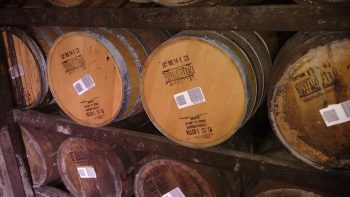
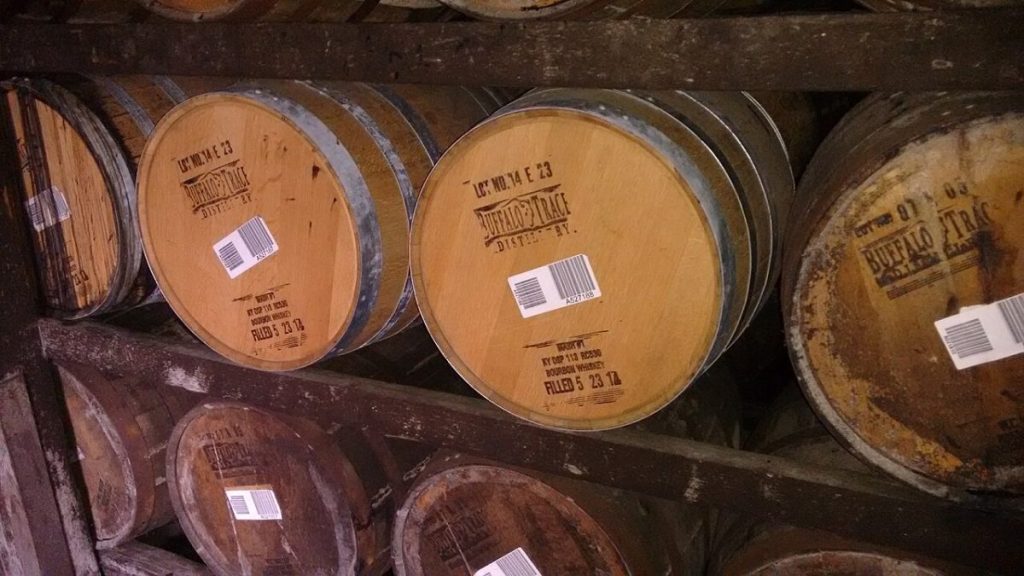
Featured photo: Buffalo Trace barrels by Acdixon, CC0.