To make turkey stock from carcass leftovers, break the frame into pieces, cover it with cold water, add onion, carrot, celery and a few herbs, and hold it at a bare simmer for about three to four hours, skimming as it goes. Strain it, cool it quickly in shallow containers, and refrigerate or freeze it. One carcass typically gives you a large pot of stock for soups, gravies and risotto.
It is the most useful thing you can do with a roast turkey after the meal. The bones, skin and scraps that would go in the bin hold enough flavor and gelatin to build a week of cooking.
The steps below cover every stage, including the one most home cooks rush: getting a big, hot pot of liquid cold enough, fast enough, to store safely.
Key takeaways
- Start with cold water, keep the pot at a gentle simmer rather than a boil, and skim the foam in the first half hour.
- Roasting the broken-up bones first is optional; it gives a darker, deeper stock suited to gravy.
- USDA says leftovers should be refrigerated within 2 hours of cooking; divide stock into shallow containers so it cools quickly.
- Commercial kitchens follow two-stage cooling: 135°F to 70°F within two hours, then to 41°F or colder within four more hours.
- USDA guidance: refrigerate leftovers 3 to 4 days, freeze 3 to 4 months, and reheat soups and sauces to a rolling boil.
In this guide
- What you need
- Step 1: Break down the carcass
- Step 2: Roast the bones, if you want a darker stock
- Step 3: Add water and aromatics
- Step 4: Simmer and skim
- Step 5: Strain and cool it fast
- Step 6: Store, freeze and use it
- FAQ
- Start the pot the day after the roast
What you need
Stock is forgiving about quantities. What matters most is that the bones are well covered by water and that nothing goes in that will cloud or overpower it.
- The carcass of one roast turkey, plus any wing tips, necks, skin and meat scraps. Leave out stuffing, which clouds the liquid.
- Aromatics: 2 onions, halved with the skin on; 2 carrots and 2 celery ribs cut into large chunks; 3 or 4 garlic cloves, lightly crushed.
- Herbs and spice: a few sprigs of thyme and parsley stems, 2 bay leaves and about 10 black peppercorns.
- Water: enough cold water to cover the bones by about 2 inches, usually 4 to 5 quarts in a large stockpot.
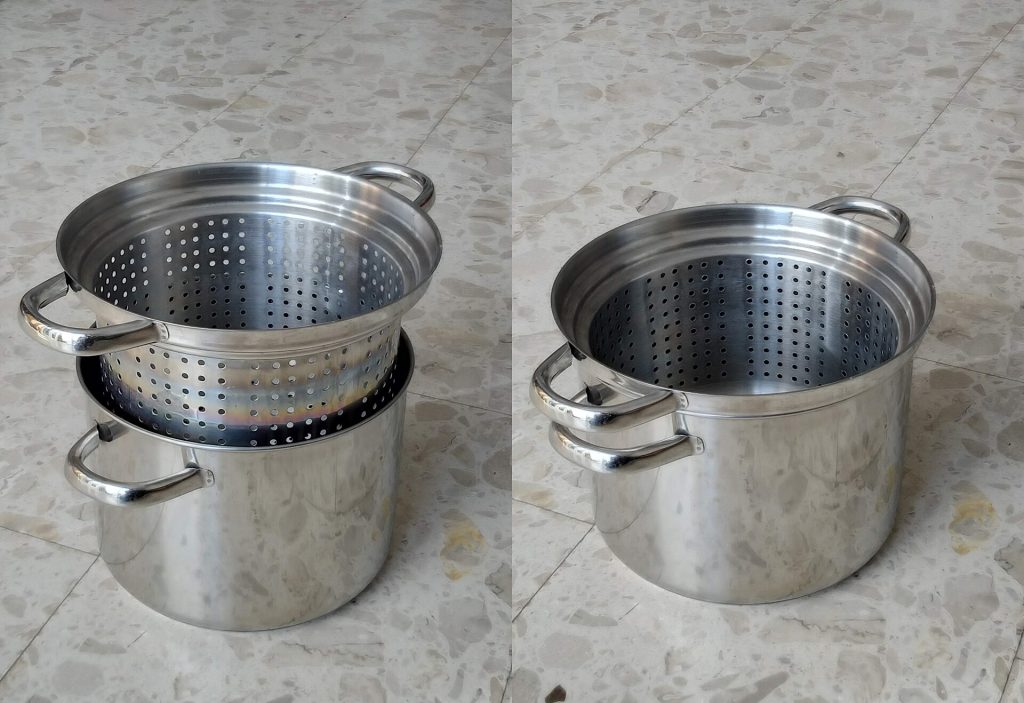
- Equipment: a stockpot of 8 quarts or more, a ladle, a fine-mesh sieve, cheesecloth if you want it clear, and several shallow containers.
Hold the salt. Stock gets reduced and reused in other dishes, and salting at the end, or in the final recipe, avoids an over-salted gravy later.
Step 1: Break down the carcass
- Pull off any meat worth saving for sandwiches or soup, and refrigerate it separately.
- Using kitchen shears or a heavy knife, cut the carcass into four or five pieces along the backbone and through the ribcage.
- Snap or cut the leg and wing bones at the joints.
- Press the pieces down so they sit flat in the pot. Broken-down bones fit under less water, which means a more concentrated stock.
If you cannot make stock the same day, refrigerate the carcass within 2 hours of the meal, as USDA advises for all leftovers, and use it within 3 to 4 days. It can also be frozen whole in a large bag and made into stock later.
Step 2: Roast the bones, if you want a darker stock
A roasted-bone stock is darker and tastes more of the roast, which suits gravy and French onion-style soups. An unroasted stock is paler and cleaner, better for chicken-noodle-style soups and risotto. The carcass is already cooked, so this step is purely about flavor.
- Heat the oven to 425°F.
- Spread the bone pieces and the halved onions in a roasting pan in a single layer.
- Roast for 30 to 40 minutes, turning once, until deep golden at the edges.
- Tip everything into the stockpot, then pour a cup of water into the hot pan and scrape up the browned bits. Add that liquid to the pot.
A good stock is made at a lazy simmer. The moment it boils hard, you trade clarity for cloudiness.
Step 3: Add water and aromatics
- Add the carrots, celery, garlic, herbs and peppercorns to the bones.
- Pour in cold water to cover everything by about 2 inches.
- Set the pot over medium-high heat and bring it slowly toward a simmer, uncovered.
Starting cold matters. As the water heats slowly, proteins dissolve and then coagulate into foam that rises to the surface, where you can remove it. Dropping bones into boiling water traps more of that material in the liquid.
Step 4: Simmer and skim
Once small bubbles break the surface, turn the heat down until you see only an occasional bubble. That is the right temperature for the next few hours.
- For the first 20 to 30 minutes, skim the grey foam from the surface with a ladle or large spoon every few minutes.
- Keep the pot uncovered or with the lid ajar, and top up with hot water if the bones become exposed.
- Simmer for about 3 to 4 hours in total. Taste after 3 hours: the stock should taste clearly of turkey and feel slightly rich on the lips.
- Do not stir hard during the simmer; it breaks down the vegetables and clouds the liquid.
A pressure cooker cuts the time to around an hour at pressure, and a slow cooker on low overnight also works. Whatever the method, the finished stock needs the same fast cooling afterwards.
Step 5: Strain and cool it fast
This is the step that matters for safety. A large pot of stock holds heat for hours, and leaving it on the stove to cool overnight keeps it in the temperature range where bacteria multiply quickly.
- Lift out the large bones with tongs and discard them.
- Pour the stock through a fine-mesh sieve, lined with damp cheesecloth for a clearer result, into a clean pot or large bowl.
- Set that pot in a sink filled with ice and cold water, and stir the stock every few minutes so the heat moves out evenly.
- Once it is no longer steaming hot, divide it into shallow containers, a few inches deep at most.
- Refrigerate uncovered or loosely covered until cold, then cover tightly.
USDA’s leftovers guidance says food must be refrigerated within 2 hours of cooking and recommends dividing large amounts into shallow containers so they cool quickly. Restaurants work to a stricter standard drawn from the FDA Food Code. A Texas health department cooling fact sheet sets it out: cool from 135°F to 70°F within two hours, then from 70°F to 41°F or colder within an additional four hours. It lists shallow pans, ice baths with stirring, and leaving food uncovered until cool among the methods that get there.
Skimming the fat
Once chilled, the fat sets in a solid layer on top. Lift it off with a spoon and either discard it or keep it for roasting potatoes. Underneath, a well-made turkey stock is often softly jellied from the gelatin in the bones, which is a sign of good body rather than a problem.
Step 6: Store, freeze and use it
| Where | How long | Tips |
|---|---|---|
| Refrigerator | 3 to 4 days (USDA) | Keep it covered and toward the back of the fridge |
| Freezer | 3 to 4 months for best quality (USDA) | Use freezer containers or flat bags; leave headspace for expansion |
| Reheating | Bring to a rolling boil (USDA) | Reheat only the portion you need |
Freeze stock in useful sizes: 1-cup and 2-cup containers for gravy and sauces, larger ones for soup. Freezing flat in zip-top bags saves space, and ice cube trays give you small portions for deglazing a pan. Label each with the date.
Ways to use it
- Turkey and rice soup or a noodle soup with the reserved meat.
- Gravy for the next roast, reduced to concentrate its flavor.
- Risotto, where the gelatin gives a silky finish.
- Braising greens, beans or winter vegetables instead of water.
- A leftover pot pie filling; our pot pie recipes show how.
FAQ
How long should turkey stock simmer?
About 3 to 4 hours at a gentle simmer on the stove. A pressure cooker needs roughly an hour at pressure.
Why is my turkey stock cloudy?
Usually because it boiled rather than simmered, or it was stirred hard. It still works well in soups and gravies.
Can I leave stock on the stove overnight to cool?
No. USDA says to refrigerate cooked food within 2 hours, and to divide large amounts into shallow containers so they cool quickly.
How long does turkey stock keep in the freezer?
USDA gives 3 to 4 months for frozen leftovers. Reheat stock to a rolling boil before using it.
Start the pot the day after the roast
Before the holiday, clear space in the freezer and set out a few shallow containers and a bag of ice, so the cooling step is easy when the stock is ready. The day after the roast, break down the carcass in the morning and let the pot simmer while you do other things. For more seasonal cooking, browse our recipes section, and see our guide to using up turkey leftovers for what to do with the meat.
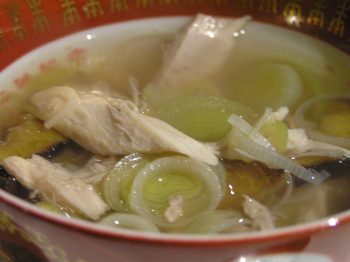
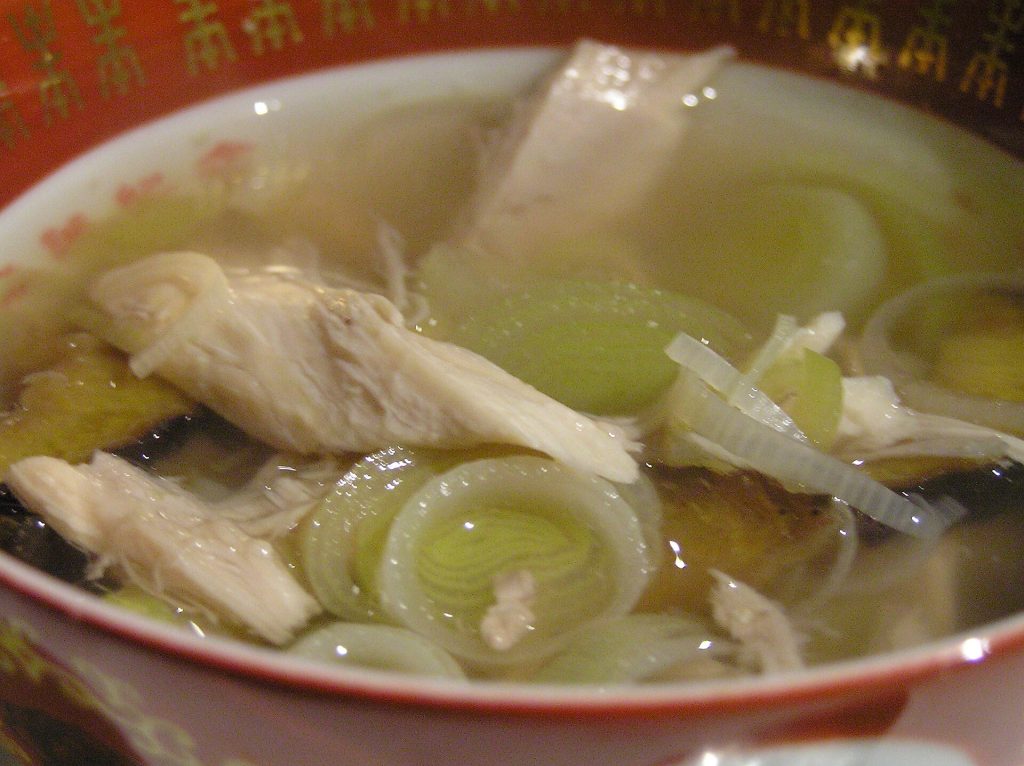
Featured photo: Cock-a-leekie Soup by Laurel F, BY-SA 2.0.