

-
by Restaurants Expert
- July 8, 2026
West Coast Sourdough is building a fast-casual model around fresh bread, premium ingredients, and a business system designed for growth.
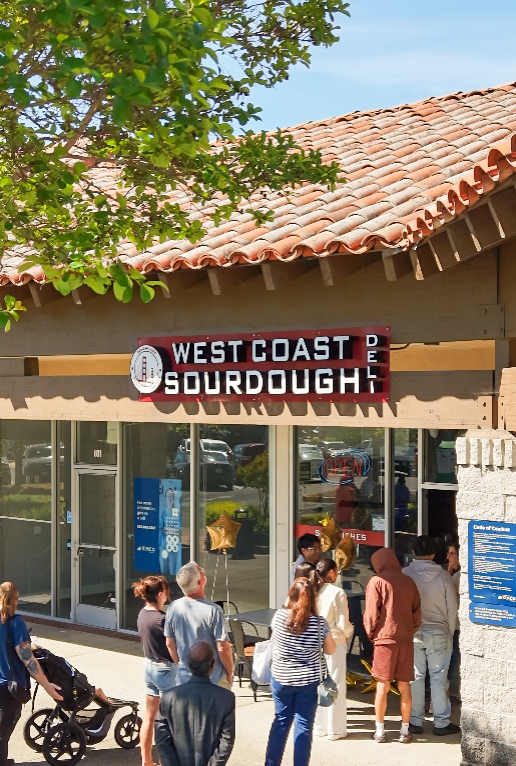
At West Coast Sourdough, the starting point is simple: a sandwich depends on the bread beneath it. For Manny Deol, Co-Founder and CEO, and Damon Bhatia, Co-Founder and CFO, that belief has shaped both the menu and the business model behind one of the country’s growing fast-casual sandwich brands.
The brand draws from the long tradition of authentic San Francisco sourdough, but its appeal is not built on nostalgia alone. Its restaurants are designed for modern diners who want speed, convenience, and a meal that still feels carefully made.
If you are ordering lunch between meetings, picking up dinner for the family, or looking for something warmer than the usual deli-counter option, the difference starts with bread hand-rolled by artisan bakers, baked fresh daily in each restaurant, and served warm.
That standard has become central to the brand’s identity. In a crowded sandwich category, West Coast Sourdough has chosen to compete on product quality rather than size or price alone.
Quality as the Operating System
The food model is intentionally straightforward, but the execution requires discipline. Each sandwich is made on fresh sourdough, while premium meats are sliced in-house daily. Local produce deliveries help support a menu built around freshness, consistency, and speed.
For guests, that may show up as a warm sandwich with a crisp sourdough bite, a cup of soup, or one of the brand’s freshly baked daily bread bowls. For the business, it creates a clear point of difference. West Coast Sourdough is not trying to look like every other deli. It is built around a specific product promise and then repeated across locations.
That focus also supports its position as an artisan sandwich shop with a broader franchise strategy. The goal is not to make artisan food feel slow or difficult to access. Instead, Deol and Bhatia have worked to pair bakery-level quality with the pace of quick-service dining.
Leadership Through a Difficult Launch Window
The timing of the brand’s growth made that challenge even more complex. West Coast Sourdough launched during the uncertainty of 2020, facing lockdowns, capacity restrictions, supply chain disruptions, and labor shortages. Those conditions tested restaurant operators across the country, especially brands trying to build consistency from the ground up.
Under the leadership of Manny Deol, CEO, and Damon Bhatia, CFO, the company focused on operational structure. The team developed a repeatable playbook, focused on unit economics for franchise partners, and maintained its emphasis on product differentiation.
That approach helped the brand capture a larger cultural moment. As more consumers developed an appreciation for sourdough during the pandemic, West Coast Sourdough offered a restaurant version of that same comfort: warm bread, familiar flavors, and a more polished fast-casual experience.
Technology Behind the Counter
Fresh bread may be the emotional center of the brand, but technology plays a major role in how it scales. West Coast Sourdough uses a tech-enabled platform that includes a proprietary consumer app for streamlined ordering, as well as online ordering, third-party delivery, and catering programs.
Those tools matter because the brand is built around high-throughput lunch traffic and repeat customer behavior. A guest can order ahead, grab a meal quickly, or plan catering around sandwiches, soups, and signature sourdough bread bowls. For franchise operators, that structure creates multiple revenue channels within a focused menu model.
It also helps explain why the company is attracting attention from entrepreneurs interested in fast-casual franchise opportunities. The concept combines recognizable comfort food with operational systems designed to support growth.
Scaling the Sourdough Standard
West Coast Sourdough has grown to over 50 locations across multiple states, with additional units in development. Its recognition in Entrepreneur Magazine’s Franchise 500 has added visibility to its expansion, while the brand’s fresh-bread model continues to support its position as a top sandwich franchise.
For diners searching for the best sourdough sandwich, the appeal is direct: warm bread, fresh-sliced meats, local produce, and a menu that feels familiar without blending into the category. Deol and Bhatia have built West Coast Sourdough around a clear idea: quality can scale when the process is disciplined, the product is distinct, and the bread comes first.