If your restaurant is part of a chain with 20 or more locations operating under the same name and selling substantially the same menu items, federal menu calorie labeling is not optional. You must post calories for standard items on menus and menu boards, show a short statement about the 2,000-calorie daily figure, tell guests that more nutrition information is available on request, and label self-service and display foods too.
The rule has been enforceable since May 7, 2018, according to the FDA’s menu labeling page, yet menus change constantly. New limited-time items, a redesigned drive-through board or a fresh online ordering page can each quietly fall out of compliance.
This checklist walks through the regulation in the order an operator would audit a location: coverage, menus, statements, self-service, then paperwork. Tick each box before a menu goes live.
Key takeaways
- Chains with 20+ locations under the same name and a substantially similar menu are covered; other restaurants can register voluntarily.
- Calories go next to the item name or price, in type no smaller than the name or price, with the word “Calories” or “Cal”.
- Two statements are mandatory: the 2,000-calorie succinct statement and “Additional nutrition information available upon request.”
- Buffets, salad bars and display cases need calorie signs next to each food.
- Online menus and drive-through boards count as menus under the federal regulation.
Does the rule apply to you
The federal regulation, 21 CFR 101.11, defines a covered establishment as a restaurant or similar retail food establishment that is part of a chain with 20 or more locations doing business under the same name and offering substantially the same menu items. It also covers any establishment that voluntarily registers with the FDA to be treated as covered.
- ☐ Count every location operating under the same name.
- ☐ Confirm whether the menu is substantially the same across locations.
- ☐ If you are below 20 locations but want uniform national rules, review the FDA’s voluntary registration form (Form 3757).
- ☐ Assign one person to own compliance for each menu launch.
Independents under the threshold are not required to follow the federal rule, but many choose to post calories anyway because guests increasingly expect it. State or local rules may also apply, so check with your local health department.
Checklist: calories on every menu and menu board
The core requirement is simple: disclose the number of calories in each standard menu item on menus and menu boards. The details are where audits fail.
Format
- ☐ Calories appear adjacent to the name or the price of the item.
- ☐ Type size is no smaller than the type size of the item name or price.
- ☐ The number is in a colour at least as conspicuous as the name or price, on a contrasting background.
- ☐ The word “Calories” or “Cal” accompanies the number.
- ☐ Values are rounded to the nearest 5 calories up to 50, and to the nearest 10 calories above 50.
Which menus count
The regulation’s definition of a menu is broad. It includes breakfast, lunch, dinner, dessert, beverage and children’s menus, other specialty menus, electronic menus and menus on the Internet. Menu boards include those inside the restaurant and at the drive-through.
- ☐ Printed dine-in menus, including dessert and drinks menus.
- ☐ Indoor menu boards and digital screens.
- ☐ Drive-through boards.
- ☐ Your website and app ordering menus.
Combos, shareables and variable items
- ☐ Combination meals with two options show both values separated by a slash, such as “350/450 calories”.
- ☐ Combos with three or more options use a calorie range.
- ☐ Multiple-serving items, like a whole pizza, state calories per serving and the number of servings, such as “200 cal/slice, 8 slices”.
What is exempt
Not everything on the menu needs a number. The regulation exempts condiments for general use, daily specials, custom orders, temporary menu items that appear for fewer than 60 days a year, and foods being market tested for fewer than 90 consecutive days.
The menu your guests order from is the menu the rule covers, whether it hangs on a wall, glows on a drive-through board or scrolls on a phone.
Checklist: the two required statements
Two short statements must appear on every form of the menu. They are the easiest part of compliance to get right and one of the easiest to lose in a redesign.
| Statement | Exact wording | Where it goes |
|---|---|---|
| Succinct statement | “2,000 calories a day is used for general nutrition advice, but calorie needs vary.” | Bottom of each menu page; bottom of the menu board |
| Availability statement | “Additional nutrition information available upon request.” | Bottom of the first menu page with items, next to the succinct statement; bottom of the menu board |
| Children’s menu option | “1,200 to 1,400 calories a day is used for general nutrition advice for children ages 4 to 8 years, but calorie needs vary.” | May be used on menus designed for children |
- ☐ Both statements are in type no smaller than the smallest calorie declaration on the same menu or board.
- ☐ Both are in a colour and contrast at least as conspicuous as the calorie declarations.
- ☐ Online and app menus carry the statements too.
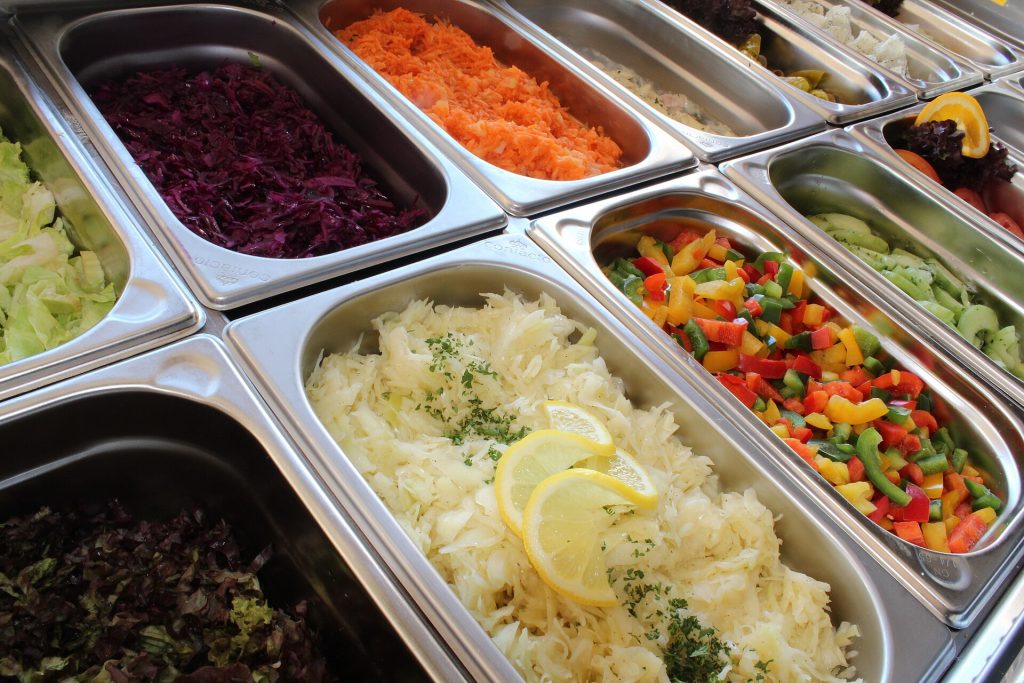
Checklist: self-service and foods on display
Buffets, salad bars, self-serve drink stations and bakery cases trip up plenty of operators. The FDA says calories for self-service foods and foods on display must be listed in close proximity to, and clearly associated with, the item.
- ☐ Each food has a sign adjacent to it showing calories per displayed item or per serving, with the serving unit stated (for example, per scoop or per piece).
- ☐ The succinct statement and availability statement appear on the sign, on a larger sign near the food that guests can read while choosing, or on a large menu board.
- ☐ Signs move with the food when the line is reset or items rotate.
- ☐ Staff know which foods are exempt condiments and which need signs.
Checklist: nutrition data and paperwork
Calories on the board are only the visible part. Behind them, the rule expects a documented, reasonable basis for every number and a way to hand guests fuller nutrition details.
Written nutrition information
On request, you must provide written information for each standard item covering total calories, total fat, saturated fat, trans fat, cholesterol, sodium, total carbohydrates, sugars, fiber and protein. The regulation allows it in a counter card, sign, poster, handout, booklet, loose-leaf binder, electronic device such as a computer, or on the menu itself.
- ☐ Nutrient values come from a reasonable basis: a nutrient database, cookbooks, laboratory analysis or other reasonable means.
- ☐ You keep records of the method used for each item.
- ☐ An owner or operator has signed a statement certifying that the nutrient values are accurate and that the establishment follows the standard recipe and portion.
- ☐ Recipe or portion changes trigger a recalculation before the new item is served.
- ☐ Front-of-house staff know where the written information is kept and can hand it over quickly.
Accurate numbers depend on consistent portions, so this work overlaps with controlling food costs and menu engineering. Standard recipes protect margins and compliance at the same time. For more on the rules that shape restaurant operations, browse our industry news.
FAQ
Do independent restaurants have to post calories?
Not under the federal rule if they are not part of a chain with 20 or more locations. They can opt in through voluntary registration, and some state or local rules may apply.
Do online ordering menus need calorie counts?
Yes. The federal definition of a menu includes electronic menus and menus on the Internet, as well as drive-through boards.
Are limited-time offers exempt?
Temporary items on the menu for fewer than 60 days a year are exempt, as are daily specials and market tests running fewer than 90 consecutive days. Anything that stays longer needs a calorie count.
What nutrients must the written information include?
Total calories, total fat, saturated fat, trans fat, cholesterol, sodium, total carbohydrates, sugars, fiber and protein.
Run the audit before your next menu change
Print this checklist and walk one location with it this week, from the drive-through board to the dessert menu to the app. Fix what you find, then add a compliance sign-off to your launch process for every new item. If you want to see how other operators present their menus, our restaurant directory is a good place to compare.
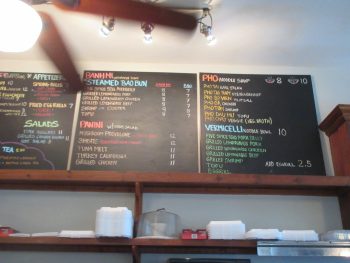
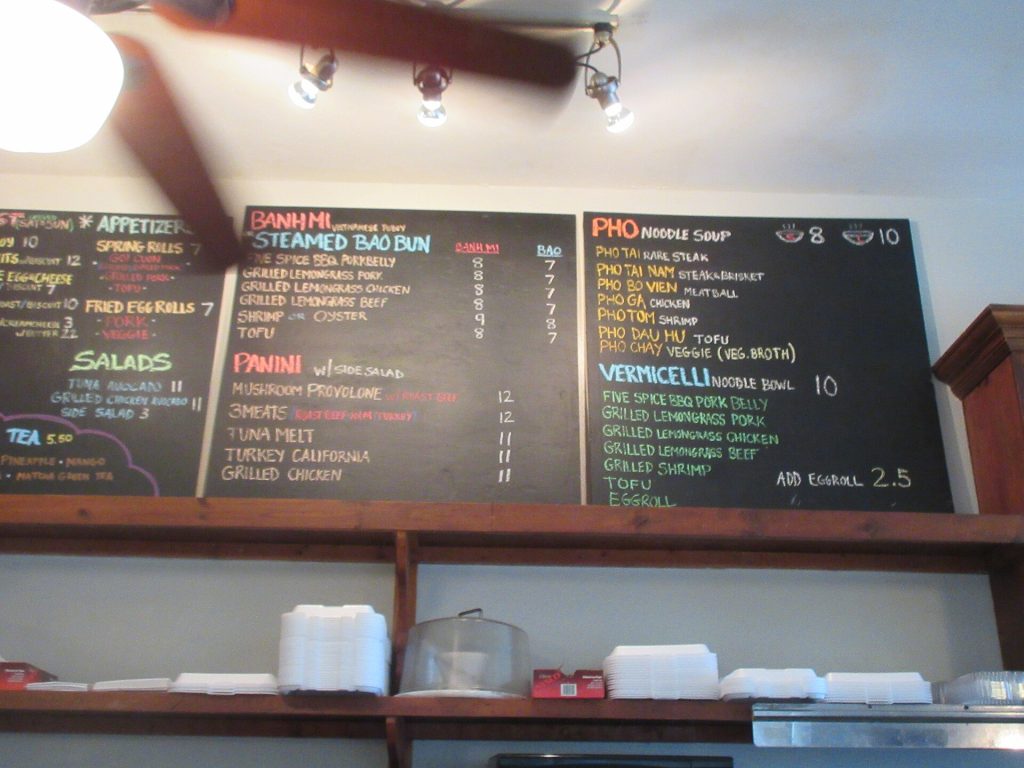
Featured photo: Menu Chalkboard, Le’s Baguette Banh Mi Cafe, New Orleans 02 by Infrogmation of New Orleans, BY-SA 4.0.