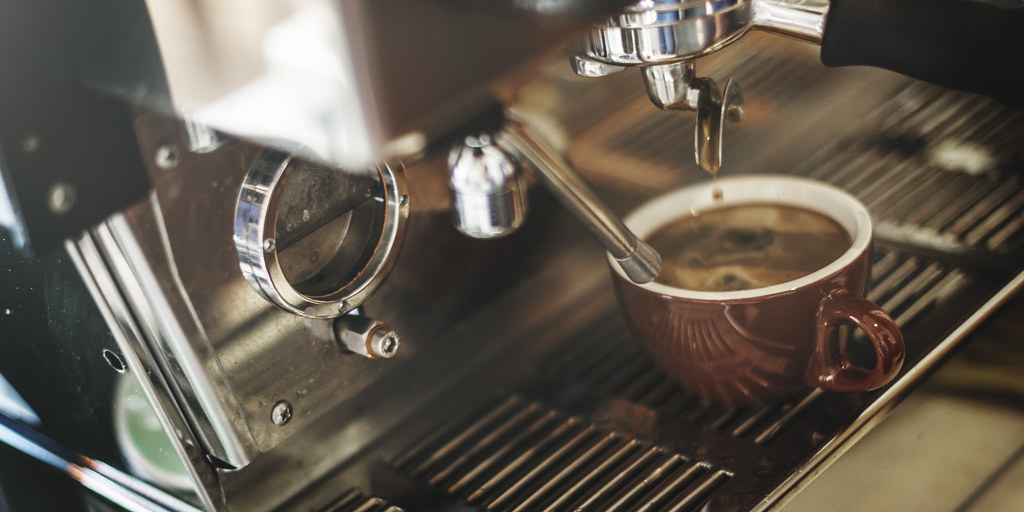
Specifying a cafe coffee bar from scratch means making a sequence of decisions that each constrain the next, not picking equipment off a list in isolation. The espresso machine’s group count sets a floor for how much volume the bar can handle, the machine sets requirements for the grinder’s duty cycle, and both depend on water quality nobody thinks about until the boiler scales up. Getting the order right matters as much as getting each piece right.
This guide covers:
- Why volume, not equipment preference, should drive the first decision
- How to size an espresso machine’s group count and boiler type to real volume
- Matching a grinder’s duty cycle and dosing method to the machine
- Where water treatment and workflow layout fit into the spec
At a Glance
| Takeaway | Detail |
|---|---|
| Volume should drive every other decision | Covers per day, not brand preference, sets the floor for machine and grinder capacity. |
| Group count needs headroom, not just current volume | Sizing to exact projected volume leaves no room for a busy morning rush. |
| Boiler type affects both speed and consistency | Single, HX, and multi-boiler machines trade off recovery time against temperature stability. |
| Grinder duty cycle has to match the machine | An underpowered grinder becomes the bottleneck before the espresso machine does. |
| Grind-by-weight removes a common source of drift | Weighed dosing holds recipes steady across shifts better than timer-based dosing. |
| Water treatment protects the priciest equipment on the bar | Untreated hard water scales boilers and steam wands faster than most owners expect. |
| Workflow order shapes layout more than aesthetics do | Order, grind, pull, steam, serve, in sequence, prevents baristas crossing paths mid-drink. |
| A spec list should include headroom for growth | Underspeccing to save money upfront often costs more in an early equipment swap. |
Start With Volume, Not Equipment
The most common mistake in specifying a cafe bar is starting with a specific machine or grinder in mind rather than starting with expected volume. Covers per day, and specifically the size of the morning rush, determine what the rest of the bar needs to support. A cafe expecting 150 drinks a day at peak has different requirements than one expecting 400, even with a similar menu.
Estimating volume before touring equipment prevents two expensive mistakes: buying more machine than the space or budget can support, and buying less machine than the morning rush will demand within the first year. Most operators underestimate rush-hour volume specifically, since a steady pace across a full day can hide that half of it happens in a 90-minute window.
Sizing the Espresso Machine to the Bar
Group count is the first real spec decision, and it should be sized to peak-hour volume with headroom rather than average daily volume. A single group head can reliably pull around 60 to 80 shots per hour in steady operation; a two-group machine roughly doubles that ceiling. A cafe running a genuine morning rush generally needs at least two groups even at moderate daily volume, since a single-group machine bottlenecks fast once a line forms.
Boiler type is the second major decision, and it affects consistency as much as speed. Single-boiler machines are simplest and least expensive but can’t steam milk and pull a shot at the same time. Heat exchanger machines solve that by drawing from one boiler for both functions, at some cost to temperature stability. Multi-boiler machines dedicate separate boilers to brewing and steaming, holding temperature more precisely under continuous use but costing more upfront.
| Boiler Type | Steam + Brew Simultaneously | Temperature Stability | Best Fit |
|---|---|---|---|
| Single boiler | No | Lower under continuous use | Low-volume bars, home setups |
| Heat exchanger (HX) | Yes | Moderate | Small to mid-volume cafes |
| Multi-boiler (dual/triple) | Yes | High | High-volume bars, all-day consistency |
Matching the Grinder to the Machine’s Duty Cycle
A grinder built for occasional use will become the bottleneck of a bar long before the espresso machine does, since grinders run continuously through a rush in a way the machine’s brew cycle doesn’t. Duty cycle, how long a grinder can run without overheating and how quickly it recovers, needs to match the machine’s group count and expected volume, not just the grinder’s price point.
Dosing method matters too. Timer-based grinders dispense a set amount for a set duration, which drifts as bean density changes with roast level, age, and humidity. Grind-by-weight grinders weigh the dose as it grinds and stop automatically at the target weight, holding a recipe steady across a shift regardless of who’s on bar or what the beans are doing that day. For a bar running multiple baristas across shifts, that consistency removes a variable that otherwise requires constant manual correction.
Matching grinder duty cycle to machine group count is a specification problem more than a brand preference. Browsing a full range of Mahlkonig grinders at Crawford Espresso makes it easier to make that decision, with their variety of options.
Water Treatment: The Step Most New Cafes Skip
Water treatment rarely makes an initial equipment list, but it protects the most expensive machine on the bar. Untreated water with high mineral content scales boilers, group heads, and steam wands considerably faster than filtered water, and boiler descaling or replacement is a far more expensive fix than filtration would have been.
Water hardness varies significantly by region, so the right filtration setup depends on local water quality rather than a generic recommendation. A cafe in a hard-water area needs more aggressive filtration than one with naturally soft water, and skipping this step to save money upfront tends to show up as a boiler repair bill within the first year or two.
Dosing Consistency and Workflow Layout
Beyond the machine and grinder, an automatic tamper removes one more source of shift-to-shift variation. Manual tamping pressure varies by barista, fatigue level, and how busy a shift is, which shows up as inconsistent extraction even when the grind and dose are correct. An automatic tamper applies the same pressure every time, narrowing the variables a barista has to manage under pressure.
Layout should follow the sequence a drink actually moves through: order, grind, pull, steam, serve. Positioning equipment out of that order forces baristas to cross paths or backtrack mid-drink, slowing service exactly when speed matters most.
Building the Full Spec List
Once volume, machine, grinder, water treatment, and layout are worked through in that order, the rest of the spec list, tampers, pitchers, scales, knock boxes, fills in relatively quickly, since those decisions are smaller and less consequential than the core four.
For a first build-out or an equipment refresh, Shop commercial coffee equipment at Crawford Espresso for premium options.
Specifying in the Right Order
Specifying a cafe coffee bar from scratch works best as a sequence rather than a shopping list: volume determines machine size, machine size determines grinder duty cycle, and both depend on water treatment and layout to perform under real service pressure.
Key Takeaways
- Estimate peak-hour volume before touring equipment, since rush-hour demand, not daily average, determines group count and grinder duty cycle
- Match grinder duty cycle to the espresso machine’s group count, since an underpowered grinder becomes the bottleneck first
- Don’t skip water treatment; it protects the most expensive equipment on the bar and is cheaper than a boiler repair
A spec built in this order, volume, machine, grinder, water, layout, tends to hold up under real service pressure better than one assembled around individual equipment preferences.
Frequently Asked Questions
How many espresso machine groups does a new cafe need?
It depends on peak-hour volume rather than daily total. A single group head handles roughly 60 to 80 shots per hour; most cafes with a genuine morning rush need at least two groups even at moderate daily volume, since a single-group machine bottlenecks quickly.
What’s the difference between a heat exchanger and a multi-boiler espresso machine?
A heat exchanger machine draws from one boiler for both brewing and steaming, allowing simultaneous use with some temperature trade-off. A multi-boiler machine dedicates separate boilers to each function, holding temperature more precisely under continuous use at a higher upfront cost.
Does the grinder really matter as much as the espresso machine?
Yes, arguably more during a rush. Grinders run continuously through busy periods in a way the machine’s brew cycle doesn’t, so an insufficient duty cycle becomes the bar’s bottleneck before the espresso machine does, regardless of how capable the machine itself is.
What does grind-by-weight actually solve?
It removes drift caused by bean density changing with roast level, age, and humidity. Timer-based dosing assumes consistent bean flow and can drift as those factors shift; grind-by-weight grinders weigh each dose and stop automatically, holding a recipe steady across a shift.
Is water treatment really necessary for a small cafe?
Generally yes, since the risk scales with water hardness rather than cafe size. Untreated hard water scales boilers, group heads, and steam wands faster than filtered water, and descaling or replacing a boiler typically costs far more than installing filtration upfront.
What equipment order should a cafe layout follow?
Order, grind, pull, steam, serve, matching the sequence a drink actually moves through. Positioning equipment out of that order forces baristas to cross paths or backtrack mid-drink, slowing service during the exact moments rush periods, when speed matters most.