The Feast of the Seven Fishes is an Italian-American Christmas Eve dinner built entirely around seafood. It grew out of La Vigilia, the Catholic vigil before Christmas, when meat was off the table, and southern Italian immigrants carried the custom to North America, where it became a large family meal of fried, baked and simmered fish.
Typical dishes include salt cod, known as baccalà, fried smelts, clams with pasta, fried calamari and shrimp. Nobody knows for sure why the number is seven, and many families serve more or fewer courses.
Here is where the tradition comes from, what goes on the menu, the theories behind the number, and how it changes from one family to the next. In 2026, Christmas Eve falls on a Thursday.
Key takeaways
- The feast is a meatless Christmas Eve dinner of several seafood dishes, also called La Vigilia or the Vigil.
- It stems from the Catholic practice of abstaining from meat before feast days, adapted by southern Italians into a seafood celebration.
- It is far more prominent among Italian-Americans than in Italy itself.
- Common dishes include baccalà, fried smelts, clams, calamari, shrimp and eel.
- The reason for seven is unknown; theories include the seven sacraments, the seven days of creation and the seven virtues.
What the Feast of the Seven Fishes is
Britannica defines the Feast of the Seven Fishes as an Italian-American Christmas Eve meal: a meatless dinner of seven different fish dishes. It is also known as Christmas Eve fish dinner, or in Italian as La Vigilia, the vigil. The name in English is the one most people in North America now recognise, even though many Italian families simply call the evening La Vigilia.
The shape of the meal is loose. There is no fixed menu and no official list of seven dishes. What stays constant is the idea of a long, abundant dinner of seafood on the night before Christmas, eaten with extended family.
La Vigilia: a meatless vigil
The roots are religious. Italy Magazine notes that abstinence from meat and animal fat is a precept of the Catholic Church, observed on Fridays and at certain times of the year, including the eve of feast days such as Christmas. Christmas Eve was a day of waiting before the celebration, so the dinner that night had to be lean.
America’s Test Kitchen explains that in Italian terms fish was considered magro, or lean, and was within reach of poorer families, while meat was a luxury. In the coastal south of Italy, where seafood was plentiful, that obligation turned into a feast. The fast became a celebration of the catch.
The Feast of the Seven Fishes turned a day of abstinence into the most generous meal of the year.
From southern Italy to Italian-American homes
As a named tradition, the feast is more Italian-American than Italian. Anthropologist Michael Di Giovine of West Chester University, who published a study of the custom in the journal Food and Foodways in 2010, notes that it is not widely practised across Italy. Even in southern Italy, where most Italian-Americans’ families came from, it is less prominent than it is in North America.
America’s Test Kitchen dates the migration of the custom to the great wave of Italian immigration between 1880 and 1924. Once in the United States, Christmas Eve seafood became a way of holding on to home. Di Giovine describes the feast as a ritual that strengthens family bonds after assimilation and a way of welcoming non-Italian spouses into the family.
A tradition that grew in the telling
An Italy Magazine writer living in Italy said she had never heard of the Feast of the Seven Fishes there, and her Italian friends had not either. Christmas Eve fish dinners are real in Italy; the fixed count of seven and the English name are the Italian-American additions.
Why seven fishes
The honest answer is that no one knows. Di Giovine writes that the historical origins and reasons for seven are unknown, and NPR came to the same view. The explanations families give are part of the tradition itself.
| Number | Theory offered |
|---|---|
| Seven | The seven sacraments of the Catholic Church |
| Seven | The seven days of creation, or the seven days of the week |
| Seven | The seven virtues, or the seven deadly sins |
| Seven | The Seven Hills of Rome |
| Nine | The Holy Trinity multiplied by three |
| Eleven | The apostles, minus Judas |
| Thirteen | The twelve apostles plus Jesus |
Other ideas include the fish as an early Christian symbol and St. Peter the fisherman. Britannica notes that many families celebrate with three, eleven, thirteen or another odd number of fish, and NPR reported feasts running anywhere from seven to thirteen. The number matters less than the sense of plenty.
The dishes on the table
There is no canonical menu, but certain dishes appear again and again. The Italian Sons and Daughters of America, a fraternal organisation, lists baccalà, capitone (eel), stuffed calamari, smelts, cod, anchovies, shrimp and stuffed lobster among the traditional choices.
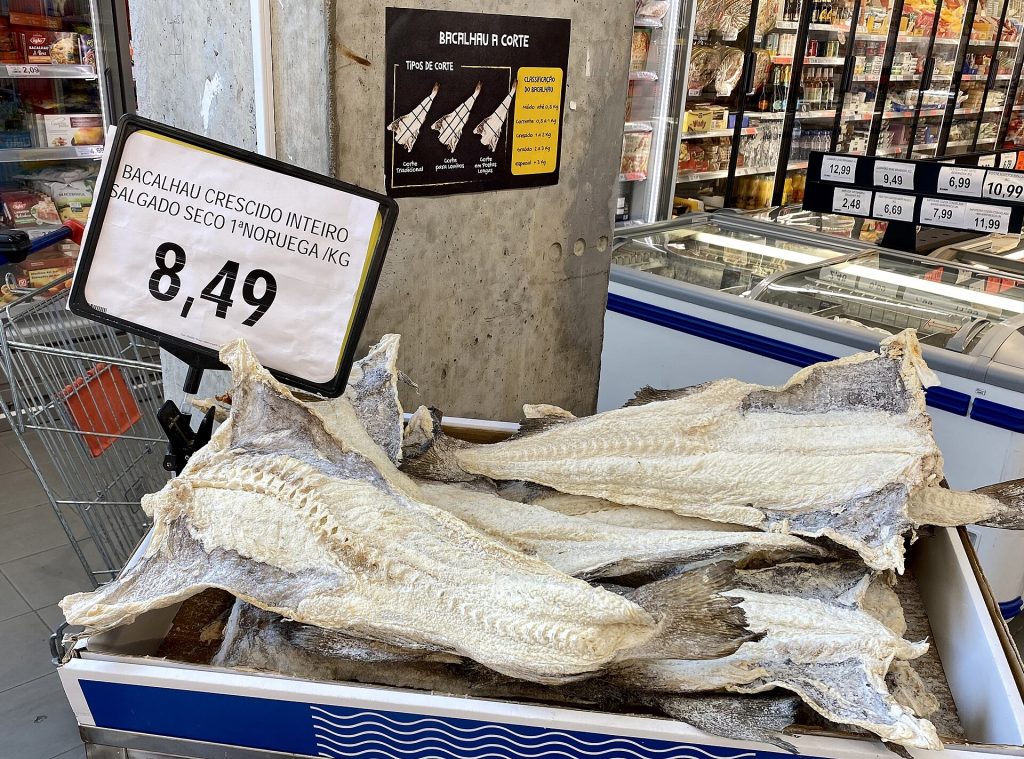
Baccalà
Salt cod is the backbone of many Christmas Eve tables because it was the preserved fish poor families could store. It has to be soaked before cooking. America’s Test Kitchen’s salt cod recipe calls for about 24 hours in cold water in the refrigerator, changing the water twice, or the finished dish will taste unpleasantly salty. Baccalà turns up as a cold salad, fried, or stewed with tomatoes.
Fried smelts and calamari
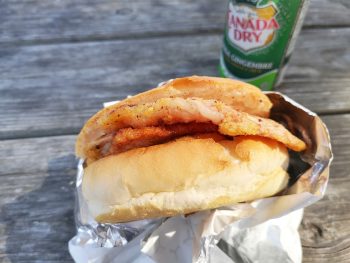
Small fried fish are a fixture. NPR describes pan-fried smelts and fried calamari rings, noting that much of the meal is traditionally cooked in oil. Fry them last, just before serving, so they stay crisp.
Clams, shrimp and pasta
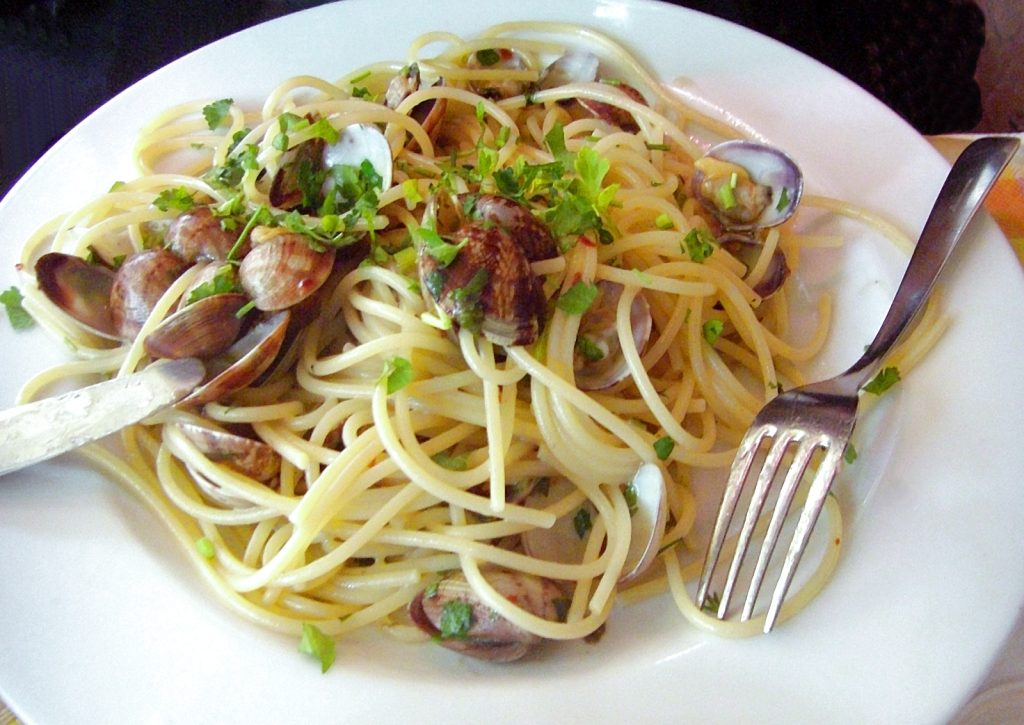
Italy Magazine lists spaghetti alle vongole, clam pasta, alongside grilled shrimp, mussel soup, seafood salad and sea bass. Pasta often carries one or two of the seven fish, which helps stretch the count without adding another full course.
Eel
Capitone, a large eel, is the old-fashioned choice that ISDA includes on its list. It is less common on younger families’ tables, but it still marks the most traditional versions of the meal.
How families and regions vary it
Because the tradition is kept by families rather than by a written rule, every household has its own version. Saveur’s account of one family’s feast includes pasta con le sarde made in the Sicilian style with whole sardines, calamari with peas and potatoes, and lobster fra diavolo, and admits they served more than seven dishes anyway.
- The count: seven is common, but nine, eleven, twelve and thirteen all appear, and some families ignore numbers altogether.
- The regional accent: families with Sicilian roots may bring dishes such as pasta con le sarde, while others build the night around salt cod and fried fish.
- The modern table: America’s Test Kitchen’s own menu mixes in salmon, lobster tail and fish stews from other cuisines, summing up the only rule as skipping the meat.
- The timing: NPR described families who linger over the meal and exchange gifts at midnight.
For more food traditions, browse our food culture stories and see how Christmas food traditions differ around the world.
FAQ
Do you have to serve exactly seven fish?
No. Britannica notes that many families serve three, eleven, thirteen or another odd number of fish, and some serve whatever they like. The only consistent rule is no meat.
Is the Feast of the Seven Fishes celebrated in Italy?
Christmas Eve fish dinners are common in southern Italy, but the named, seven-dish feast is mainly an Italian-American tradition and is not widely practised across Italy.
What is baccalà?
Baccalà is dried, salted cod. It must be soaked in several changes of cold water before cooking to remove the salt, so start a day or more ahead.
Why is there no meat on Christmas Eve?
Catholic tradition called for abstaining from meat on the eve of major feast days, including Christmas. Fish was allowed, which is how the seafood feast began.
Planning your own Christmas Eve fish dinner
Choose your number, then build around dishes that can be made ahead. Soak the baccalà the day before, make a seafood salad and a baked fish in the afternoon, and keep the frying and the clam pasta for the last half hour. Seven dishes can be as simple as a platter of fried seafood that counts three or four fish at once. If you are feeding a crowd, our guide to setting up a holiday buffet will help with the table.
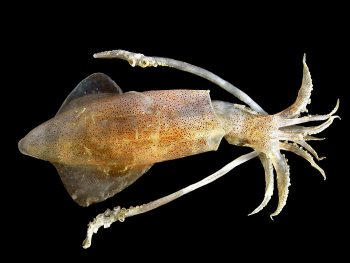
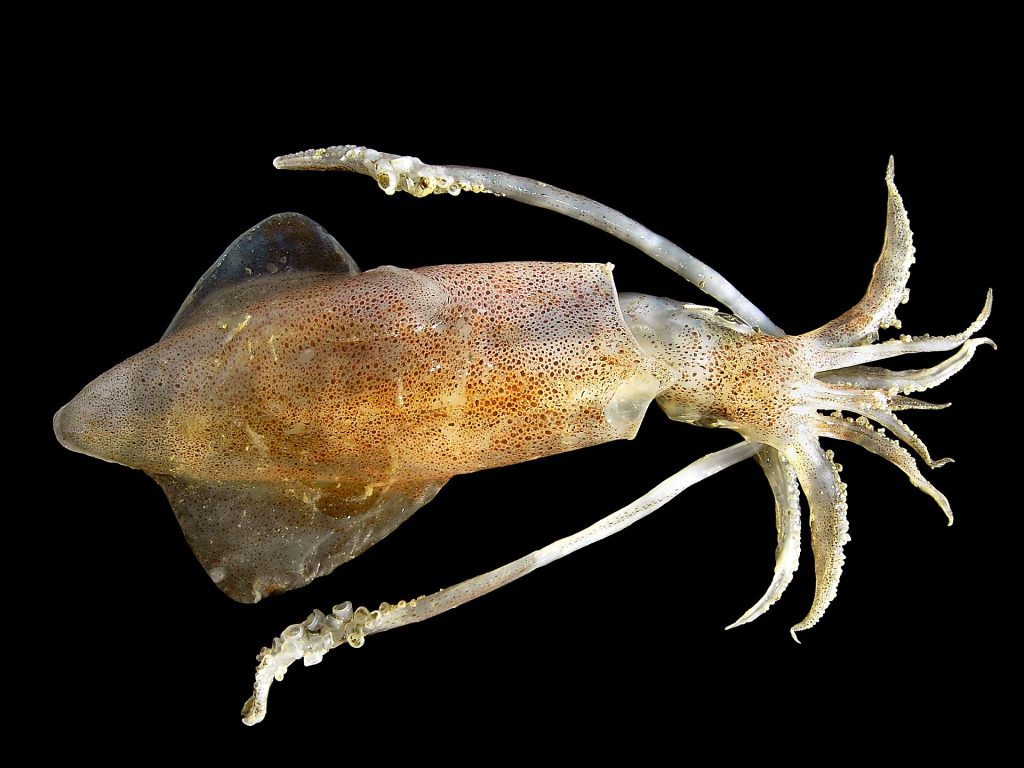
Featured photo: Loligo vulgaris by Hans Hillewaert, BY-SA 4.0.