Takeaway cups look like a simple purchase until a lid comes loose during delivery, a hot drink becomes uncomfortable to hold, or a cup that looked good in a catalogue takes up too much space behind the counter. The right cup is not merely a container. It affects service speed, drink quality, customer comfort, storage, waste and the way people perceive a food-and-beverage brand.
Restaurants and cafés therefore need to choose cups around the drinks they actually sell and the conditions in which customers will use them. A busy coffee counter, a bubble tea shop and a restaurant offering delivery may all need very different formats. The following process helps operators compare those requirements before committing to a large order.
Start With the Beverage, Not the Cup
Begin by listing the drinks on the takeaway menu. For each one, note its serving temperature, portion size, ingredients and expected journey time. These details quickly narrow the suitable materials and constructions.
Hot coffee and tea need a cup designed to tolerate the intended filling temperature. Cold drinks may benefit from a clear cup that lets customers see colours, layers and garnishes. Smoothies and drinks with toppings can require a wider opening, while carbonated beverages need enough headspace to reduce spills and foaming around the lid.
The same menu may need more than one cup family. For example, a café could use paper cups for espresso-based hot drinks and clear plastic cups for iced coffee. Trying to force every beverage into one format can save a little storage space, but it may compromise presentation or performance.
Match the Material to the Service
Cup material should support the beverage and the service model rather than follow a trend in isolation.
Paper cups
Paper cups are widely used for coffee, tea, hot chocolate and other takeaway drinks. Single-wall cups use less material and can suit smaller servings or drinks that are not held for long. Depending on the beverage temperature, they may be paired with custom cup sleeves that improve handling comfort while carrying the same visual identity as the cup.
Double-wall and other insulated paper constructions add separation between the drink and the customer’s hand. They can provide a more substantial feel and reduce the need for a separate sleeve, although operators should compare the complete cost and storage requirement rather than the unit price alone.
Paper should not automatically be treated as suitable for every drink or waste stream. Coatings, inks and local collection facilities all affect how a used cup can be handled. Any environmental message printed on a cup should match its actual construction and the disposal options available in the market where it will be used.
PET and PP cups
Clear PET cups are often selected for iced coffee, juices and colourful cold drinks because of their clarity. The drink itself becomes part of the display, which can be useful for products sold through visual presentation.
PP cups can suit applications that need flexibility or a different temperature-performance range. However, material names alone are not enough to approve a cup. Buyers should confirm the supplier’s stated use conditions for the exact product and test it with the intended beverage. Once the format has passed those checks, custom plastic cups can give iced drinks a branded presentation without hiding the colour, layers or texture that help sell them.
Reusable cups
Reusable formats can work well in controlled environments such as offices, campuses, venues or deposit-return programmes. They require a plan for collection, washing, drying, storage and loss. A reusable cup only works operationally when the system around it is convenient for both staff and customers.
Choose Sizes Around the Menu
More cup sizes can offer customers more choice, but every extra size creates another item to order, count and store. It may also introduce additional lids and sleeves.
A practical range usually begins with sales data. Identify the portions customers already buy, then consider whether any sizes can share a rim diameter and lid. Standardising one lid across several cup capacities can simplify counter setup and reduce the risk of staff reaching for the wrong component during a rush.
Nominal capacity is only part of the specification. Ask about usable fill volume and allow space for foam, whipped toppings, ice or sealing. A cup filled to its maximum capacity may be awkward to close and more likely to spill. Test recipes at the actual fill line before finalising the size printed on a menu.
Treat the Lid and Cup as One System
A good cup paired with an unsuitable lid is still a poor takeaway package. Cup and lid fit should be evaluated together, preferably using production samples from the order rather than components that merely share a quoted diameter.
During testing, staff should fill the cup with the intended drink, apply the lid using the normal counter process and check the complete rim. Then tilt and carry it as a customer or delivery driver would. Look for lifting, seepage and distortion. Hot drinks also need appropriate venting so pressure does not build beneath the lid.
The drinking opening matters as well. Sip lids suit many coffees and teas, dome lids provide space for cream or toppings, and flat straw-slot lids may be more appropriate for cold drinks. The best choice is the one that supports the recipe and the way it will be consumed.
Consider Comfort During the Whole Journey
Think beyond the few seconds between filling the cup and handing it over. A customer may carry the drink to a car, walk with it for 15 minutes or receive it as part of a delivery order.
Check whether the cup is comfortable to grip at the planned serving temperature. Test how it fits common vehicle cup holders and the drink carriers used by the business. Tall or top-heavy cups can behave differently once filled with ice or toppings. If orders travel in bags, make sure the lid height and cup diameter work with the internal space and do not put pressure on nearby food containers.
Condensation also matters for cold drinks. Moisture on the outside of a cup can soften paper carriers, dampen bags and make labels detach. Testing the whole package under realistic travel conditions reveals problems that individual product samples may not show.
Decide When the Cup Should Carry the Brand
Plain stock cups are useful when a business is new, volumes are uncertain or artwork changes frequently. They are readily adaptable, and a stamp or sleeve can provide temporary branding. Once drink specifications and ordering patterns are stable, however, the cup can become part of a more consistent customer experience.
For restaurants and cafés with repeat demand, custom Paper coffee cups can carry a logo, brand colours or campaign artwork beyond the counter. The strongest reason to customise is not simply to fill the surface with advertising. It is to make a frequently handled item feel connected to the menu, interior and other takeaway packaging.
Keep the design legible on a curved surface and review the artwork at actual size. Cup seams, the rim and the base can reduce the usable print area. A design should also work across every size in the range; artwork that feels balanced on a large cup may look crowded on a small one.
Before approving production, request a proof or physical sample and check colour direction, logo placement and small text. Ask whether the printing method, cup construction or finish changes the minimum order quantity. Seasonal artwork can be effective, but only if the business can use the stock before the campaign ends.
Compare Total Cost, Not Just Unit Price
The lowest cup price does not always produce the lowest service cost. Include lids, sleeves, freight, storage, wastage and staff handling when comparing options. A slightly more expensive construction may remove the need for a sleeve, while a shared lid diameter may reduce inventory complexity.
Order quantities should reflect storage capacity and realistic sales. Large orders can lower the quoted unit cost but tie up cash and occupy valuable space. They also create a risk of obsolete stock when a menu, logo or local packaging requirement changes.
Ask suppliers to state carton quantities, carton dimensions, lead times and tolerances clearly. For custom orders, confirm what happens at each approval stage and whether production samples will be retained as a reference for repeat runs.
Run a Small Service Test Before Ordering in Bulk
A practical trial is more valuable than assessing an empty cup on a desk. Give samples to the people who fill, close and hand over drinks every day. Test them during a real or simulated rush using the business’s normal recipes and equipment.
The trial should answer a short list of questions:
- Does the cup dispense cleanly from the stack?
- Can staff identify and apply the correct lid quickly?
- Is it comfortable to hold at the serving temperature?
- Does the filled cup remain stable in carriers, bags and vehicle holders?
- Is the printed design clear when the cup is held naturally?
- Can the business store enough stock without disrupting workflow?
Record failures instead of treating them as isolated accidents. Repeated difficulty applying a lid or separating stacked cups will become a larger operational problem once thousands of units enter service.
Make the Final Choice as a System
The right takeaway cup is the one that fits the drink, the lid, the service journey and the business behind it. Start with menu requirements, confirm material and temperature suitability, reduce unnecessary size and lid variations, and test the complete package under realistic conditions.
Branding comes after those fundamentals, not before them. When the functional specification is stable, a well-designed custom cup can make the takeaway experience more recognisable without sacrificing speed or reliability. That balance turns an everyday supply item into a dependable part of restaurant or café service.
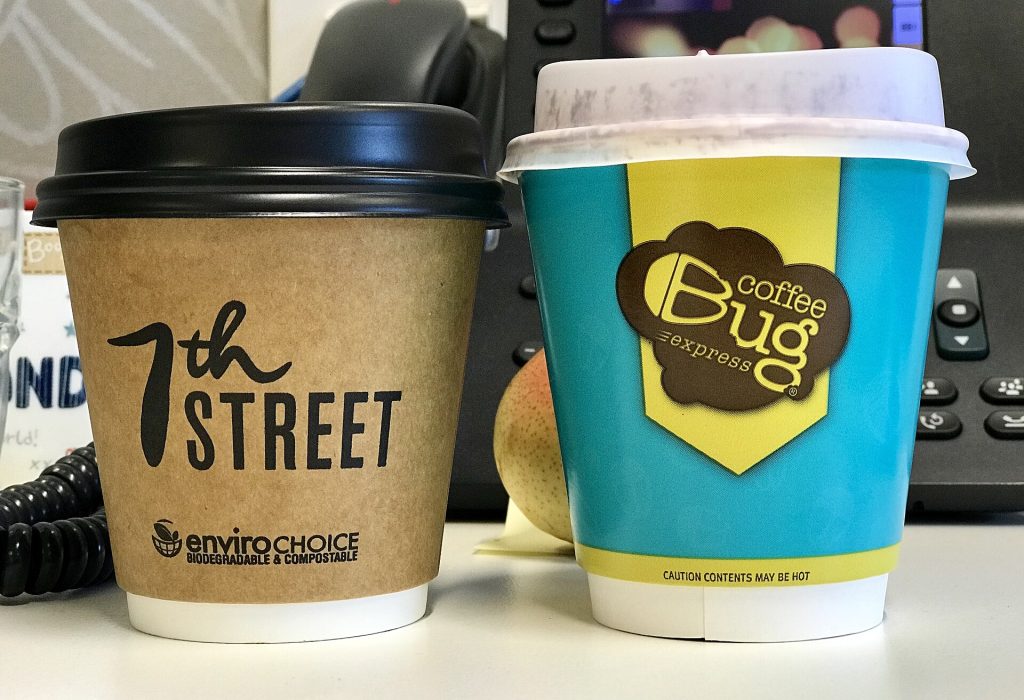
Featured photo: Disposable paper coffee cups- 7th Street, Coffee Bug, Queensland by Kgbo, BY-SA 4.0.