How Cafe Fit Out Ideas Influence Customer Flow and Ordering Behaviour
- Strategic layout decisions shape how customers move, queue, and order
- Entry design and visual cues can influence whether people stay or leave
- Seating placement impacts dwell time, spending habits, and customer comfort
- Lighting, sound, and materials subtly guide behaviour without signage

You’ve probably put a lot of energy into your menu, team training, and even the coffee machine. But if customers are hesitating at the door or unsure where to queue, there’s a good chance your layout is working against you. The way a space feels often influences how people move through it, and in cafes, even small friction points can lead to slower service or lost sales.
Maybe you’ve noticed a crowd building near the entrance while the back half of the shop sits empty. Or customers walking in, scanning the space, and then walking straight back out. These aren’t just one-off quirks — they’re reactions to how the space is designed.
The good news? The flow of a cafe can be shaped with small but intentional choices. From where your counter sits to what customers see first, every detail of the physical space plays a role in shaping how they move, wait, and decide what to order.
Understanding the Psychology of Movement in Cafes
The moment someone steps into a cafe, they’re subconsciously scanning for visual cues. Where do I order? Is this a place to sit down or grab and go? What’s the vibe? If those questions aren’t answered quickly through the layout, people hesitate. Hesitation in a fast-paced environment like a café doesn’t just slow down service — it disrupts the flow for everyone else.
Most people move through spaces in predictable ways. They tend to follow visual anchors, like the location of a counter or the way a room opens up. If the layout contradicts that natural movement, customers can end up bumping into each other or forming awkward queues that block foot traffic.
One of the most common issues is clustering. Without clear visual direction, customers gather around the register or near the entrance, unsure of where to go next. This cluttered space increases wait times, especially during peak periods. Even loyal customers might find the process irritating if they have to navigate around a poorly placed table or an ambiguous pickup zone.
When the design supports how people intuitively want to move, everything else runs smoother — from order speed to staff workflow.
Why Entry Points and Queues Matter More Than You Think
The front door is more than just a way in — it’s the first moment of influence. What people see, hear, and feel in that first step shapes how they interact with the space. If there’s no clear direction, they’ll pause. That pause often leads to confusion or even a quick exit, especially for new customers who aren’t sure how things work.
The path from the entrance to the counter should be obvious without needing signage to provide directions. That usually means creating a visible line of sight from the front door to the ordering point. When customers can immediately see where to go, they’re more likely to keep walking forward with purpose.
But visibility isn’t everything. The positioning of furniture, waiting areas, and even nearby bins can significantly impact how people move. For example, if the queue winds awkwardly through seating, it not only frustrates those waiting but also makes seated customers feel boxed in. That tension changes the whole experience.
Strategically placed floor textures or subtle lighting changes can act as gentle guides. These small cues help direct foot traffic and shape queue behaviour without needing ropes or taped arrows. When the design naturally leads people where they need to go, queues form smoothly and service becomes more efficient.
The Layout Behind Faster Orders and Bigger Sales
A well-designed layout doesn’t just look good — it reduces friction. Customers shouldn’t have to second-guess where to stand, where to pay, or how to collect their drink. When those questions are answered through the shape and flow of the space, orders happen more confidently and quickly.
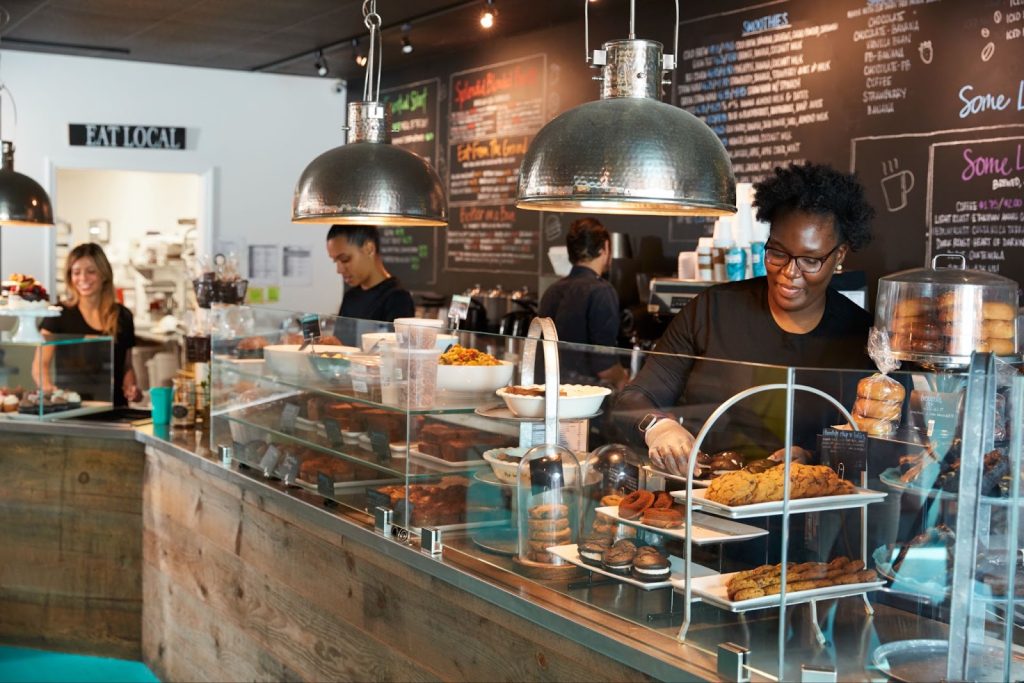
Subtle changes in layout — often inspired by well-considered cafe fit out ideas — can lead to shorter wait times, smoother transitions between service points, and even more spontaneous add-on purchases. Consider the placement of impulse items, such as baked goods or bottled drinks. If those sit along the natural path to the register, customers have time to notice and consider them without being distracted from the main transaction.
The counter itself is another high-impact area. A long, linear counter might seem practical, but if customers can’t tell where to order and where to pay, it slows everything down. Some cafes solve this by using slight height differences or surface changes to visually divide sections, helping guide customers through the process without needing instructions.
Even the distance between the door and the register can shape behaviour. Too short, and people feel rushed. Too long, and they lose interest before reaching the counter. Finding that balance — enough space for consideration but not delay — often comes down to how the whole area has been mapped out.
Seating Strategy and Customer Dwell Time
Seating isn’t just about comfort. Where and how you arrange tables can influence how long people stay, how much they order, and whether they return. A mix of seating types — stools at the window, two-tops along the wall, communal tables in the centre — allows for different visit types without the space feeling crowded or chaotic.
If takeaway is a big part of your trade, the first few steps inside the door shouldn’t be blocked by seated customers. Tucking quick-access seating off to the side provides customers with a spot to wait without slowing the movement of the main line.
For dine-in patrons, seating needs to feel intentional, not like an afterthought. Customers are more likely to order an extra coffee or snack if they’re comfortable and settled. But comfort doesn’t always mean plush chairs — it means the space feels inviting, has room to spread out, and avoids awkward proximity to queues or loud service areas.
Even table spacing matters. Too tight, and people feel like they’re intruding. Too spaced out, and you lose the energy that makes a cafe feel alive. The best seating plans adapt to the natural rhythms of the day, supporting both quick visits and longer stays without either group disrupting the other.
Sound, Lighting and Materials That Support the Space
Atmosphere has a direct impact on how customers behave, but it’s not just about aesthetics. The texture of a floor can influence how quickly people move through a space. Harsh lighting can make a quick coffee feel rushed. Acoustics can turn a peaceful catch-up into a stressful experience, especially when machine noise bounces off hard walls and ceilings.
Flooring is a good example of design serving dual purposes. Durable materials like polished concrete are easy to clean, but if they cover the entire space without variation, the room can feel cold or too open. Introducing texture near counters or pickup areas can act as a subtle cue — guiding movement while softening noise and adding visual interest.
Lighting is another high-impact tool. Bright, focused lighting over the counter draws attention to the ordering point, while warmer, dimmer tones in seating areas encourage longer stays. This contrast helps differentiate zones without adding visual clutter or signage.
Sound levels also play a quiet role in shaping behaviour. Spaces with high ceilings and hard surfaces often become louder than intended. That background noise can reduce dwell time, especially for solo customers trying to work or groups catching up. Soft furnishings or timber panelling along certain walls can absorb sound, making the space feel calmer — without compromising on style.
Design-Driven Behaviour Shaping
Good design doesn’t just support the look of a cafe — it supports how it functions. The flow of customers, the pace of service, and even the mood in the room all trace back to how space has been shaped. Every choice, from the floor plan to the finishes, plays a small role in guiding people’s decisions without them even realising it.
When a space is laid out with intention, it becomes more than functional. It becomes familiar. Customers move with ease, staff work without backtracking, and the whole environment feels better for it.