The FDA food traceability rule requires businesses that handle certain high-risk foods, from leafy greens and fresh herbs to shell eggs and oysters, to keep specific records so the agency can trace an outbreak fast. For most restaurants the job is narrower than the headlines suggest: log a defined set of details whenever those foods arrive, keep the records for two years, and be able to hand them to FDA within 24 hours.
The deadline has also moved. The original compliance date was January 20, 2026. The FDA has since pointed to July 20, 2028, and Congress has told the agency not to enforce the rule before then.
That extra time is useful, but only if you spend it well. Here is what the rule, officially Section 204 of the Food Safety Modernization Act, asks of restaurants, which operators are exempt, and what to ask your suppliers before the paperwork lands on your receiving desk.
Key takeaways
- The rule covers foods on FDA’s Food Traceability List, including fresh leafy greens, herbs, tomatoes, peppers, melons, soft cheeses, shell eggs, finfish, crustaceans and bivalves.
- Restaurants mainly keep receiving records: lot code, quantity, product description, where it came from, where and when it arrived, and the reference document.
- Restaurants and retail food establishments averaging $250,000 or less in annual food sales over the previous three years are not covered.
- FDA says Congress has directed it not to enforce the rule before July 20, 2028.
- Records must be kept for two years and produced within 24 hours of an FDA request.
In this guide
- What the rule is, in one paragraph
- The foods on the Food Traceability List
- What a restaurant actually has to record
- Who is exempt, and who only partly
- The new compliance date
- Questions to put to your suppliers now
- FAQ
- A two-hour job for this month
What the rule is, in one paragraph
According to the FDA’s rule page, anyone who manufactures, processes, packs or holds a food on the Food Traceability List must keep records containing Key Data Elements (KDEs) tied to Critical Tracking Events (CTEs), and give that information to FDA within 24 hours, or within a reasonable time the agency agrees to. The point is speed. When people get sick, investigators want to follow a contaminated lot backward and forward through the supply chain in hours, not weeks.
The rule names seven Critical Tracking Events: harvesting, cooling, initial packing, first land-based receiving of seafood, shipping, receiving and transformation. A farm or packer touches several of them. A typical restaurant touches one: receiving.
The lot code is the thread
Everything hangs on the traceability lot code, which FDA describes as a descriptor, often alphanumeric, that uniquely identifies a traceability lot within a firm’s records. Packers, first receivers of seafood and processors assign it. Your job is to capture it when the case comes through the back door, not to invent one.
The foods on the Food Traceability List
The rule doesn’t apply to everything in your walk-in. It applies to the foods on FDA’s Food Traceability List, chosen because of their history of outbreaks. The list reads like a mise en place for half the menus in the country.
| Group | Foods on the list |
|---|---|
| Produce | Fresh cucumbers, herbs, leafy greens, melons, peppers, sprouts, tomatoes and tropical tree fruits |
| Fresh-cut produce | Fresh-cut leafy greens, fresh-cut fruits, fresh-cut vegetables other than leafy greens |
| Cheese | Fresh soft or soft unripened cheese, soft ripened or semi-soft cheese, and cheese from unpasteurized milk other than hard cheese |
| Eggs | Shell eggs |
| Seafood | Finfish (fresh, frozen or previously frozen), smoked finfish, crustaceans and molluscan shellfish (bivalves) |
| Other | Nut butters and refrigerated ready-to-eat deli salads |
Look at your top-selling dishes against that table. A taco shop buying tomatoes, peppers, cilantro and queso fresco is covered four times over before the tortillas arrive. A steakhouse may only hit it with the salad station and the raw bar.
What a restaurant actually has to record
FDA’s fact sheet for restaurants and retail food establishments lists the Key Data Elements you must keep when you receive a food on the list. There are eight.
- The traceability lot code for the food.
- The quantity and unit of measure.
- The product description.
- The location description for the immediate previous source, usually your distributor.
- The location description for where the food was received, meaning your restaurant.
- The date you received it.
- The location description for the traceability lot code source, or a traceability lot code source reference.
- The reference document type and number, such as an invoice or bill of lading.
If the food comes from a supplier that is itself exempt, you can skip the lot code source but still keep the rest. Transformation records, the ones processors keep when they chop, mix or cook a listed food, don’t apply to restaurants for food they sell or serve directly to consumers. FDA’s FAQ puts it plainly: restaurants don’t have to link lot codes to the recipes or dishes they sell.
For a restaurant, traceability is a receiving-dock habit, not a kitchen overhaul.
Keeping and producing the records
The fact sheet says records must be kept for two years from the date you created or obtained them. FDA’s FAQ adds that another business, such as your distributor, can maintain records on your behalf, but you remain responsible for getting them to FDA within 24 hours. Covered businesses also need a written traceability plan explaining how they keep these records.
Who is exempt, and who only partly
FDA’s guidance for restaurants sets out the exemptions that matter most to independents.
- Small operators are out. The rule does not apply to restaurants and retail food establishments whose average annual monetary value of food sold or provided over the previous three years was no more than $250,000.
- Farm-direct buying is carved out. Food produced on a farm and both sold and shipped directly to your restaurant is exempt, but you must keep the farm’s name and address for 180 days.
- The spreadsheet is optional under $1 million. Businesses below $1,000,000 in annual sales don’t have to give FDA an electronic sortable spreadsheet during an outbreak or recall. They still have to keep the records.
Note what isn’t exempt. A busy neighbourhood bistro doing well over $250,000 in food sales is covered, even though it will never assign a lot code. If you run several sites, work through FDA’s online exemption tool, linked from the rule page, rather than guessing.
The new compliance date
The date has been a moving target, so here is the current picture from the FDA’s own page. The original compliance date was January 20, 2026. In August 2025 the agency proposed pushing it back 30 months to July 20, 2028. Congress then used the Continuing Appropriations, Agriculture, Legislative Branch, Military Construction and Veterans Affairs, and Extensions Act of 2026 to direct FDA not to enforce the rule before that same date, and FDA says it intends to comply.
The reason given for the delay was industry concern, especially among distributors and retailers, about the volume of data involved. That matters to you. Your distributor’s system is where most of your KDEs will come from, and it needs the time more than you do.
Questions to put to your suppliers now
Use the runway to get answers in writing. Five questions cover most of it.
- Will your invoices or delivery documents carry the traceability lot code for each listed item? If not on paper, how will you send it?
- Can you send receiving data electronically? Ask about the format and whether it can feed a spreadsheet or your inventory software.
- Will you keep the records on our behalf? If so, confirm how fast you could produce them, since the 24-hour clock is still yours.
- Which of the products you sell us are on the Food Traceability List? A flagged product list saves your receiving staff guesswork.
- Is your business exempt? If so, you’ll record the other KDEs without the lot code source.
While you’re reviewing supplier terms, it’s worth revisiting your receiving and food safety routines too, since the same person usually checks temperatures and paperwork at the door. More regulatory coverage sits in our industry news section.
FAQ
Does the FDA food traceability rule apply to my restaurant?
It applies if you receive foods on the Food Traceability List and your average annual food sales over the past three years exceed $250,000, unless another exemption fits. Most full-service restaurants of any size will buy something on the list.
When do restaurants have to comply?
FDA says Congress has directed it not to enforce the rule before July 20, 2028. The original January 20, 2026 date no longer applies in practice.
Do restaurants have to assign traceability lot codes?
No. Restaurants record the lot code their supplier provides when food is received. They don’t create codes or tie them to individual dishes.
How long do I have to keep the records?
Two years from the date you created or obtained them, and they must be available to FDA within 24 hours of a request.
A two-hour job for this month
Pull last month’s invoices, highlight every item on the Food Traceability List, and check whether each line shows a lot code. That single exercise tells you how ready your suppliers are and which conversations to start first. If you’re benchmarking operations against other kitchens, our restaurant directory and guide to smarter restaurant inventory are good next reads.
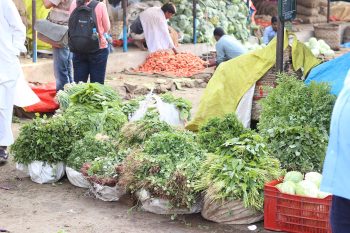
Featured photo: LeafyVegetables by Malyadri, BY-SA 3.0.