The four common coffee brewing methods differ mainly in grind size, contact time and how the water meets the coffee. Drip and pour-over use a medium grind and a few minutes of contact for a clean, balanced cup. French press uses a coarse grind and about four minutes of steeping for a heavier body. Espresso forces nearly boiling water through a fine grind in 20 to 30 seconds for a small, concentrated shot.
None of them is objectively best. Each suits a different number of cups, a different amount of hands-on time, and a different taste in body and clarity.
This guide sets out the numbers from the Specialty Coffee Association and the National Coffee Association side by side, then looks at each method’s strengths, gear and cleanup.
Key takeaways
- Grind from coarse to fine: French press, then drip and pour-over, then espresso.
- SCA’s home brewer standard calls for water at 92°C to 96°C at the grounds, with total contact time between 4 and 8 minutes.
- The NCA’s starting ratio for drip is 1 to 2 tablespoons of ground coffee per 6 ounces of water.
- Espresso takes 20 to 30 seconds at a 1:2 ratio of dry coffee to brewed espresso.
- FDA lists 113 to 247 mg of caffeine in 12 fluid ounces of regular brewed coffee; it does not give per-method figures.
In this guide
- The four coffee brewing methods at a glance
- Drip: the reliable batch brewer
- Pour-over: one cup, full control
- French press: heavy body, simple gear
- Espresso: pressure, speed and concentration
- Temperature, grind and caffeine: what the guidance says
- FAQ
- Pick one method and dial it in this week
The four coffee brewing methods at a glance
Here are the four methods on the variables that matter most. Grind descriptions and ratios are the National Coffee Association’s starting points; temperatures come from the NCA and the Specialty Coffee Association. Treat them as a baseline to adjust by taste.
| Method | Grind | Contact time | Water temperature | Starting ratio | Body and flavor | Gear and cost | Cleanup |
|---|---|---|---|---|---|---|---|
| Drip | Medium, like kosher salt | About 5 minutes | 92°C to 96°C (SCA home brewer standard) | 1 to 2 tbsp per 6 oz water | Clean and balanced | One machine; moderate | Rinse basket after use; descale every 3 to 6 months |
| Pour-over | Medium, like kosher salt | 2 to 4 minutes | 93°C, plus or minus 3°C | 1:13 to 1:16 by weight | Bright and clear | Dripper, filters, kettle; low to moderate | Wash with hot, soapy water after each use |
| French press | Coarse, like rock salt | About 4 minutes | 93°C, plus or minus 3°C | 1:10 to 1:16 by weight | Bold with a full body | One press and a kettle; low | Clean after each use to remove grounds and oils |
| Espresso | Fine, like table salt | 20 to 30 seconds | Nearly boiling, under pressure | 1:2 dry coffee to brewed espresso | Concentrated with crema | Machine, grinder and scale; highest | Knock out the puck, rinse the portafilter, brush the group head |
The pattern is simple once you see it. The longer the water sits with the coffee, the coarser the grind needs to be. French press steeps for minutes, so it is coarse. Espresso is over in half a minute, so it is fine.
Drip: the reliable batch brewer
An automatic drip machine heats the water, showers it over a bed of grounds and lets gravity do the rest. The National Coffee Association’s drip guide recommends a medium grind, about the texture of kosher salt, and roughly 5 minutes of contact between coffee and water. Its “Golden Ratio” is 1 to 2 tablespoons of ground coffee for every 6 ounces of water.
Where it shines
- Volume: it brews several cups at once, which suits a household or a small office.
- Consistency: once the dose and grind are right, it repeats with almost no effort.
- Hands-off time: you can walk away while it brews.
The weak point is the machine itself. Not every brewer holds the water hot enough, for long enough. The SCA’s home brewer certification exists for exactly that reason, and its requirements are covered below. For cleanup, the NCA advises rinsing the basket and filter with clear, hot water after each use and descaling at least every 3 to 6 months.
Pour-over: one cup, full control
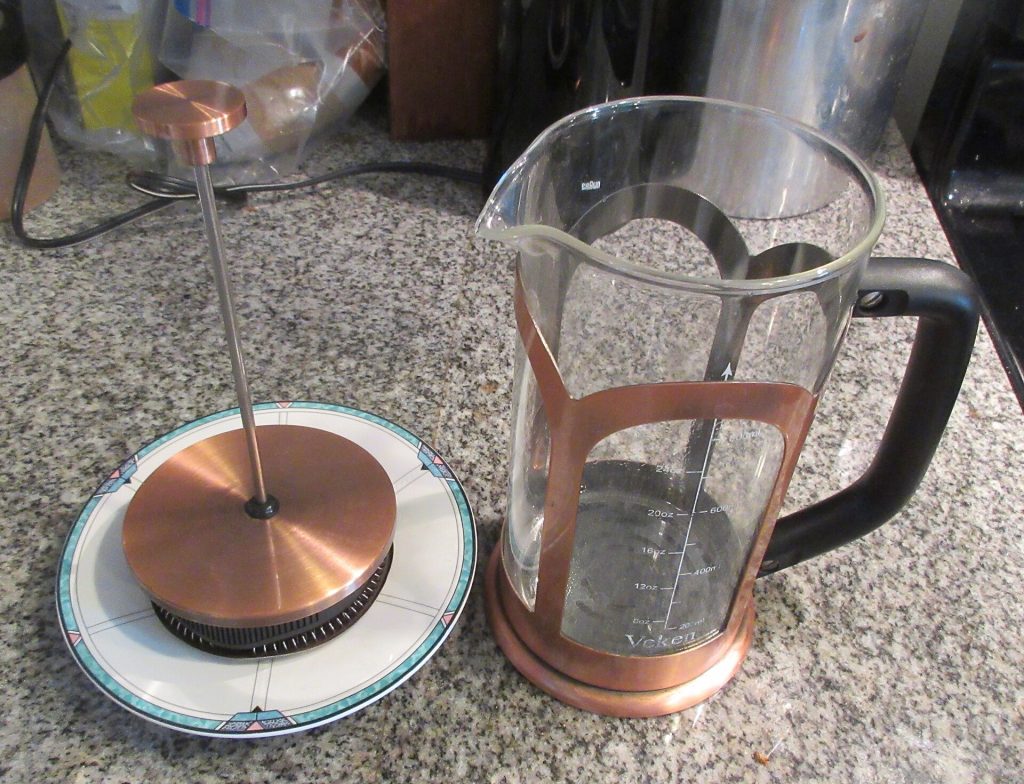
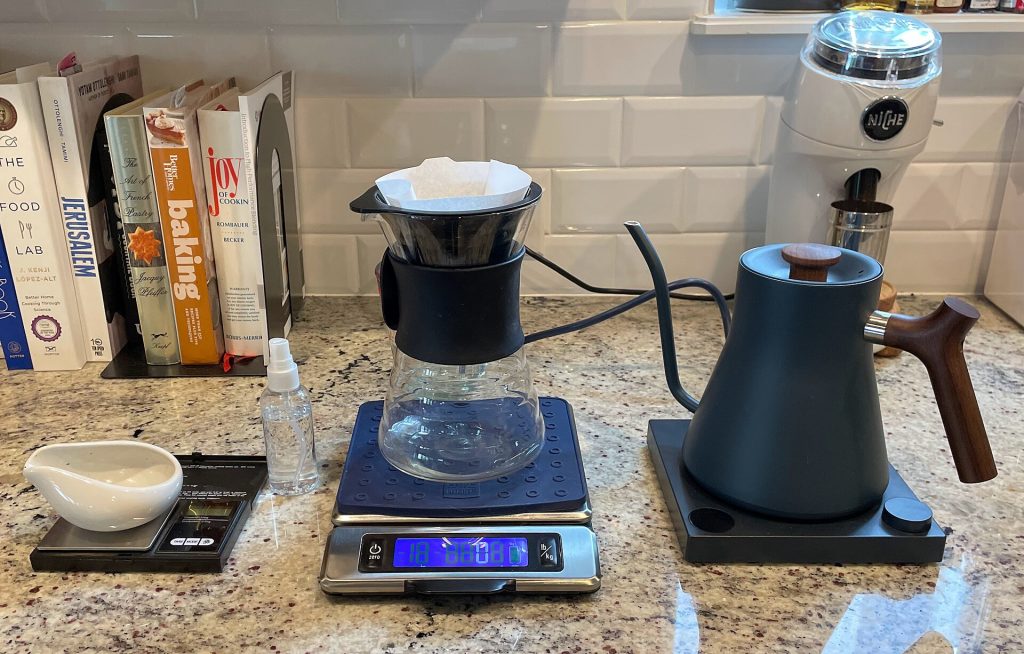
Pour-over is drip coffee done by hand. You control the pour rate, the timing and the temperature, which makes it the most adjustable of the four, and the most demanding.
- Grind to medium, like kosher salt, and use 1 gram of coffee to 13 to 16 grams of water, as the NCA suggests.
- Bring water to a boil and let it rest for about a minute to reach roughly 93°C.
- Pour about double the coffee’s weight in water and let it bloom for 30 to 45 seconds while carbon dioxide escapes.
- Pour the rest in slow stages, aiming for 2 to 4 minutes of total contact time.
The NCA’s troubleshooting rule applies here more than anywhere: if the cup tastes bitter, grind coarser; if it tastes flat or watery, grind finer. A gooseneck kettle makes the pour easier to control but is not essential.
Every brewing method is the same trade in a different shape: finer grind, less time; coarser grind, more time.
French press: heavy body, simple gear
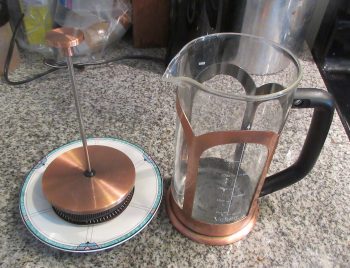
The French press steeps the grounds directly in the water, then separates them with a metal mesh plunger. Because the mesh lets through fine particles and oils that a paper filter would catch, the NCA describes the result as bold in flavor with a full body.
- Grind: coarse, like rock salt. Too fine and the cup turns muddy and the plunger is hard to push.
- Ratio: 1 gram of coffee to 10 to 16 grams of water, per the NCA.
- Time and temperature: about 4 minutes of steeping, with water around 93°C, plus or minus 3°C.
Gear is minimal, a press and a kettle, which makes it one of the cheapest ways to brew well. The catch is cleanup. The NCA stresses cleaning the equipment after each use, because leftover grounds and oils can make the next cup taste bitter. Pour the coffee off as soon as it is plunged, too; left sitting on the grounds, it keeps extracting.
Espresso: pressure, speed and concentration
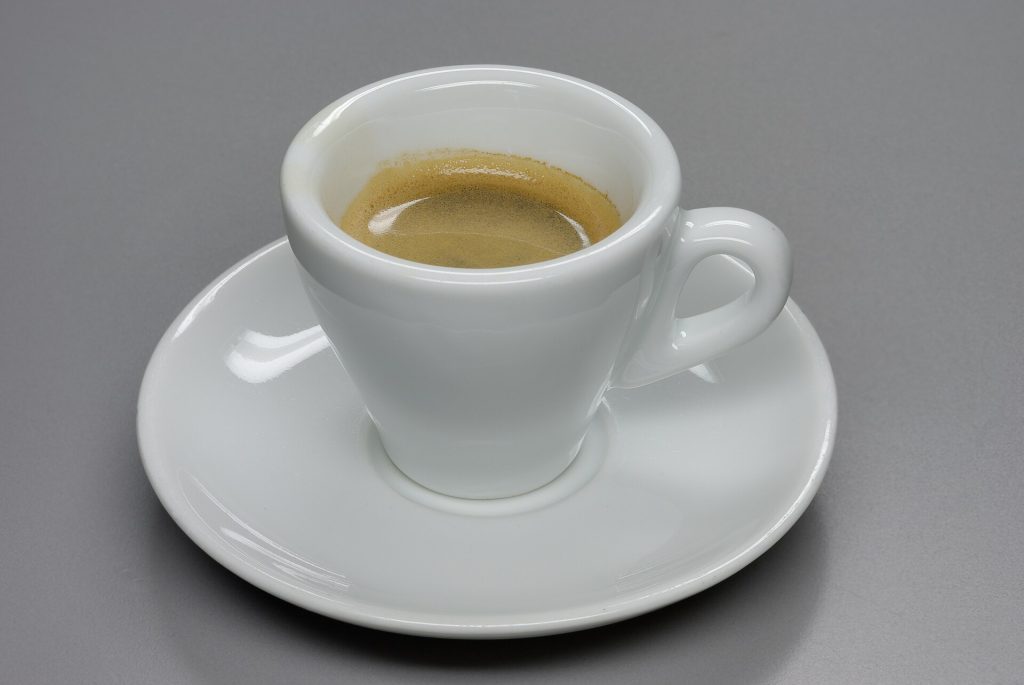
According to the NCA’s espresso guide, espresso is not a bean or a roast but a drink named after its brewing method. High pressure forces nearly boiling water through finely ground coffee in about 20 to 30 seconds, producing a concentrated shot topped with golden-brown crema.
The NCA’s starting ratio is 1 gram of dry coffee to 2 grams of brewed espresso, with a fine grind like table salt. Those small numbers leave little room for error, which is why a capable grinder matters as much as the machine.
The real cost of espresso
- Equipment: the NCA lists an espresso machine, a scale and a grinder as essentials, the largest outlay of any method here.
- Skill: dose, grind and timing all interact, and small changes show in the cup.
- Daily cleanup: remove the portafilter and discard the puck, then clean, rinse and dry the portafilter and rinse and brush the group head.
The payoff is range. A shot is the base for milk drinks, and the classic espresso drinks on most cafe menus start here.
Temperature, grind and caffeine: what the guidance says
The SCA standard for batch brewers
The Specialty Coffee Association’s home brewer certification requirements set the benchmark for automatic machines. Water must reach 92°C at the grounds within the first minute, stay at or above that, and never exceed 96°C. That is roughly 198°F to 205°F. Total contact time must be more than 4 minutes and less than 8.
The same document defines the target cup: an extraction of 18% to 22% of the coffee’s weight and a strength of 1.15% to 1.45% dissolved solids, based on a ratio of 55 grams of coffee per litre of water. You do not need a lab to use this. If your drip coffee tastes thin and sour, the machine may not be reaching temperature; if it tastes harsh, the grind may be too fine.
What we can say about caffeine
Caffeine per serving varies with the beans, the dose and the cup size, and we could not find an authoritative source that compares these four methods directly. The FDA’s consumer guide to caffeine lists 113 to 247 milligrams in 12 fluid ounces of regular brewed coffee. For healthy adults, the FDA cites 400 milligrams a day, about two to three 12-ounce cups of coffee, as an amount not generally associated with negative effects, and notes wide variation in how sensitive people are to caffeine.
FAQ
Which coffee brewing method is easiest for beginners?
Drip and French press need the least technique. Drip is hands-off; French press needs only a coarse grind, a kettle and a timer.
What water temperature should I brew coffee at?
The SCA’s home brewer standard is 92°C to 96°C, about 198°F to 205°F. The NCA suggests 93°C, plus or minus 3°C, for pour-over and French press.
Why does my French press coffee taste muddy?
The grind is probably too fine. Use a coarse grind, like rock salt, and pour the coffee off the grounds once it is plunged.
Does espresso have more caffeine than drip coffee?
A shot is more concentrated, but a serving is much smaller. We could not verify a reliable per-serving comparison, so check the label or ask your cafe if it matters to you.
Pick one method and dial it in this week
Choose the method that fits your mornings, not the one with the most gear. Then change one thing at a time: fix the ratio first, then adjust the grind until the cup is neither bitter nor watery, and write down what worked. A kitchen scale and a timer will teach you more than any new machine. For more on what to pour, browse our drinks section, or read our guide to choosing coffee beans.
Featured photo: French Press coffee making 05 by Infrogmation, BY-SA 2.0.