Want to avoid becoming another kitchen accident statistic?
Professional chefs rely on sharp blades every day. But here’s something that might shock you – 18% of chefs incurred cuts and lacerations during their work.
That’s nearly 1 in 5 professional chefs getting injured by the very tools they depend on.
Here’s the problem:
Most knife accidents happen to experienced cooks who think they know better. They get comfortable, they rush during service, and then… disaster strikes.
The good news? Most of these accidents are completely preventable when you follow proper chef knife safety practices. Whether you’re using a basic kitchen knife or investing in a premium Yakushi chef knife, the safety principles remain the same.
What you’ll discover:
- Why Even Experienced Chefs Get Cut (And How to Stop It)
- The 5 Deadliest Knife Habits in Professional Kitchens
- Essential Safety Techniques Every Chef Must Know
- Building a Knife-Safe Kitchen Environment
Why Even Experienced Chefs Get Cut (And How to Stop It)
Think experience protects you from knife accidents?
Wrong.
Professional kitchens are high-pressure environments where even skilled chefs make dangerous mistakes. During a dinner rush, when orders are backing up and you’re juggling multiple tasks, it’s easy to let safety slide.
Here’s what happens:
Your muscle memory takes over, you start moving faster, and suddenly that razor-sharp blade finds your finger instead of the onion. The pressure to perform quickly often leads to dangerous shortcuts – and that’s when accidents happen.
Over 60% of kitchen accidents involve cuts from knives or other sharp objects. But here’s the thing – most professional chefs have never received formal knife safety training beyond basic cutting techniques.
They learn through trial and error, passed-down habits, and unfortunately, sometimes through painful experience.
Want to know the most dangerous misconception?
Many chefs believe that dull knives are safer than sharp ones.
Complete nonsense!
Dull blades require more pressure, are more likely to slip, and when they do cut you, they create jagged wounds that take forever to heal.
The 5 Deadliest Knife Habits in Professional Kitchens
Some of the habits that send chefs straight to the emergency room…
1. The “Loose Blade” Disaster
Leaving knives scattered on work surfaces is asking for trouble.
When you’re moving fast during service, you might grab a knife by the blade or knock one off the counter. Always place knives in designated spots – never loose on countertops.
2. The “Wrong Tool” Trap
Using a chef knife as a can opener, using a paring knife for heavy chopping, or grabbing whatever’s closest instead of the right tool.
Each knife has a specific purpose. Forcing a knife to do jobs it wasn’t designed for puts unnecessary stress on both the blade and your technique.
3. The “Catch the Falling Knife” Reflex
Here’s an old kitchen saying: “A falling knife has no handle.”
Yet countless chefs instinctively try to catch dropped knives. Train yourself to step back and let it fall. A new knife costs way less than emergency room bills.
4. The “Distracted Cutting” Danger
Chopping while talking to coworkers, looking at orders, or thinking about the next course.
Your full attention should be on the cutting board when a knife is in your hand. Distractions lead to accidents.
5. The “Sink Soaking” Mistake
Dropping knives into soapy dishwater where they can’t be seen.
Someone reaching into that sink is going to get cut. Wash knives immediately after use and store them properly.
Essential Safety Techniques Every Chef Must Know
Ready to upgrade your knife safety game?
These techniques will keep you cutting like a pro without the battle scars.
The Claw Grip Method
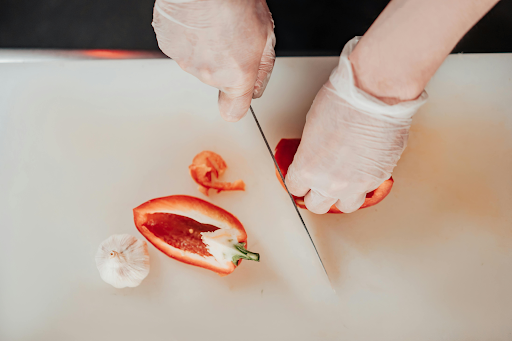
Your non-knife hand forms a claw with fingertips tucked under and knuckles forward. This protects your fingertips while giving you control over the ingredient.
The knife blade should rest against your knuckles as you cut. It feels awkward at first, but this technique becomes second nature with practice.
Proper Cutting Board Setup
Your cutting board should never slide around. Place a damp towel underneath to keep it stable.
Make sure your cutting surface is at the right height – roughly waist level. Too high or too low throws off your cutting angle.
The Transport Rule
When moving with a knife, hold it pointed down and close to your body. Announce “knife behind” when passing other kitchen staff.
Never hand a knife directly to someone – place it down and let them pick it up.
Maintaining Your Edge
Sharp knives are safer knives, but they need regular maintenance.
Hone your knife before each shift and get it professionally sharpened on schedule. A properly maintained knife requires less pressure and gives you better control.
Building a Knife-Safe Kitchen Environment
Individual technique is only half the battle…
Your kitchen environment plays a huge role in preventing accidents. 350,000 people are injured by kitchen knives each year, and many of these accidents could be prevented with better kitchen organization.
Storage Solutions
Invest in proper knife storage. Magnetic strips, knife blocks, or drawer inserts with blade guards all work.
The key is having a designated spot for each knife.
Lighting Matters
Poor lighting leads to poor knife control. Make sure your prep areas are well-lit.
You need to clearly see what you’re cutting and where your fingers are positioned.
Team Communication
Establish clear protocols for knife handling in your kitchen. Everyone should know the rules about transport, storage, and cleaning.
When 8,110 cuts and lacerations result in missed work days in restaurants annually, having consistent safety practices is essential.
Cut-Resistant Gloves
For certain tasks like mandoline work or oyster shucking, cut-resistant gloves provide extra protection.
They’re not necessary for all cutting tasks, but they’re invaluable when working with particularly dangerous equipment.
First Aid Preparedness
Accidents can still happen despite your best efforts. Keep a well-stocked first aid kit accessible in your kitchen.
Know basic wound care and when an injury requires medical attention.
Advanced Safety Tips for Busy Kitchens
Want to take your knife safety to the next level?
These techniques separate the professionals from the home cooks.
The Reset Habit
Between cutting tasks, place your knife down and take a mental reset.
This prevents fatigue and complacency that leads to accidents during long prep sessions.
Knife Rotation
Don’t use the same knife for hours straight. Rotating between different knives prevents hand fatigue and maintains better technique.
Tired hands make mistakes.
Prep Station Organization
Keep your station organized with ingredients on one side, cutting board in the center, and disposal on the other side.
This reduces unnecessary movements and keeps your knife work focused.
Bottom Line
Chef knife safety isn’t about being overly cautious – it’s about being professional.
Every scar tells a story, but smart chefs write fewer painful chapters. By mastering proper technique, maintaining your tools, and creating a safe kitchen environment, you can focus on what really matters: creating amazing food.
These practices will serve you throughout your culinary career:
- Master the claw grip and proper cutting techniques
- Keep your knives sharp and properly stored
- Stay focused and avoid dangerous shortcuts
- Build safety protocols into your kitchen culture
Start implementing these practices today, and you’ll join the ranks of chefs who can work fast, efficiently, and go home with all their fingers intact.
Sharp knives, sharp technique, and smart safety practices – that’s the recipe for success in the kitchen.