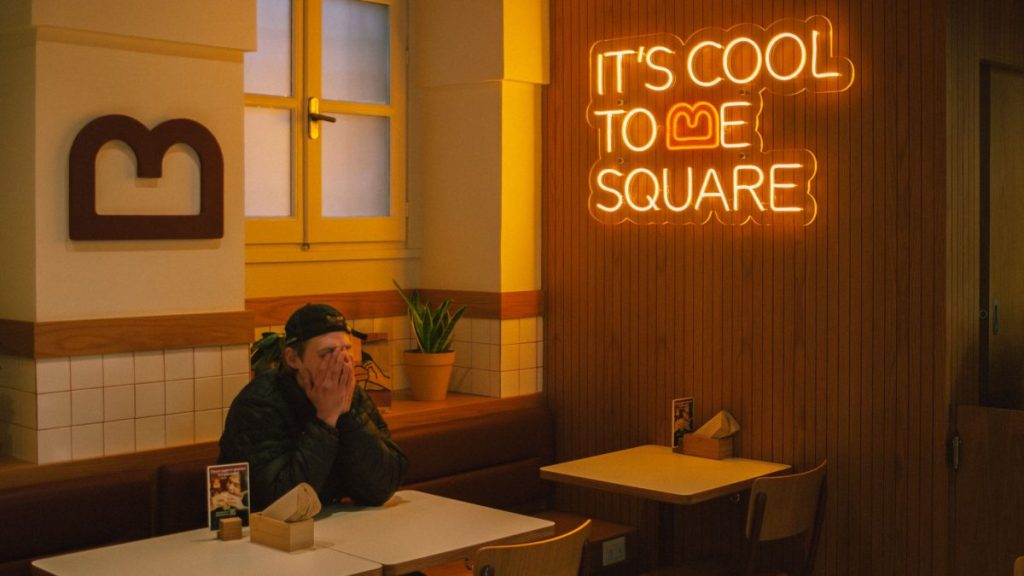
A neon sign won’t rescue a restaurant with a weak menu, and it won’t sink a careful budget either. It sits in an awkward spending category: too visible to call decoration and too small to count as a renovation, so it’s easy to push back another season.
Whether it earns its place comes down to things you can check before you order anything. When do you do most of your business, and what does your restaurant look like from the street at 7 p.m. in January? How many extra customers would it take to cover the cost? That last number is often smaller than owners expect.
What a Business Neon Sign Does for a Small Restaurant
A sign does its best work before anyone opens your menu. In the second or two it takes someone to walk past, it tells them you’re there, you’re open, and roughly what kind of place you run. Unlike your host, it never calls in sick on a Friday.
That first impression counts for more than it seems. In a FedEx Office survey of American consumers, 76 percent said a store’s signs could get them to walk into a place they had never visited, and 68 percent said a business’s signage reflects the quality of what it sells. It’s an older survey (interviews ran in March 2012), and it covered every kind of sign, not just neon. It still shows how quickly people judge a place from the outside.
Neon adds two things a printed sign can’t. It stays readable after dark, when dinner trade happens for much of the year, and it gives the dining room a focal point that shows up in the photos guests post. Today’s business neon signs are built from LED flex tubing mounted on acrylic, not hand-bent glass.
They run on a low-voltage power supply (usually 12 or 24 volts), plug into a standard outlet for indoor use, and have no glass tube to break. That’s why they’ve become a realistic option for a 40-seat restaurant, not only for bars with a lighting budget.
How Much a Restaurant Neon Sign Costs to Buy and Run
Size drives the price more than anything else. After that comes the number of colors, how much tubing the artwork needs, and whether the sign is built for outdoor use. One U.S. LED neon seller’s published price guide puts a medium business sign, roughly 24 to 36 inches wide, at around $350 to $700, and larger pieces in the 36 to 60 inch range at $600 to $1,200. Big multicolor logos can go higher, and the same guide adds 50 to 100 percent for traditional glass neon.
Running costs are where LED neon surprises people. Commercial LED flex is rated at roughly 3 to 5 watts per foot of tubing, so a restaurant sign with 15 feet of tubing draws about 45 to 75 watts.
Take 60 watts as a middle estimate and leave the sign on 10 hours a day, every day. It uses about 219 kilowatt-hours a year. At the U.S. commercial electricity average of roughly 14 cents per kilowatt-hour in 2026, using Energy Information Administration figures, the annual bill comes to about $30. Your local rate will differ, but not by enough to change the decision.
Lifespan is the other half of the cost picture. Manufacturers’ spec sheets commonly rate LED flex for 30,000 to 50,000 hours, which works out to about 8 to 14 years at 10 hours a day. Keep the power supply model number on file, since it’s the easiest part to replace if the sign ever goes dark.
How Many Extra Customers It Takes to Pay Off a Neon Sign
Restaurant owners have good reason to be wary of new costs. Full-service restaurants typically net 3 to 5 percent of sales, according to Toast’s industry data, so a $600 purchase can look like it needs $15,000 in new sales to break even at a 4 percent margin.
That math treats every dollar the same, and extra customers don’t work that way. Your rent and most of your payroll are covered whether one more table shows up or not.
The main new cost a walk-in brings is the food on the plate, and most operators aim to keep food cost between 28 and 35 percent of sales. A simple example shows the difference:
- Sign cost: $600
- Average check from a new customer: $30
- Food cost at 30 percent: $9
- Left over per new customer: about $21
- New customers needed to cover the sign: about 29
That’s fewer than three extra customers a month over a single year. After that, the sign keeps running for about $30 a year in electricity.
Run the numbers with your own quote, because extras such as additional colors, a shaped backing or a remote dimmer change what you pay. This breakdown of custom LED neon sign costs explains how each one affects the price.
None of this guarantees the customers will come. Owners’ own estimates point the same way, though. A 2012 study by marketing professor Charles Taylor and colleagues found that 85 percent of businesses using on-premise signs believed they would lose sales without one, with an average projected loss of 35 percent. Those figures are self-reported, not audited, so treat them as a signal, not a forecast.
When a Neon Sign Is Worth It for a Small Restaurant
A neon sign tends to pay off when a few conditions line up:
- You do real business after dark. Dinner service, late hours, or a bar program give a lit sign the hours it needs to work. If darker evenings are already on your winter preparation checklist, the sign belongs there too.
- People can see you from the street. A front window, a corner spot, or a wall facing a parking lot gives the sign an audience.
- Guests have trouble finding or remembering you. Side streets, shared buildings, and second-floor spaces gain the most, because the sign does the job a big storefront would.
- Your name reads at a glance. Short names and simple logos translate cleanly into neon tubing.
- You plan to stay a while. Indoor LED signs mount with a few screws and unplug so that you can move them with you, but the payback still assumes a couple of years in the same spot.
When a Neon Sign Is Not Worth the Money
For some restaurants, the money does more good elsewhere, at least for now:
- Breakfast and lunch spots that close mid-afternoon. Neon is at its weakest in direct daylight, and a well-made painted or vinyl sign may do more for a place that’s dark by 3 p.m.
- Spaces nobody can see from outside. A unit deep inside a mall or food hall, often with strict landlord sign rules, gets little from a glowing wall the public never passes.
- Months when cash is tight. A sign never outranks a failing walk-in cooler or a payroll run.
- A rebrand or move on the horizon. Ordering a sign with a name you’re about to change buys you an expensive souvenir.
- A design that won’t translate. Long slogans and busy logos with fine lines blur into a smudge of light from across the street.
How to Get the Most Value From a Restaurant Neon Sign
Small decisions at the ordering stage separate a sign people notice from one they walk past.
Ask for a mockup at real size, then picture it from across the street, not on your laptop screen. Signs that look generous on a screen often read small in a window. Lead with your name, not a slogan, and keep the number of colors low, since each extra color adds cost and visual clutter.
Think about where the light lands. Saturated pinks and blues look great on a feature wall but can tint food and faces at nearby tables, so warm white or softer colors work better close to the dining area. A dimmer, which many LED signs come with, lets you match the sign to the room as the evening winds down. A simple timer that turns the sign on at service and off at close also teaches regulars that lit means open.
Before ordering, read the signage clause in your lease and check your city’s rules for window and exterior signs. Requirements differ from place to place. Some leases require landlord approval for anything visible from outside, and some cities regulate window and outdoor signs. So a quick check now can save an awkward conversation after the sign is already on the wall.