If you want to know where to eat in Mexico City, start with four neighbourhoods and a handful of places that have been feeding the city for decades. In Centro, that means Mercado de San Juan, El Cardenal, Café de Tacuba, the cantina La Ópera and the all-hours counter at Los Cocuyos. In Roma, it means Contramar and Taquería Los Parados. Condesa gives you guisado tacos at Tacos Hola El Güero, and Coyoacán gives you tostadas in its market and a long lunch at Los Danzantes.
Every place here was checked against its own website, the city’s official tourism guide or the current MICHELIN Guide listing before this piece went out. That matters in a city where restaurants move, expand and close fast.
What follows is organised by neighbourhood, so you can eat well without spending the day in traffic.
Key takeaways
- Centro Histórico packs a market, two historic dining rooms, a century-old cantina and a round-the-clock taquería into a few walkable blocks.
- Roma is the place for Contramar’s seafood lunch and late tacos at Los Parados, which the MICHELIN Guide says has run since 1965.
- In Condesa, Tacos Hola El Güero has served guisado tacos from ceramic pots since 1968.
- Coyoacán’s market is known for tostadas; Los Danzantes on Jardín Centenario is the sit-down option.
- Contramar requires reservations and Café de Tacuba books weekday tables, so plan those first.
In this guide
- The short list at a glance
- Centro Histórico: markets, cantinas and old dining rooms
- Roma: seafood, a market and a late-night taquería
- Condesa: guisados and churros
- Coyoacán: tostadas and a long lunch
- How to eat your way across the city
- FAQ
- Plan your first day
The short list at a glance
Use this table to sketch your days. Each row is a place confirmed open at the time of writing, with the neighbourhood that makes it easy to group.
| Place | Neighbourhood | Type | Go for |
|---|---|---|---|
| Mercado de San Juan | Centro | Market | Gourmet produce, cheeses, seafood, tastings |
| El Cardenal | Centro (Calle de la Palma) | Traditional restaurant | Breakfast, chocolate and pan dulce |
| Café de Tacuba | Centro (Tacuba 28) | Historic dining room | Enchiladas, mole poblano, tamales |
| Bar La Ópera | Centro (5 de Mayo) | Cantina | Galician octopus, snails in chipotle |
| Taquería Los Cocuyos | Centro (Bolívar) | Taquería | Suadero, cabeza, al pastor |
| El Moro | Centro (Eje Central) | Churrería | Churros |
| Contramar | Roma Norte | Seafood restaurant | Tuna tostadas, pescado a la talla |
| Mercado Medellín | Roma Sur | Market | Latin American groceries, market seafood |
| Taquería Los Parados | Roma Sur | Taquería | Charcoal-grilled bistec, costilla |
| Tacos Hola El Güero | Condesa (Hipódromo) | Taquería | Guisado tacos |
| Mercado de Coyoacán | Coyoacán | Market | Tostadas |
| Los Danzantes | Coyoacán (Jardín Centenario) | Restaurant | Contemporary Mexican |
Centro Histórico: markets, cantinas and old dining rooms
The historic centre is where the city’s oldest food institutions sit shoulder to shoulder. Do it on foot, and start early.
Mercado de San Juan
At 2ª Calle de Ernesto Pugibet 21, Mercado de San Juan is the market chefs shop. The city’s tourism guide describes it as specialising in gourmet and imported foods, with fresh produce, deli meats, cheeses and seafood, plus products from other Mexican states and from abroad. Vendors are generous with samples, and weekends bring out-of-town visitors, so a weekday morning is calmer.
El Cardenal
El Cardenal opened in 1969, founded by Oliva Garizurieta de Briz, and its flagship is at Palma 23 in the Centro Histórico. The restaurant makes its own tortillas, cheese, cream, bread and pastries, and its “Doña Oliva” hot chocolate with fresh bread is the reason to come for breakfast. There are now several branches, including a second one in Centro on Marconi, but the Palma dining room is the classic.
Café de Tacuba
Around the corner at Tacuba 28, Café de Tacuba opened in 1912 in a 17th-century building that the city’s tourism guide calls arguably Mexico City’s most famous historic restaurant. Diego Rivera held his wedding reception here. Order enchiladas, mole poblano, chilaquiles or tamales, and expect musicians to wander through the dining room.
Bar La Ópera
No list of Mexico City cantinas skips La Ópera at 5 de Mayo 10. It began as a pastry shop in 1876 and became a cantina in 1895. Look up: the bar says the hole in the ceiling came from a shot fired by Francisco Villa. The kitchen is known for Galician-style octopus, snails in chipotle sauce and Veracruz-style tongue. It closes at 6pm on Sundays, so plan a weekday or Saturday visit for a late session.
Taquería Los Cocuyos
On Calle Bolívar in Centro, Los Cocuyos has been running since 1980 and holds a MICHELIN Bib Gourmand. The MICHELIN Guide’s taquería list steers you to the adventurous cuts: tripe, head and suadero. It is open around the clock, which makes it the obvious last stop after La Ópera.
El Moro
Churrería El Moro was started in 1935 by Francisco Iriarte, who arrived from Spain’s Baztan Valley and began with a churro cart at the Zócalo. The original storefront on Eje Central (once San Juan de Letrán) is still there and, according to the company, open 24 hours.
Centro rewards the patient eater: a market in the morning, a historic lunch, a cantina in the afternoon and tacos whenever you get hungry again.
Roma: seafood, a market and a late-night taquería
Contramar, Roma Norte
Gabriela Cámara’s Contramar at Durango 200 has been serving seafood since 1998 and carries a Bib Gourmand in the 2026 MICHELIN Guide. Order the tuna tostadas with chipotle mayonnaise and the pescado a la talla, the house signature split with red and green rubs. The guide notes that reservations are required, so book before you land.
Mercado Medellín, Roma Sur
At Campeche 101, Mercado Medellín is officially named Mercado Melchor Ocampo. The city’s guide calls it the classic example of the public market as neighbourhood centre, with more than 500 vendors and a strong Latin American accent: arepas, cassava, Colombian coffee and Venezuelan rum sit next to Mexican staples. La Morenita de Medellín, inside, is known for seafood.
Taquería Los Parados, Roma Sur
Also in Roma Sur, at Avenida Monterrey 333, Los Parados has been grilling over charcoal since 1965. As the name hints, you eat standing. The MICHELIN Guide points to the bistec, the thin costilla and al pastor, and the taquería keeps late hours, until the early morning on weekends.
Salón Covadonga, Roma Norte
For a Roma cantina, Salón Covadonga at Puebla 121 has been open since 1958 and still draws domino players, journalists and families. The menu leans Asturian: pulpo, chorizo, tortilla española and cod croquetas, alongside tortas de milanesa.
Condesa: guisados and churros
Tacos Hola El Güero
At Ámsterdam 135 in Hipódromo, part of the wider Condesa area, Tacos Hola El Güero has made guisado tacos since 1968. Fillings wait in large ceramic pots, you choose single or double tortillas, and the MICHELIN Guide singles out the picadillo with green salsa and cotija and the chorizo with potato. It closes in the afternoon on Sundays, so treat it as a breakfast or lunch stop.
El Moro, Condesa
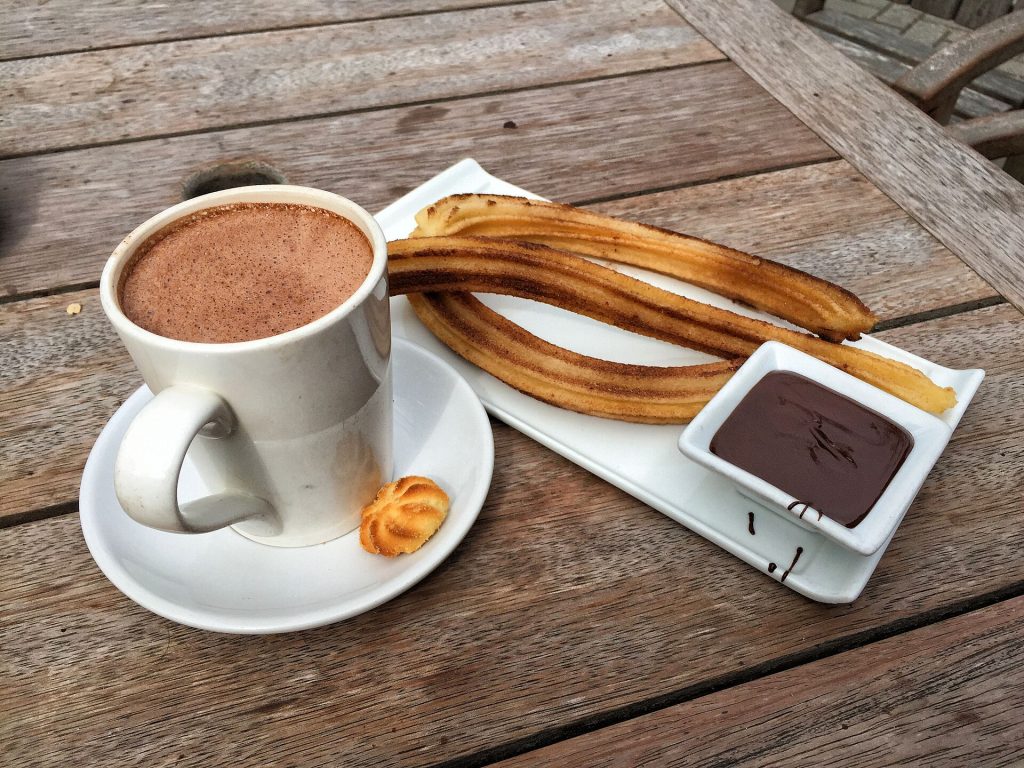
If you missed the churros in Centro, El Moro has a Condesa branch at Avenida Michoacán 27.
Coyoacán: tostadas and a long lunch
Mercado de Coyoacán
On Ignacio Allende, Mercado de Coyoacán is famous for tostadas piled with seafood, mushrooms, tinga, shank meat or vegetables. The city’s guide places it within walking distance of both the Frida Kahlo and Leon Trotsky museums, and warns that weekends bring crowds to the whole centre of Coyoacán. Artisan stalls selling skulls and skeletons make it a good stop before Día de Muertos.
Los Danzantes
On Jardín Centenario, Los Danzantes is the neighbourhood’s sit-down meal, a contemporary Mexican restaurant with a terrace in a historic building. The MICHELIN Guide notes a hoja santa with goat cheese that has been on the menu for over 20 years. Coyoacán also has its own El Moro, on Felipe Carrillo Puerto.
How to eat your way across the city
- Group by neighbourhood. Centro alone can fill a day. Roma and Condesa sit side by side and pair well. Coyoacán is further south, so give it a half day.
- Eat the big meal at lunch. Lunch is the easiest way into the busier dining rooms, and it leaves the evening free for a cantina.
- Book the few that need it. Contramar requires reservations, and Café de Tacuba takes reservations Monday to Friday.
- Carry small cash for markets. Stalls and counters move quickly and change is appreciated.
- Check before you go. Hours differ by branch and by day, so confirm on each official site or listing the morning you visit.
For more trips built around food, browse our dining guides, or read up on eating street food with confidence before your first taco stand.
FAQ
Which neighbourhood is best for a first food visit?
Centro Histórico. In a few blocks you get Mercado de San Juan, El Cardenal, Café de Tacuba, La Ópera, Los Cocuyos and El Moro, which covers breakfast through late-night tacos.
Do I need reservations in Mexico City?
For most taquerías and markets, no. For Contramar, yes; the MICHELIN Guide says reservations are required. Café de Tacuba takes reservations on weekdays, which helps if you are a group.
Where can I eat tacos late at night?
Los Cocuyos in Centro is open 24 hours according to the MICHELIN Guide, and Los Parados in Roma Sur serves until the early hours, later on Fridays and Saturdays.
What should I eat at Mercado de Coyoacán?
Tostadas. The market is known for them, with toppings ranging from seafood to tinga and mushrooms.
Plan your first day
Start with breakfast at El Cardenal, walk to Mercado de San Juan, lunch at Café de Tacuba and finish with octopus at La Ópera and tacos at Los Cocuyos. Book Contramar for day two. Then use our restaurant directory and our Mexican food coverage to fill in the rest of the trip.
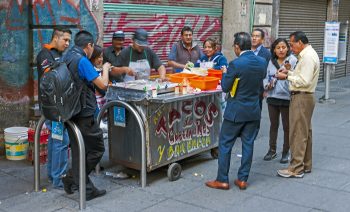
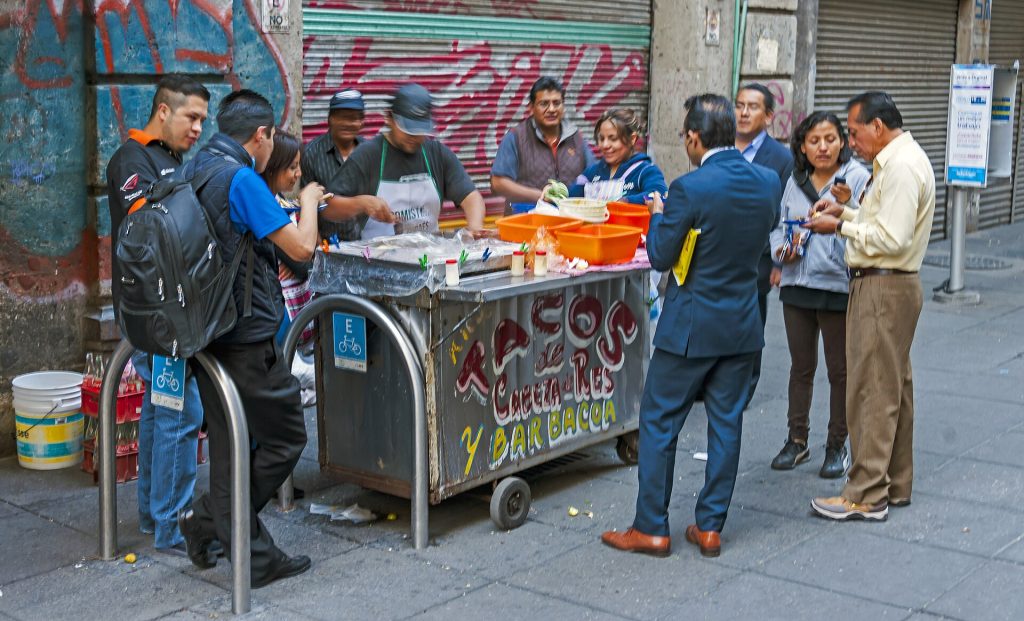
Featured photo: People at taco cart in Mexico City by Daniel Case, BY-SA 3.0.