

-
by Restaurants Expert
- March 16, 2026
Global shipping and storage costs are rising, and many businesses are feeling the pressure. Long delivery times, high freight fees, and large warehouses full of spare parts all add to the challenge. But what if companies could produce what they need, exactly when they need it? That’s where 3D printing is changing the conversation.
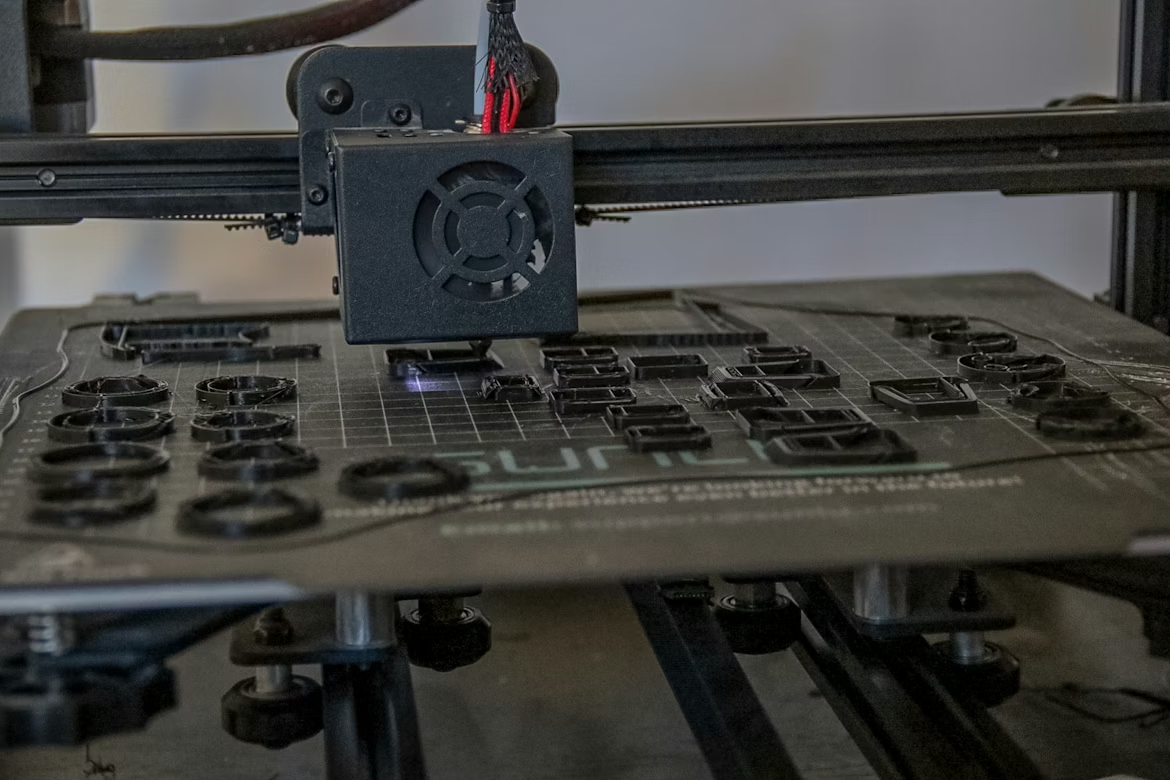
Instead of shipping parts across the world and storing them for months, businesses can create products closer to where they are needed. This shift could reduce shipping, cut inventory costs, and simplify supply chains. In this article, we explore whether 3D printing can truly reshape how companies manage production and logistics.
The State of Global Shipping and Inventory Challenges
Supply chains are getting hammered right now. Containers pile up at ports for days, sometimes weeks, going nowhere. Fuel expenses jump around so unpredictably that creating an accurate transportation budget feels like reading tea leaves.
You’re caught in an impossible bind: stock too much and watch capital evaporate in storage fees, or stock too little and wave goodbye to sales while customers bail on you.
Consider this reality check from Q3–24: binder jetting system sales stayed flat, but every other printer technology saw shipments tumble, Powder Bed Fusion dropped 24%, directed energy deposition fell 18% year-over-year. Why? Economic jitters and sky-high interest rates make companies hit pause on major equipment purchases, even when they’re desperate for better alternatives.
What’s happening to your bottom line? Profits vanish while nimble competitors snatch your market share. The old warehousing-plus-international-shipping playbook can’t deliver the speed or affordability today’s market demands. You need something fundamentally different.
That’s where a radical shift comes in: localized, on-demand 3D printing that completely reimagines how your products get from design file to doorstep.
3D Printing and Shipping Costs , Transforming the Supply Chain Paradigm
Here’s an interesting flip: 3D printing and shipping costs work in opposite directions. The more you print locally, the less you ship globally. Instead of manufacturing halfway around the world and hauling products across oceans, you produce items within shouting distance of your customers. Suddenly those crushing transportation bills disappear. Customs headaches? Gone. Delivery windows shrinking from weeks down to days? Absolutely.
RapidMade’s online 3D printing service lets you manufacture parts right here domestically at their 30,000-square-foot Portland facility, completely sidestepping international freight nightmares. With ISO 9001 certification and ITAR registration already in place, you get compliance-ready parts without overseas delays or their associated costs.
Real-World Transformation Stories
Daimler Bus did something clever: they authorized coach operators to produce specific spare parts on-demand through certified processes, eliminating wait times. No more emergency shipping charges. No more buses sitting idle costing money. Previously, one broken part meant lost revenue while waiting for central warehouses to ship replacements.
The 3D printing global supply chain approach pushes production toward demand centers rather than concentrating everything overseas. Companies consistently report 40-60% drops in transportation expenses when they ditch centralized foreign manufacturing for regional digital production networks.
But wait, cutting shipping distance is just the surface benefit. The deeper transformation happens in how you handle inventory itself, completely eliminating those expensive warehousing burdens.
Smart 3D Printing Inventory Management , Reducing Warehouse Overhead
Think about this: 3D printing inventory management swaps physical products for digital files. Rather than hoarding thousands of parts “just in case,” you store CAD files and print whatever you need, whenever you need it. Your warehouse footprint shrinks dramatically. Dead stock from discontinued lines? That problem evaporates. Inventory obsolescence? Not anymore.
Tangible Cost Savings
Storage costs plummet when you’re housing files instead of physical goods. No more capital locked in unsold inventory gathering dust. You eliminate climate control expenses, security systems for sprawling warehouses, and insurance premiums on stored products. Inventory audits transform from exhausting physical counts into simple file management tasks.
Understanding the potential is step one. Actually implementing it effectively? That’s where the rubber meets the road. Let’s walk through three battle-tested strategies leading companies use today to slash shipping expenses.
Winning Strategies to Reduce Shipping Costs with 3D Printing Integration
Localized Manufacturing Networks
Want to reduce shipping costs with 3D printing? Build distributed production hubs instead of one massive factory. Picture this: your customer in Texas gets their order printed in Dallas, not manufactured in Shanghai and shipped across the Pacific.
Lead times compress from weeks to days. International freight expenses vanish entirely. Rush orders don’t require expensive air freight anymore, you just prioritize them at the closest production facility.
Lightweight Component Design and Packaging Innovations
3D printing unlocks design possibilities impossible with traditional manufacturing. Engineers create complex geometries that cut weight while maintaining strength. Lighter components mean lower shipping rates across every carrier method.
Better yet, you can print assemblies as single consolidated pieces instead of multiple parts requiring assembly, reducing packaging materials and dimensional weight charges simultaneously.
Agile Response to Market Demand and Disruption
When disasters strike, pandemics, earthquakes, wars, conventional supply chains seize up completely. Companies leveraging 3D printing benefits for logistics pivot on a dime, producing critical items without waiting for overseas suppliers to restart. During COVID-19, additive manufacturing operations shifted to PPE production within days rather than months.
These strategies deliver measurable savings, sure. But the real value goes deeper, 3D printing fundamentally changes how you approach your entire logistics operation and competitive positioning.
3D Printing Benefits for Logistics Decision-Makers
Speed-to-Market Advantages
Digital manufacturing compresses development timelines radically. Prototypes that used to take months now materialize in days. You test designs, collect feedback, and iterate quickly without committing to expensive tooling or minimum order quantities from foreign manufacturers.
Sustainability and CO₂ Reduction
Less shipping means a smaller carbon footprint. Period. Localized production eliminates container ships burning bunker fuel and cuts long-haul trucking dramatically. Here’s a bonus: better product customization through 3D printing reduces returns because products match specifications more accurately, cutting reverse logistics costs and environmental damage.
Today’s advantages are impressive, no question. But they’re merely the opening act. Emerging innovations in digital warehousing, AI integration, and regulatory frameworks are positioning 3D printing as the backbone of tomorrow’s supply chains.
Emerging Trends , The Future of 3D Printing in the Global Supply Chain
Digital Warehousing and Spare Parts on Demand
Physical spare parts inventory is becoming a relic. The aerospace and automotive sectors are creating certified digital libraries where authorized partners print replacement components on demand. This wipes out millions in warehousing costs while guaranteeing parts availability for equipment that’s decades old.
AI and IoT Integration
Predictive analytics forecast component failures before they occur, automatically triggering local 3D print orders. Smart sensors on machinery communicate directly with production systems, building truly autonomous supply chains that anticipate needs instead of reacting to emergencies.
With these game-changing trends accelerating, the question isn’t whether to adopt 3D printing, it’s how quickly you can start capturing immediate savings while future-proofing your operation.
Frequently Asked Questions
Can 3D printing really eliminate international shipping needs?
Not completely, but it drastically cuts dependency. For many components and products, local 3D printing eliminates 70-90% of international freight, leaving only raw materials and highly specialized items in global transit.
How do upfront 3D printing costs compare to long-term logistics savings?
Initial printer investments typically pay for themselves within 12-18 months through combined shipping and inventory reductions. Ongoing per-part costs stay competitive with traditional manufacturing for low-to-medium volume production runs.
What types of companies benefit most from 3D printing logistics integration?
Businesses wrestling with complex supply chains, high-value spare parts, customized products, or just-in-time requirements see the fastest ROI. Aerospace, medical devices, automotive, and industrial equipment sectors are leading the charge.
Transforming Logistics with 3D Printing
The intersection of 3D printing and shipping costs creates opportunities that simply didn’t exist five years ago for businesses ready to challenge conventional supply chain thinking. From 3D printing inventory management approaches that eliminate warehousing waste to localized manufacturing networks that cut international freight completely, the path to reduce shipping costs with 3D printing has never been clearer.
As the 3D printing global supply chain matures and adoption accelerates, early movers will lock in competitive advantages lasting years. The technology exists right now, the only question is whether you’ll implement it before your competitors beat you to the punch.