A Michelin star is an award the Michelin Guide gives to restaurants for the quality of their cooking. One star marks very good cooking, two stars excellent cooking, and three stars exceptional cooking, the guide’s highest honor. Stars are decided by the guide’s own anonymous inspectors, they go to the restaurant rather than the chef, and they are reviewed every year.
Stars are judged on what is on the plate, not on tablecloths, service style or wine lists. That is why a counter-seat taco stand and a hushed tasting-menu room can both hold a star. Here is how the system works and how to use it when choosing where to eat.
Key facts
- Michelin awards one, two or three stars for cooking only; décor and service style are not part of the star.
- Inspectors judge five criteria: ingredient quality, mastery of technique, harmony of flavors, the chef’s personality in the food, and consistency.
- Stars belong to the restaurant, not the chef, and are reassessed each year.
- The Bib Gourmand flags good cooking at moderate prices; the Green Star recognizes sustainable practices.
- The guide began in France in 1900; the first US edition, covering New York City, arrived in 2005.
What do one, two and three Michelin stars mean?
The guide’s own descriptions, in its explainer on Michelin stars, run roughly like this:
| Award | What it signals | Classic shorthand |
|---|---|---|
| One star | High-quality cooking with top ingredients and distinct flavors, at a consistently high standard | Worth a stop |
| Two stars | Excellent, refined cooking where the chef’s personality and talent show | Worth a detour |
| Three stars | Exceptional cuisine that elevates cooking to an art form | Worth a special journey |
The shorthand in the right-hand column dates back to the guide’s early decades, when it was written for motorists deciding whether a restaurant justified the drive. It is still a useful way to think about the levels.
How do Michelin inspectors decide?
Michelin says its inspectors are full-time employees, many with backgrounds in restaurants and hospitality. They book and dine anonymously, like any other guest, and the guide states that the same five criteria apply in every country:
- Quality of the ingredients
- Mastery of flavor and cooking techniques
- Harmony of flavors
- The personality of the chef as expressed in the cuisine
- Consistency, both across the menu and over time
Consistency is the reason a single great meal is not enough. A restaurant is typically visited more than once before a star is awarded, and stars can be removed in a later edition if standards slip.
Do stars go to the chef or the restaurant?
To the restaurant. Michelin is explicit that stars are awarded to restaurants, not chefs. A chef who moves to a new kitchen does not take the stars along, and a restaurant can keep its stars under a new head chef if the cooking holds up.
What are the Bib Gourmand and the Green Star?
- Bib Gourmand: named after Bib, or Bibendum, the Michelin tire mascot. It marks restaurants offering good, often simple cooking at a moderate price. It was introduced in the late 1990s and is many diners’ favorite part of the guide.
- Michelin Green Star: added in 2020 to highlight restaurants with strong sustainability practices, such as sourcing, waste reduction and their role in the community. A restaurant can hold a Green Star with or without regular stars.
- Recommended restaurants: places listed in the guide without a star or Bib Gourmand. Being in the guide at all means the inspectors rate the food as good.
Where did the Michelin Guide come from?
Brothers André and Édouard Michelin, founders of the tire company, published the first guide in France in 1900. It was a free booklet of maps, mechanics and places to eat and sleep, designed to get people driving, and wearing out tires. The guide introduced a single star for fine dining in 1926 and expanded to the three-star hierarchy in the early 1930s.
Michelin now publishes guides for many countries and cities. The first US edition, for New York City, came out in 2005, and the guide has since added other American cities and regions. Coverage changes, so check the Michelin Guide’s US site for the current list of destinations.
Is a Michelin-starred meal always expensive?
Not always. Many three-star restaurants serve long tasting menus with prices to match, but one-star restaurants range widely, and some starred places are casual. Bib Gourmand restaurants are, by definition, moderately priced for their market.
If you are weighing a splurge, our guide to choosing between a tasting menu or à la carte helps you decide what kind of meal you want, and our look at the real cost of eating out in 2026 covers budgeting for special occasions.
How to use the guide to book a great meal
- Start with the Bib Gourmand list in the city you are visiting. It is the best value in the guide.
- Read the inspector’s note for each restaurant. It describes the cooking style and often the format, such as counter seating or a fixed menu.
- Check the format and price on the restaurant’s own website before you book. Menus and prices change more often than guides.
- Book early for starred restaurants, especially new or newly promoted ones; demand jumps after the annual announcement.
- Ask about dietary needs when booking. Tasting menus are planned in advance and kitchens appreciate notice.
Our city guides point out Michelin-recognized restaurants where they fit; see, for example, our guide on where to eat in Quebec City.
FAQ
How many Michelin stars can a restaurant have?
Up to three. Three stars is the highest rating the guide gives a restaurant.
Can a restaurant lose its Michelin star?
Yes. Stars are reviewed for each new edition, and a restaurant can lose one or more stars, or drop out of the guide, if the cooking no longer meets the standard. Some chefs have also asked to be removed.
Does a chef have Michelin stars?
Strictly, no. Stars go to restaurants. People say a chef “has three stars” as shorthand for the restaurants they lead.
What is the difference between a Michelin star and a Bib Gourmand?
A star recognizes the level of cooking regardless of price. A Bib Gourmand recognizes good cooking at a moderate price.
Do Michelin inspectors pay for their meals?
Michelin describes its inspections as anonymous visits made like a regular guest, and its inspectors are guide employees, not paid by restaurants.
Use stars as a starting point
Treat the Michelin Guide as a well-informed shortlist rather than a ranking of everything worth eating. Stars tell you the kitchen is consistently excellent; they do not tell you whether the format, price or mood suits your evening. Read the notes, check the menu, and pair a starred dinner with a few local favorites. For more ways to pick where to eat, browse our dining guides.
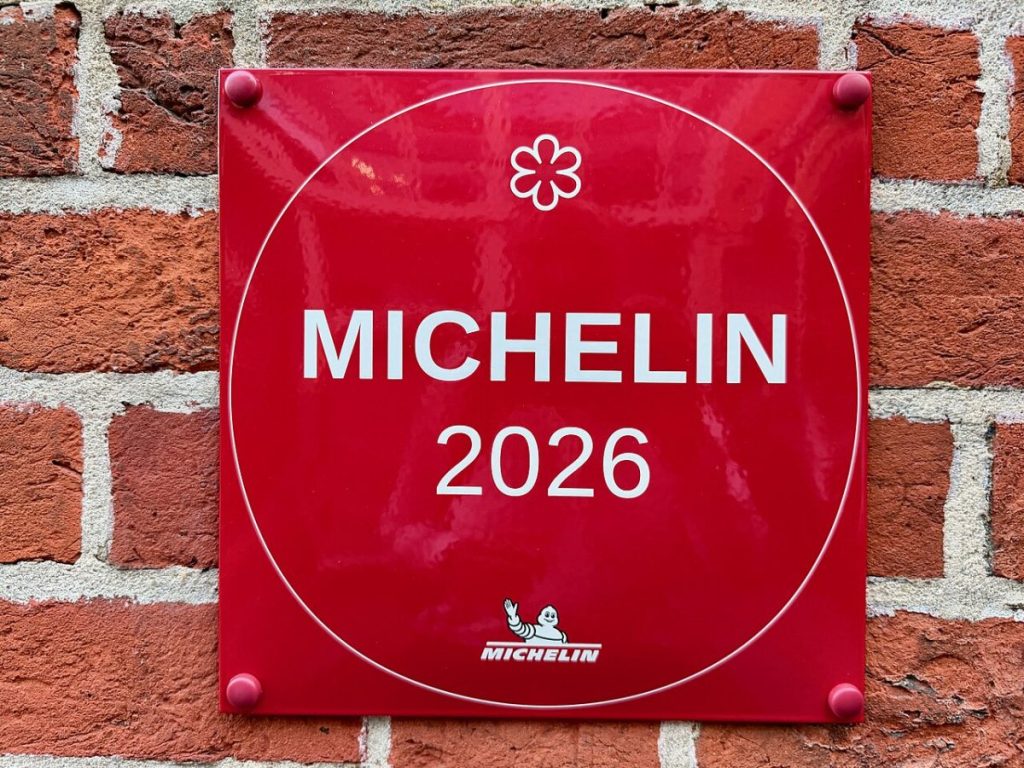
Featured photo: Michelin Guide 2026 plaque by Oleg Yunakov, CC BY-SA 4.0.